A warm spot on tile or carpet
Usually a hot-water line, though heat can surface away from the break. Confirmed by closing the heater's cold supply and pressure-testing the hot side.
Professional slab leak detection in Las Vegas, NV, with the phone answered 24/7: we confirm the leak at the water meter, split hot lines from cold, and mark the spot before any concrete is opened.
You speak with Leak Detection Las Vegas about what you are seeing, and we book a visit to locate the leak.
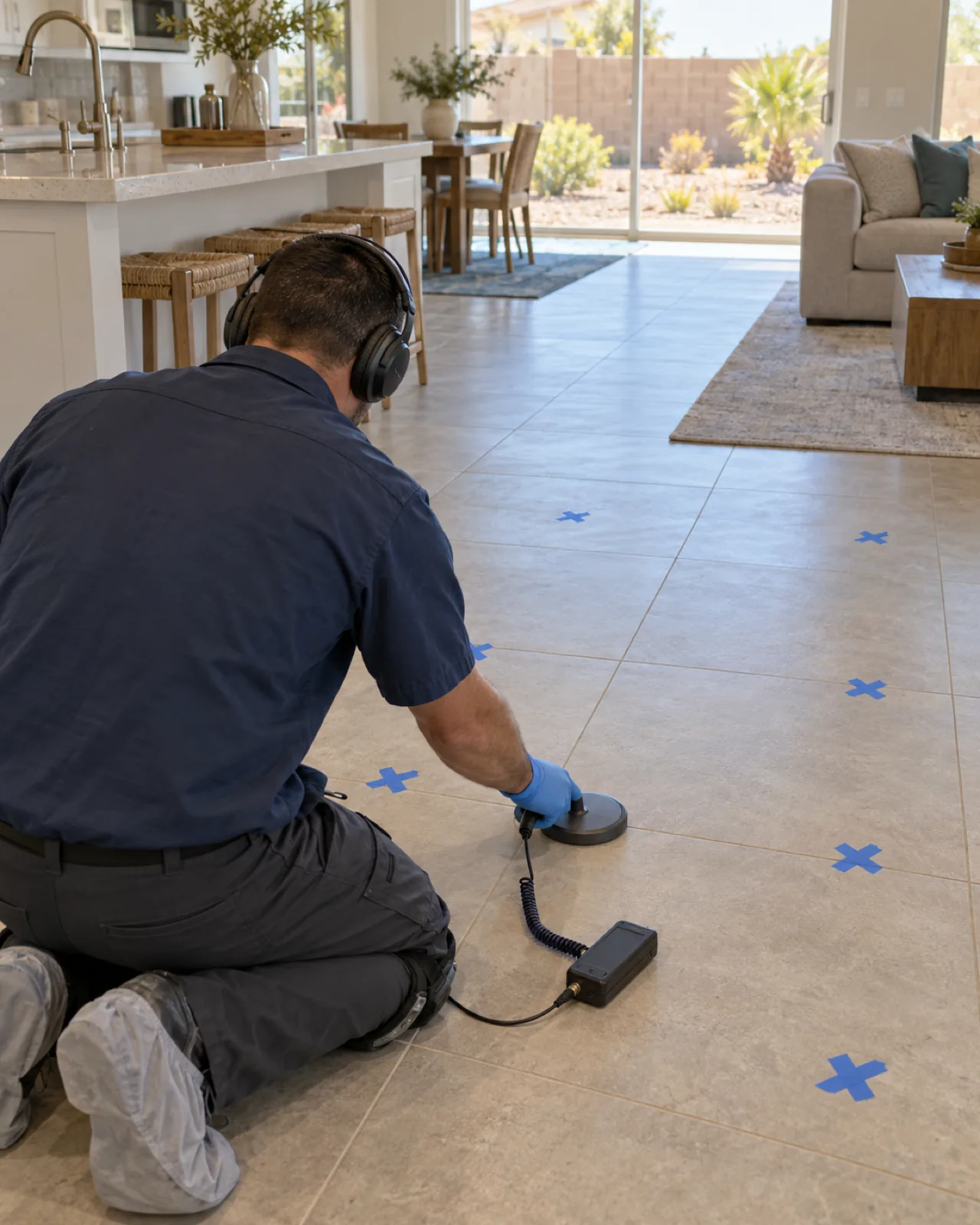
Leak Detection Las Vegas provides slab leak detection in Las Vegas, NV for water lines under concrete floors. We confirm the leak at the meter, split the yard line from the house, isolate hot from cold, then pinpoint and mark the spot, so the repair contractor you choose opens only that patch of concrete.
Each of these common slab leak signs is a clue to test, not proof, until the meter or a gauge agrees.
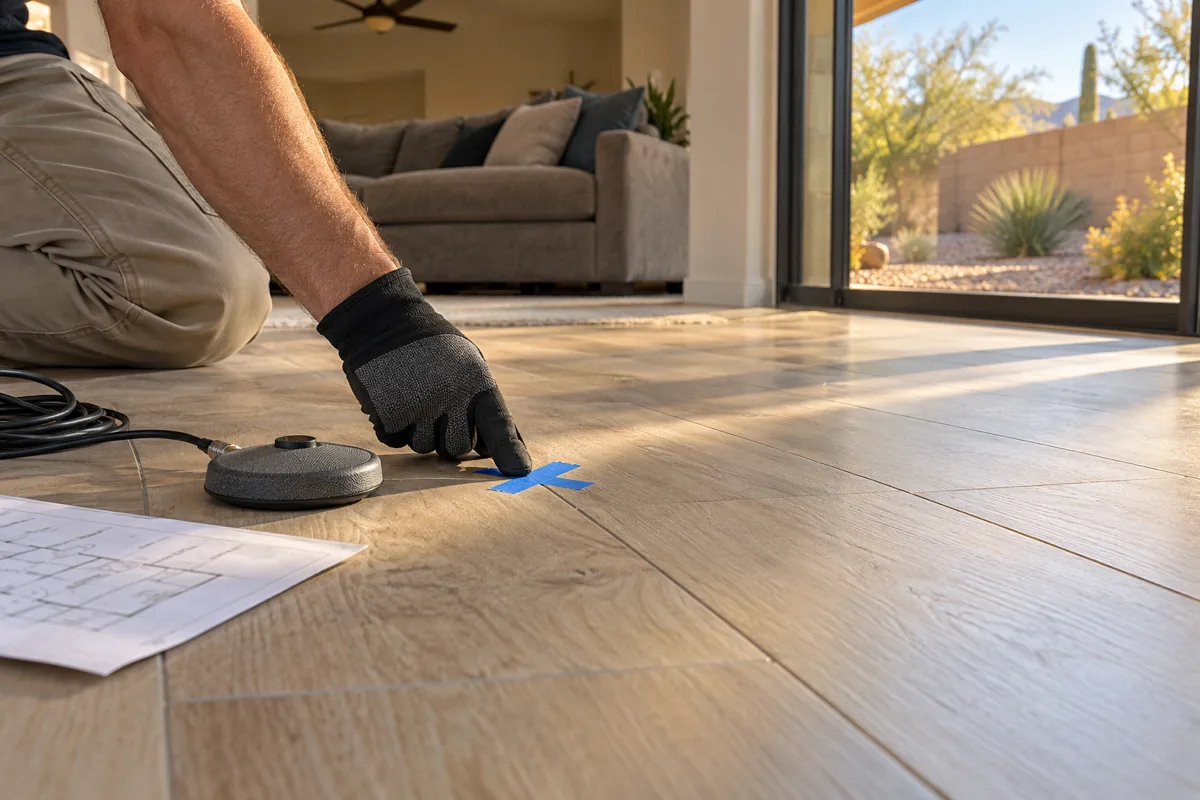
Usually a hot-water line, though heat can surface away from the break. Confirmed by closing the heater's cold supply and pressure-testing the hot side.
The meter's flow triangle keeps turning with all water off, which LVVWD names as the sign of a possible leak.
The district's meters logged nonstop flow for at least three days. A meter test with the house valve closed, then open, separates yard from house.
Hot water is escaping and being replaced. If the meter moves only while the heater's cold supply is open, the hot side is losing water.
It can be the slab, or a drain, toilet seal or wall line. Moisture readings plus isolation decide, because many damp baseboards are not slab leaks.
A cold line under the floor leaves no warm spot, so the bill is often the only clue. The meter test settles it.
Routine visit or emergency slab leak call, each one ends with a spot you can see.
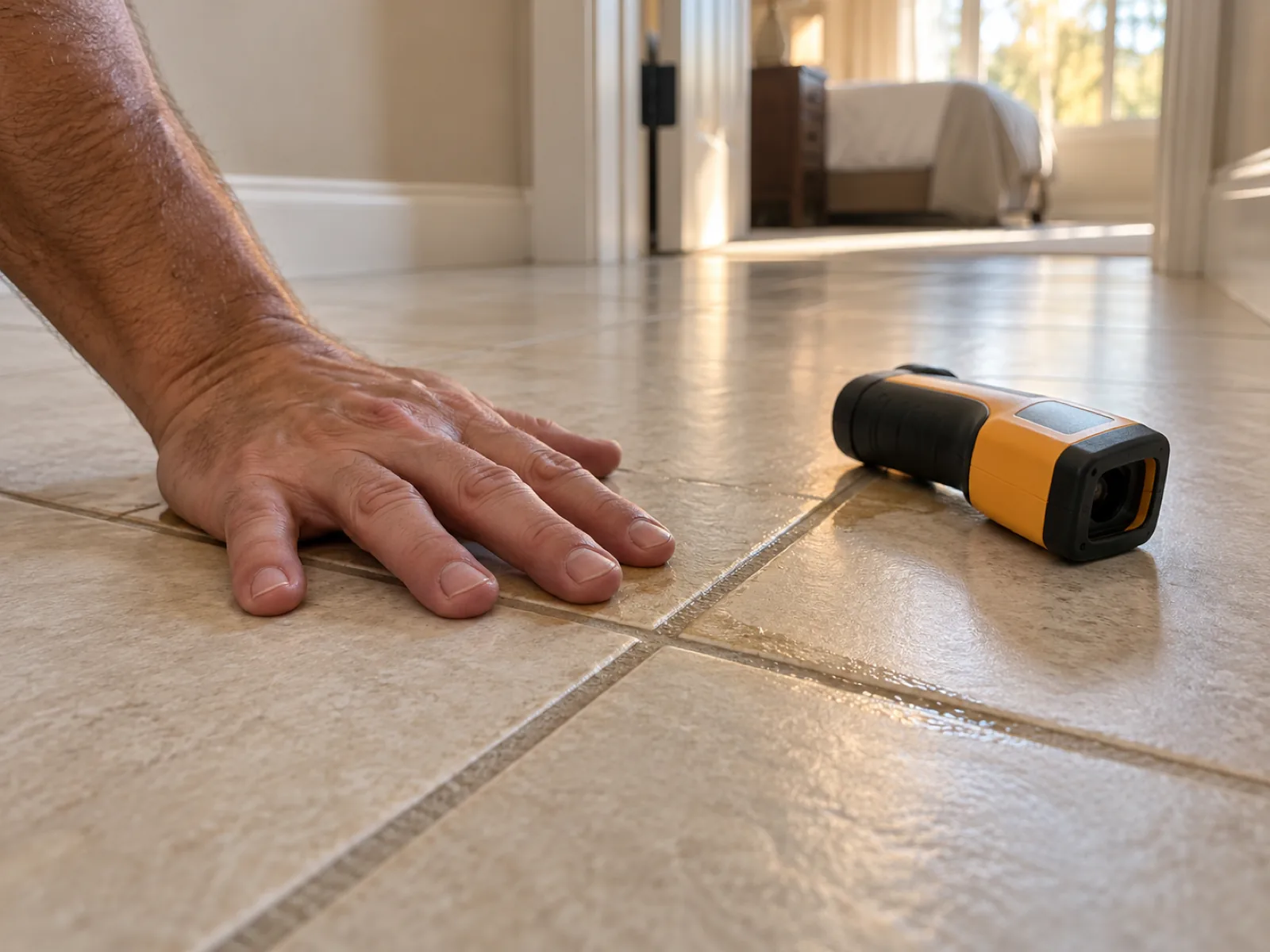
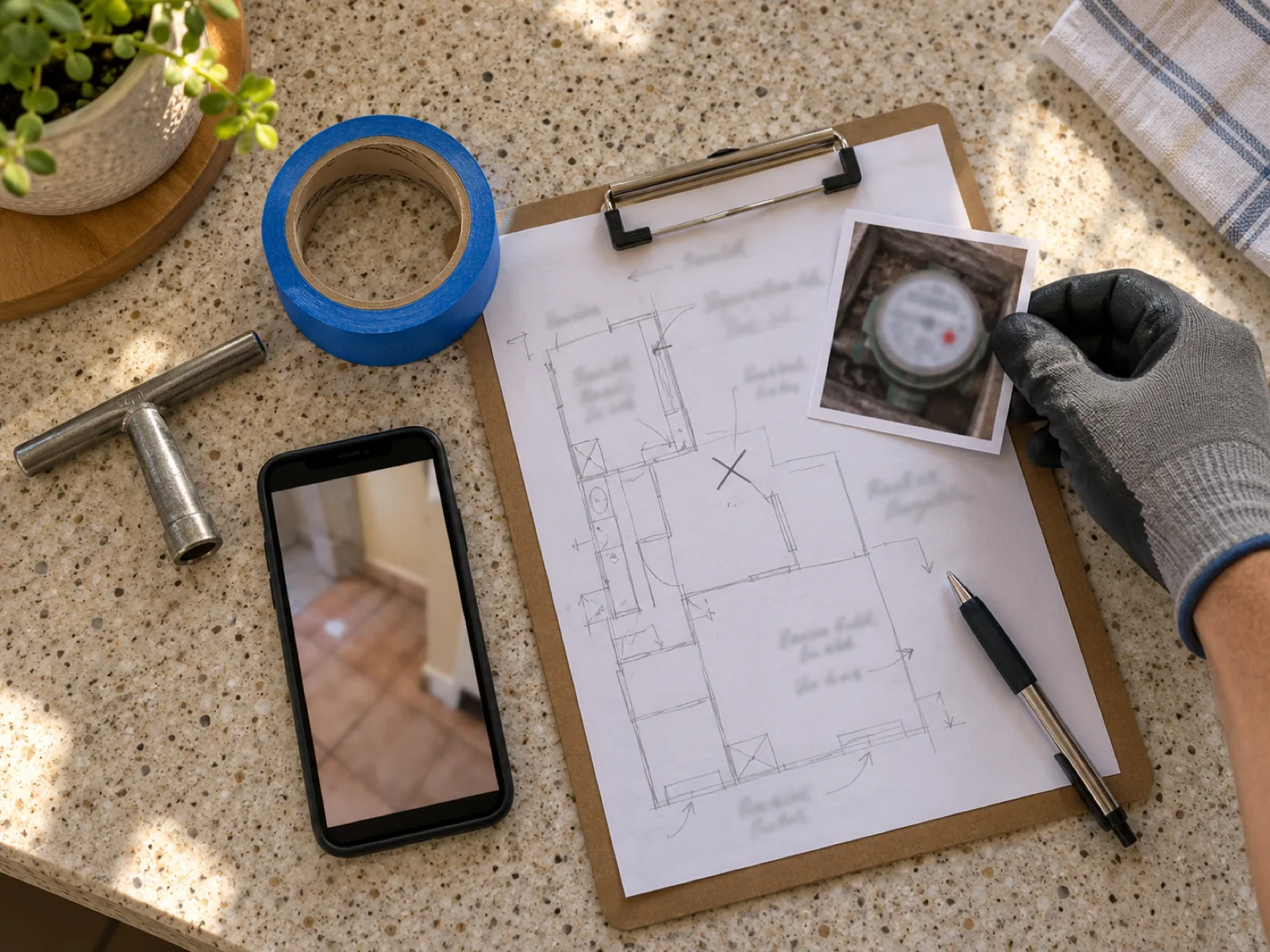
All water off, eyes on the meter, to prove a leak exists before anyone searches under the floor.
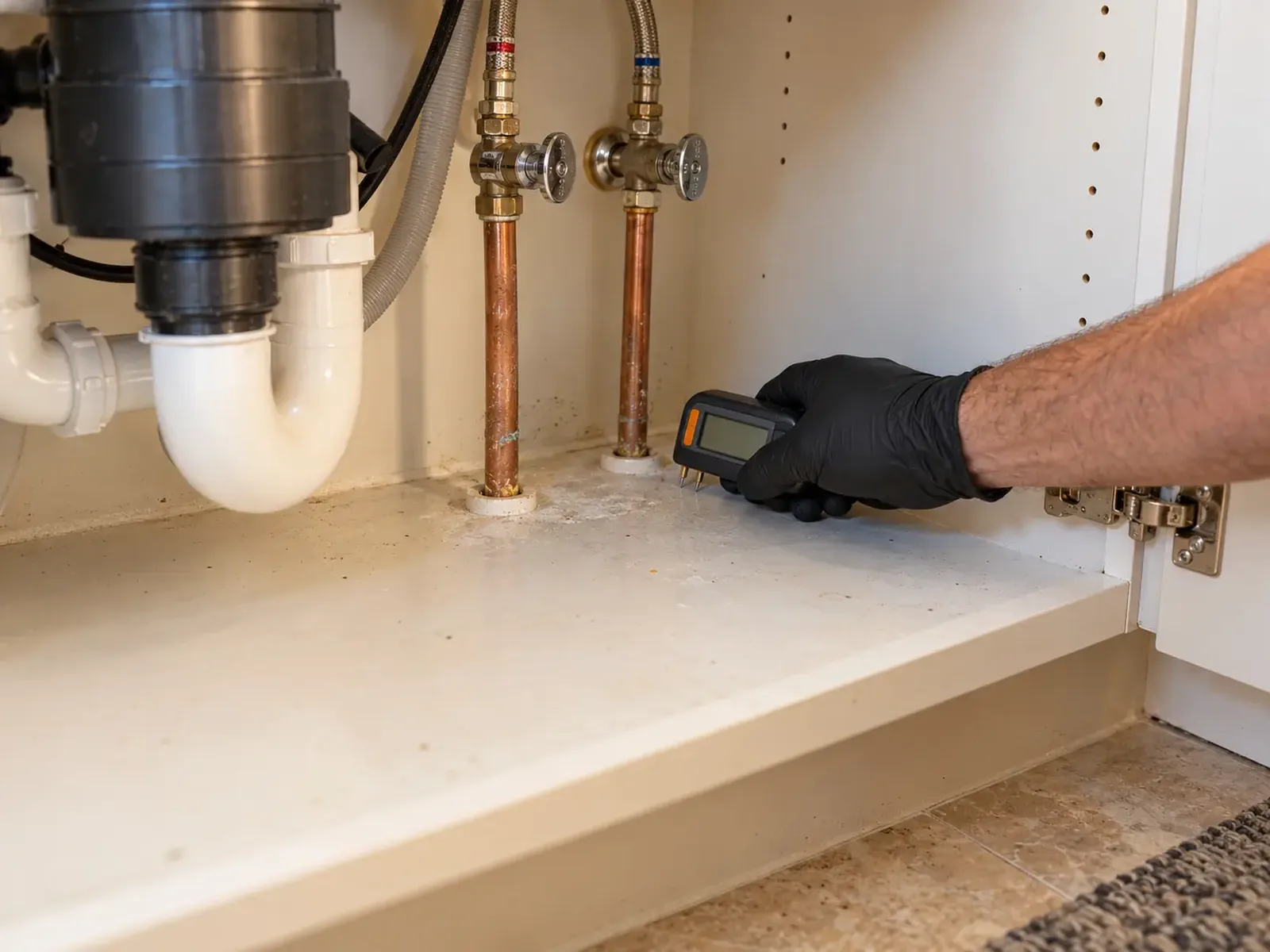
Closing the water heater's cold supply shows which side is losing water, which can rule out half the lines under the slab.
The suspect side is held under pressure and watched. A copper or PEX line that cannot hold it is the one leaking.
Listening along the line route picks up escaping water; a thermal camera follows heat on hot lines. Each has blind spots, so one checks the other.
Tape on the floor at the pinpointed spot, then a walk through what each test showed and ruled out.
Slab leak detection in Las Vegas, NV runs in five steps, and each one narrows the search before the next begins.
All water off, watch the triangle, then close the house valve to split yard from house.
Close the heater's cold supply and read which side the meter says is losing water.
Hold pressure on the suspect side and watch for the drop that marks a leak.
Acoustic listening along the line route, plus thermal imaging where a hot line warms the floor.
Mark the floor at the leak so only that area of slab is opened.
What our slab leak detection company commits to, plus one limit.
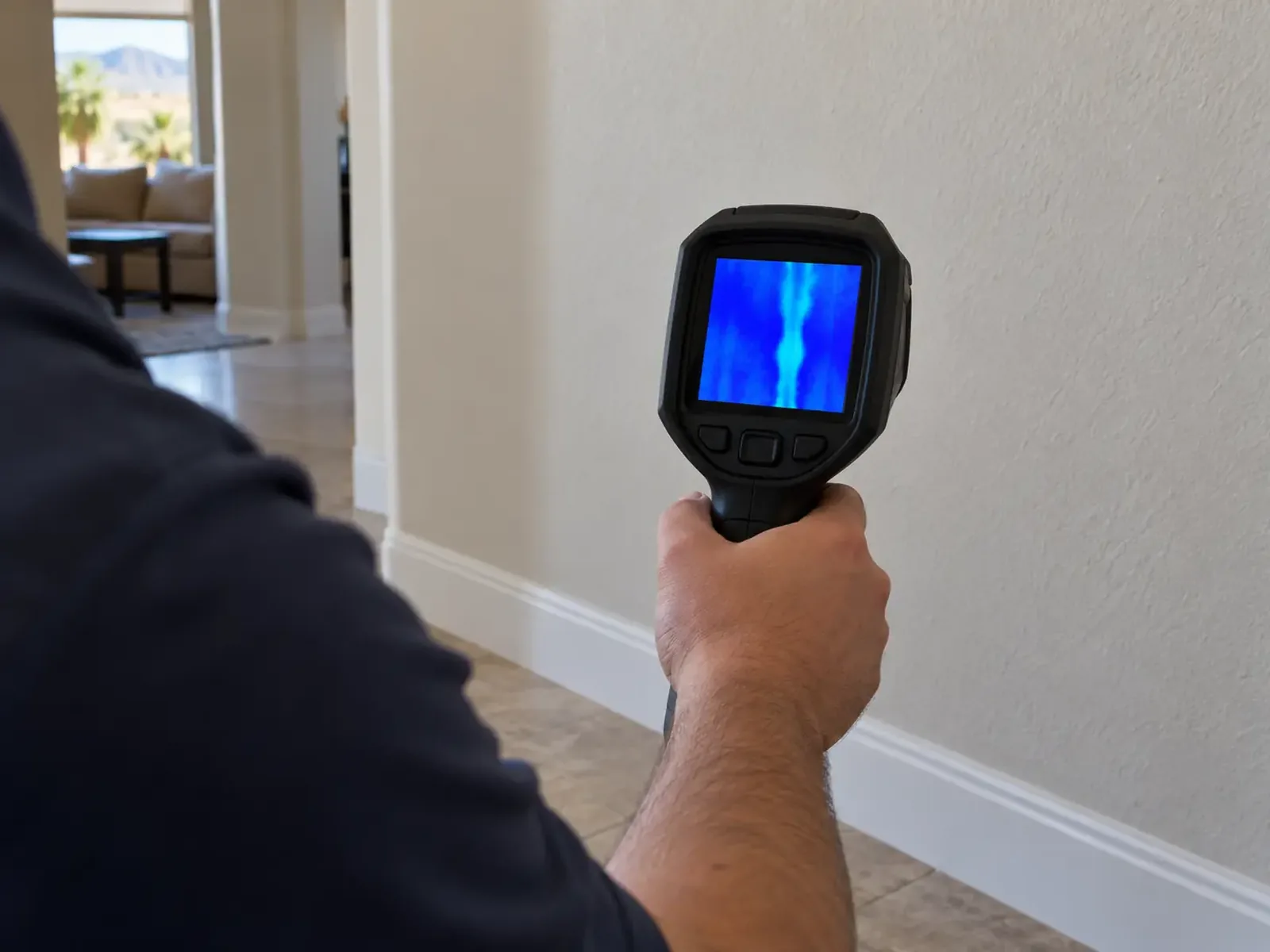
We do not repair, reroute or repipe, so where the mark lands does not change what we earn. The repair goes to a contractor you pick.
The meter split shows whether the slab is involved at all. A yard-line leak never sends anyone into your kitchen.
Sound and heat are cross-checked against the pressure result, so one noisy reading does not decide where concrete gets cut.
On a cold line with no heat to follow, pressure and sound lead, and the repair crew may need to widen the opening slightly.
No single tool finds every slab leak.
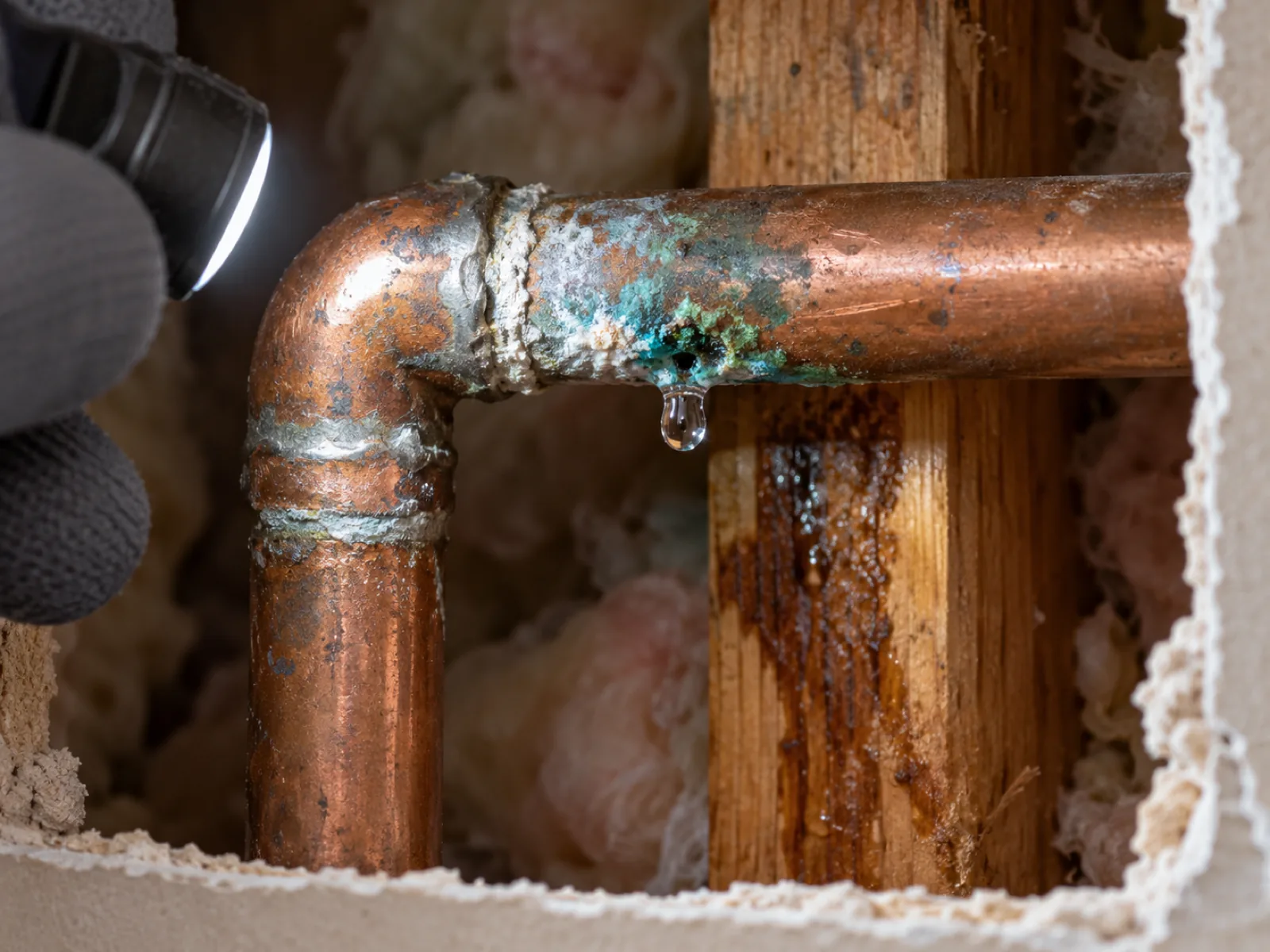
| Method | What it tells us | Where it falls short |
|---|---|---|
| Meter test | Whether water is leaving at all, and yard side or house side | Says nothing about where under the floor |
| Hot and cold isolation | Which side of the plumbing is losing water | Cannot separate two lines on the same side |
| Pressure test | Whether one isolated line holds or drops | Confirms the line, not the spot |
| Acoustic listening | Where escaping water is loudest along the route | Thick tile, pumps and traffic noise can mask it |
| Thermal imaging | Where a hot line warms the floor surface | Little help on cold lines or under thick rugs |
We have not published a price; four things set the scope.
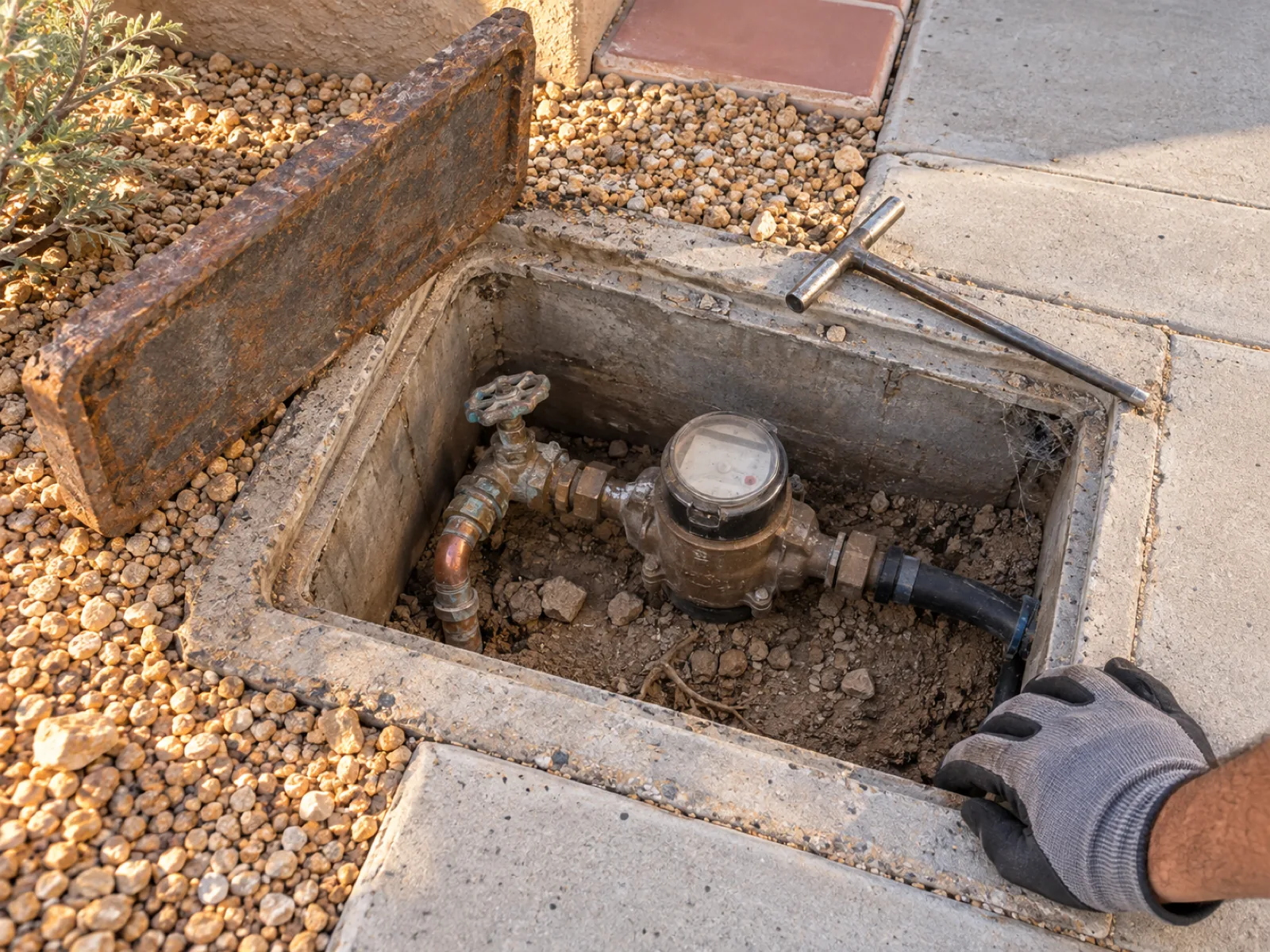
Hot-side leaks usually leave heat to follow. Cold-side leaks leave fewer clues, so the search leans on pressure and sound.
Three bathrooms, an island sink or a wet bar mean more under-slab runs to test than a two-bath plan.
Tile, wood and carpet each change how sound and heat reach the surface, and so which method leads.
When the meter split points outside the house valve, the service line needs its own, separate search.
Three local facts shape where we look first.
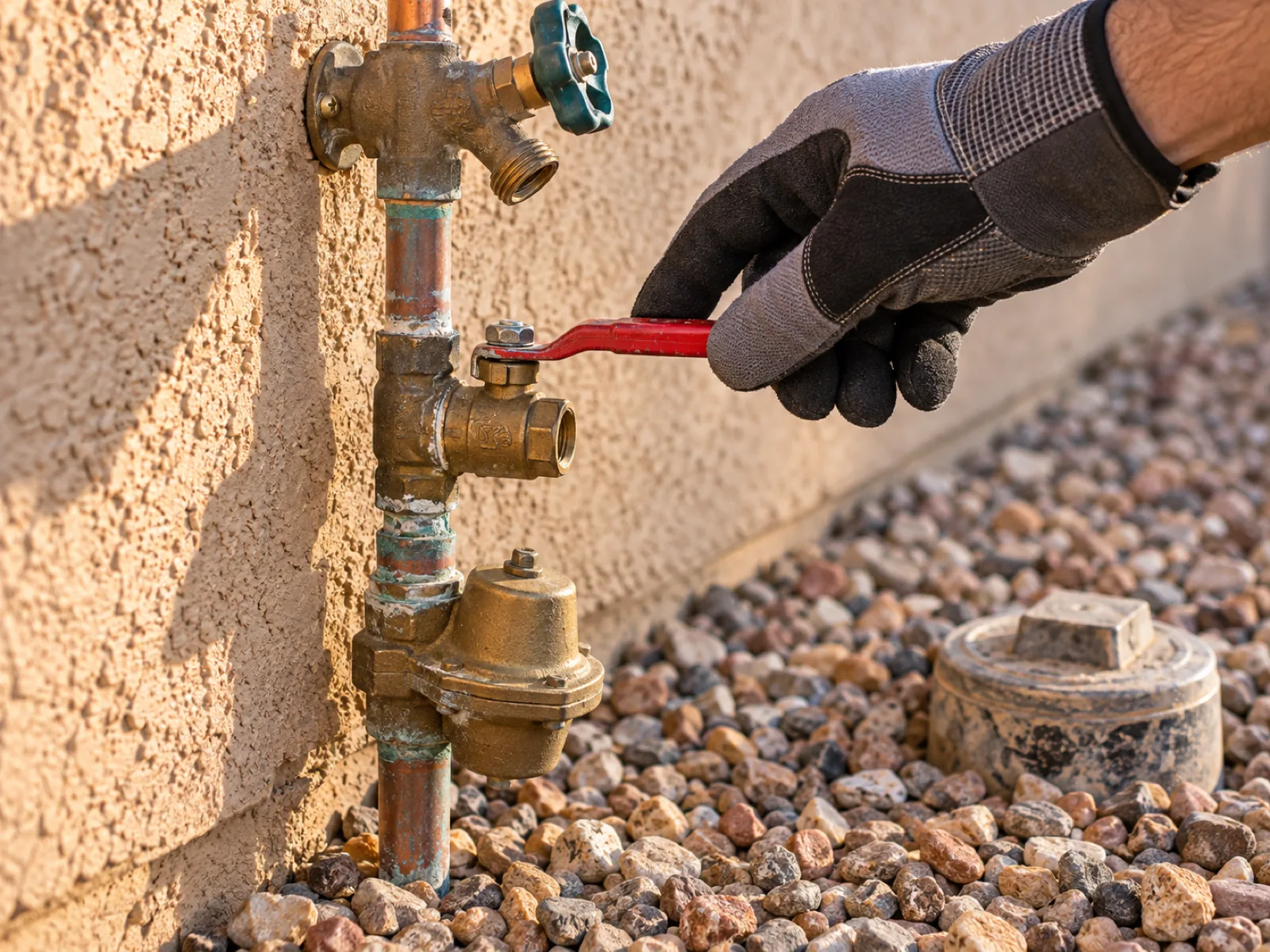
Census ACS puts the median year built at 1994 for Las Vegas, NV, against 2000 for Henderson, NV and 2002 for North Las Vegas, NV. Older supply lines have been in service longer.
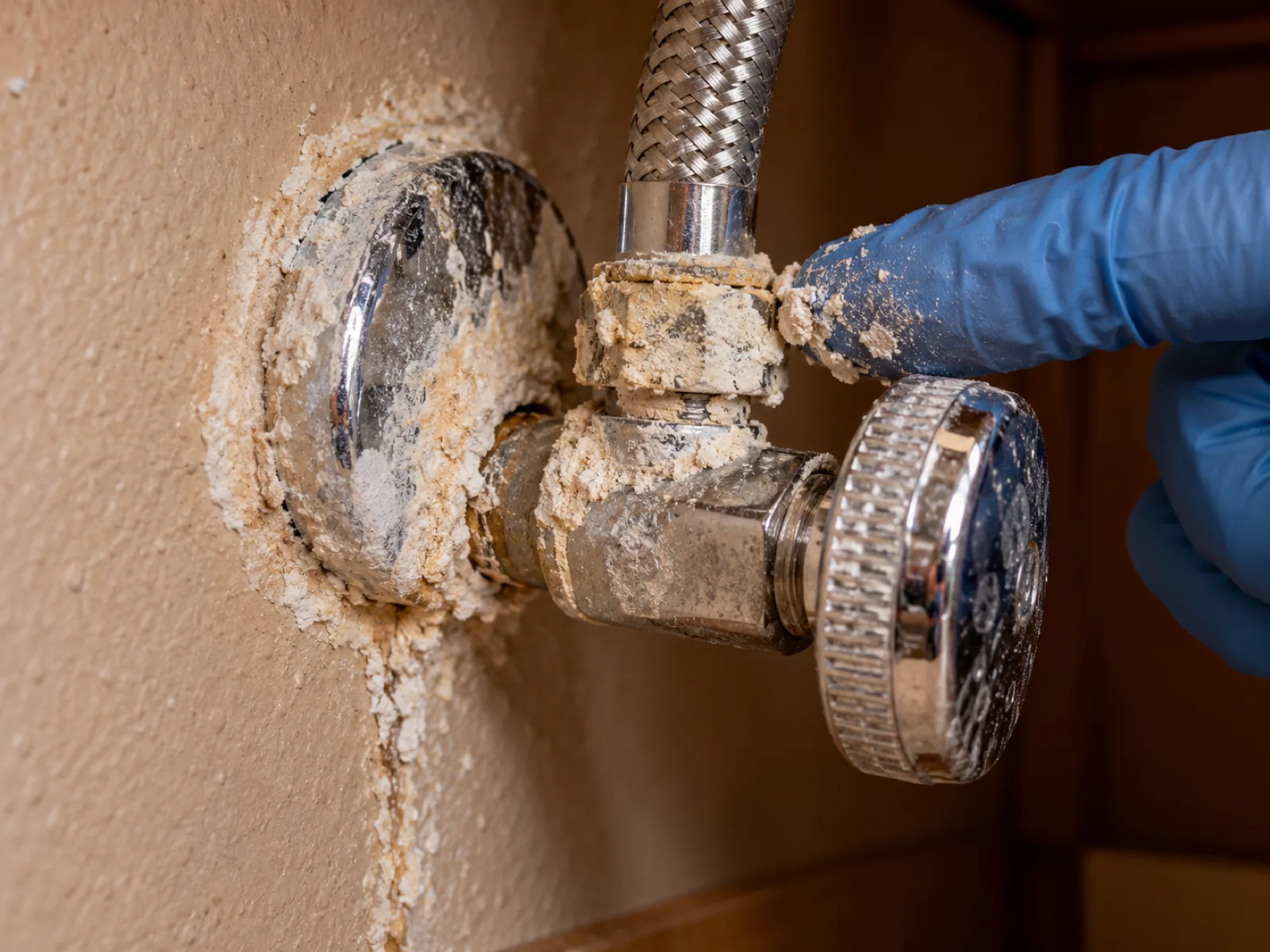
LVVWD water measures 278 ppm, or 16 grains per gallon. Local plumbers report pinhole leaks in copper; that link is trade experience, not proven science, so we test instead.
LVVWD's check: close the house shut-off, and if the triangle keeps moving, the leak sits under the yard, between meter and valve. Then the slab is not involved.
Tell us where the floor feels warm or where you hear water, and we start at the meter.
We locate the leak; any plumber you choose repairs it.
We stop at the mark; the reroute vs repipe decision belongs to you and your repair contractor.
| Option | What it means | When plumbers usually suggest it |
|---|---|---|
| Spot repair | Open the slab at the mark, repair, patch | One leak on a line otherwise in fair shape |
| Reroute | Abandon the under-slab section and run a new line through walls or the attic | A long or hard-to-reach run, or flooring the owner wants left alone |
| Repipe | Replace the supply piping, commonly with PEX or CPVC | Several leaks over time, or more than one line losing pressure |
LVVWD's terms, summarized in our LVVWD and SNWA leak programs guide; confirm on lvvwd.com.
Up to 50 percent of a repair's cost, capped at $2,000 per event, for single-family property owners. The repair must cost at least $200, with a paid invoice.
One reimbursement per rolling 365 calendar days. Tenants, ongoing leaks and rural service areas are excluded, per LVVWD's Customer Assistance Programs (opens in a new tab).
Usage up at least 50 percent, the leak already billed and no adjustment in 12 months. Repair within 60 days of that bill; apply within 90 days of the repair.
Leak Detection Las Vegas is not affiliated with the LVVWD or the SNWA, and is not on the SNWA Water Smart Plumber list. Program terms come from the water district's own pages.
Whoever opens your slab should hold an active Nevada license.
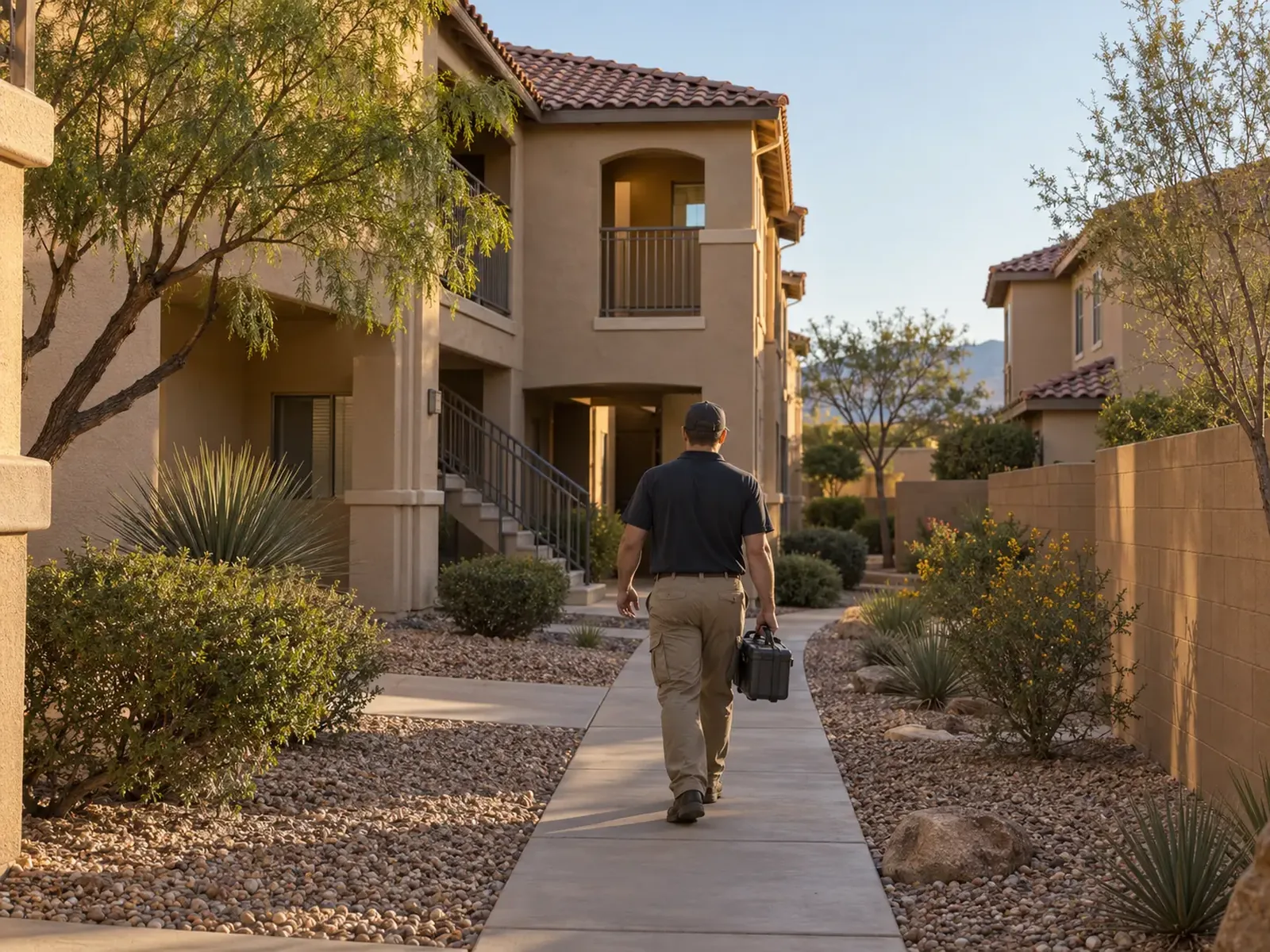
Las Vegas, NV neighborhoods we cover, plus nearby cities.
Off Charleston Boulevard, a downtown call gets the same meter-first visit.
West of Rampart Boulevard, a warm spot in a tiled kitchen starts with hot-side isolation, not a guess about the line route.
Earlier repairs get noted, so a new leak near an old patch is not missed.
Near US-95, newer homes still get the full hot-and-cold test; a recent build can leak at a fitting.
Landmarks and nearby places
Yes. A cold-line leak under the slab often leaves no warm spot and shows up only on the meter or the bill. LVVWD's meter triangle check is the quickest test.
We have not published a price. Cost depends on which side is leaking, how many lines run under the slab, the floor covering and any yard line check.
It depends on your policy. On the Insurance Information Institute's sample HO-3 form, accidental plumbing discharge is covered, including tear-out to repair the system, but not the pipe itself or wear and tear. See our slab leak insurance guide.
No. We locate and mark the leak without cutting anything. Opening the slab belongs to the repair, done by a contractor you choose afterwards.
You choose a spot repair, reroute or repipe by a licensed contractor. LVVWD single-family customers may recover part of a qualifying repair through its Leak Repair Reimbursement.
Yes. The phone is picked up around the clock, nights and weekends included, from anywhere in Las Vegas, NV. The visit is booked on that call and starts at your meter, not with a saw.
Close the house shut-off valve and watch the meter. LVVWD says a triangle that keeps moving means the leak sits between the meter and the valve; if it stops, the leak is on the house side, possibly under the slab.
Our line picks up 24/7: call with a warm floor, a running sound or an LVVWD notice, and we start at the meter.
We locate the leak; any plumber you choose repairs it.