What most guides skip is how each sign gets confirmed, and that nearly every one has a harmless look-alike. Leak Detection Las Vegas confirms slab leaks in Las Vegas, NV homes before any concrete is opened; for slab leak location across the city, see Leak Detection Las Vegas in Las Vegas.
What is a slab leak?
A slab leak is a leak in a water supply line that runs under or through a home's concrete slab foundation. The common signs are a warm spot on the floor, the sound of running water with everything off, a meter that keeps moving, damp flooring and an unexplained jump in the water bill.
The leak can be on a hot line or a cold line. The slab is not the problem; it only hides the pipe. That is why the symptoms are indirect, and why guessing where to break concrete is an expensive way to find out.
- 1Floor covering: tile, wood or carpet.
- 2Concrete slab foundation.
- 3Water supply line running beneath the slab.
- 4The leak, wetting the soil around the line.
- 5Warm spot on the floor when the leaking line carries hot water.
- 6Damp or discoloured flooring, or wet carpet, near the leak.
- 7Sound of running water with every fixture turned off.
Signs of a slab leak
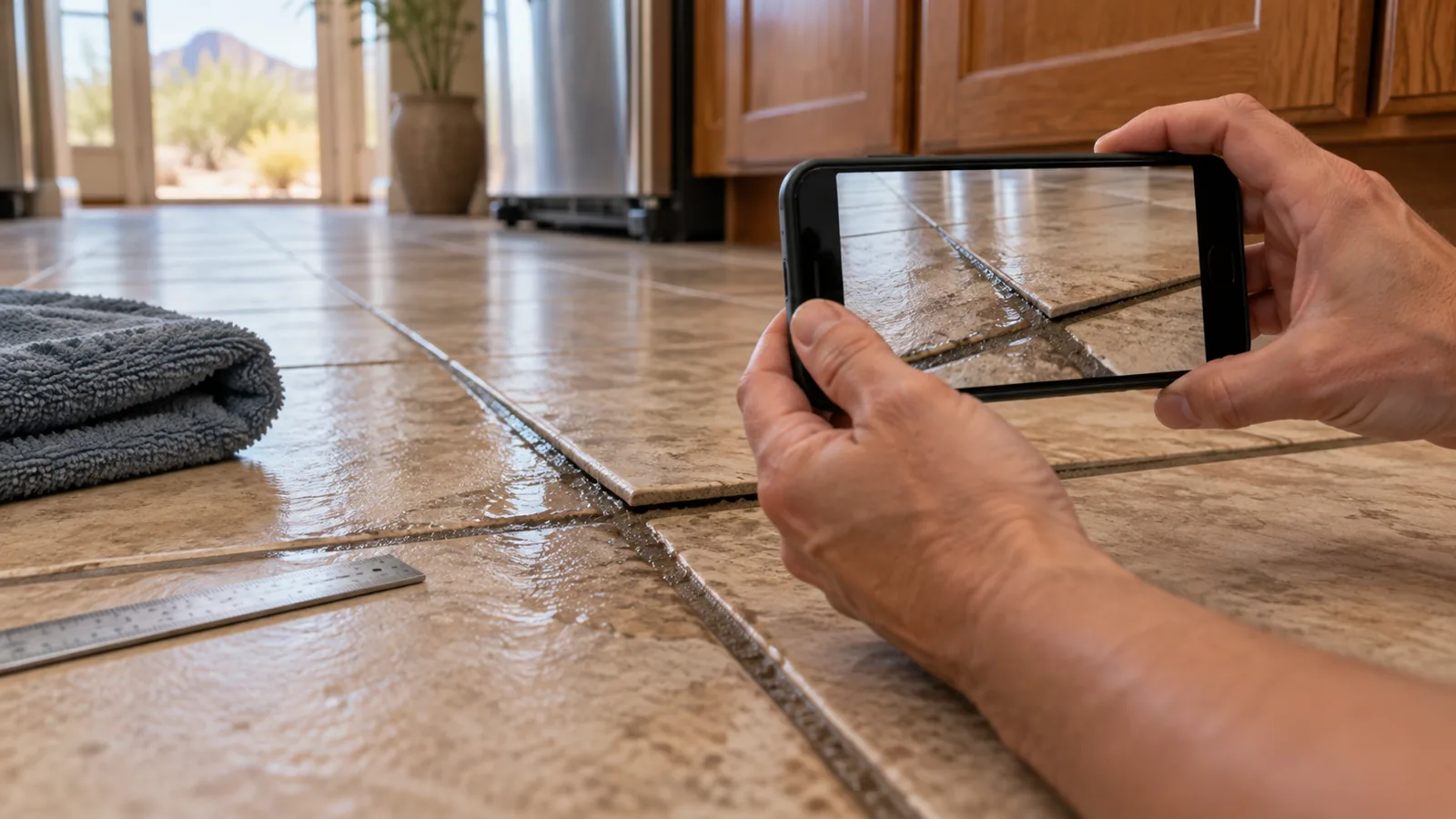
- A warm or hot spot on tile, wood or laminate, often noticed barefoot
- The sound of running water, or a faint hiss, when every fixture is off
- The flow-indicator triangle on the water meter still turning with all water off
- A water heater that runs or fires more often than it used to
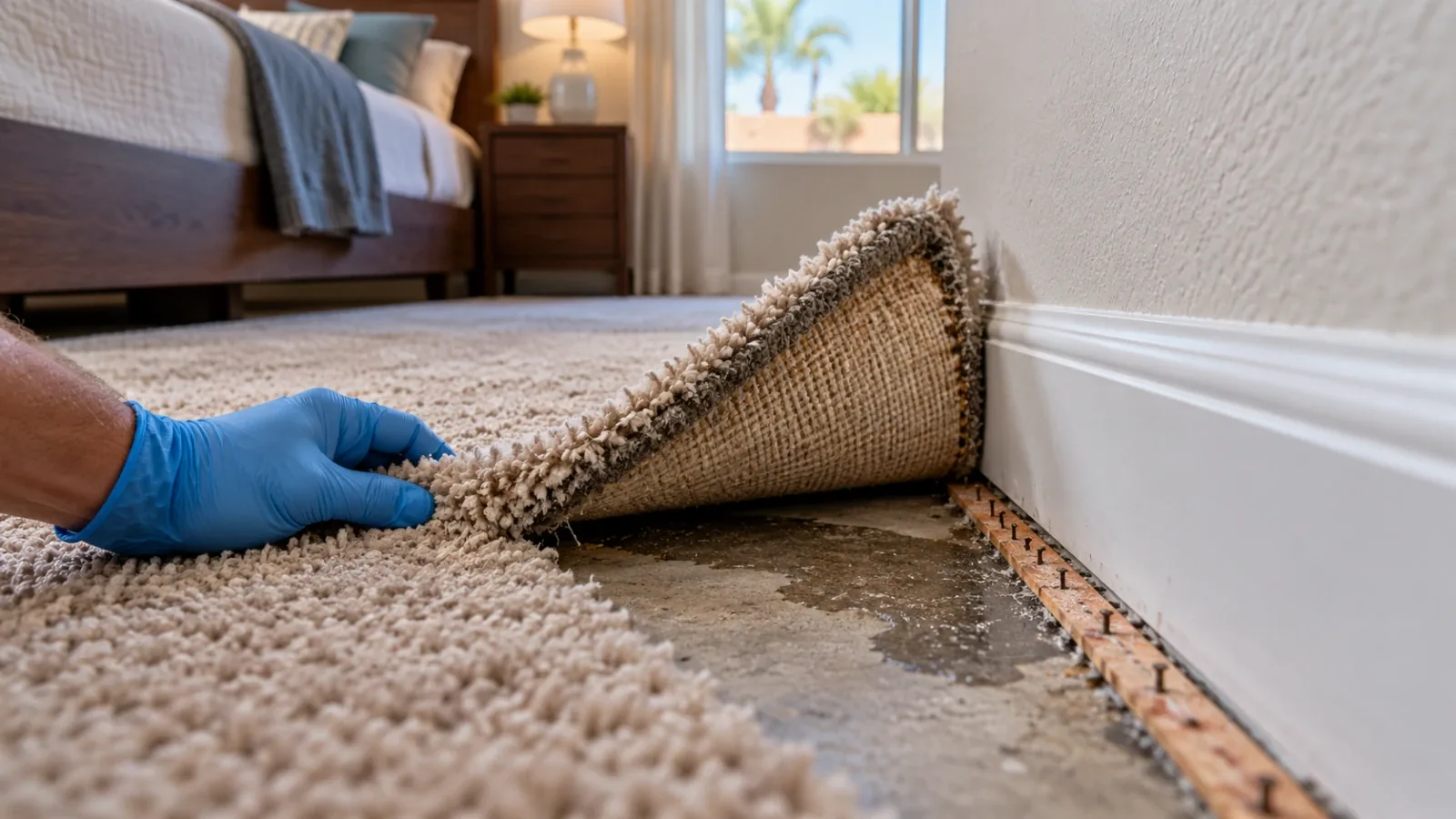
- Damp or cupped flooring, tile that lifts, or carpet that is wet along its edges
- A water bill that jumps without any change in how the household uses water
- New cracks in the slab or flooring, or a musty smell
The last two are weak signs on their own. Concrete cracks for plenty of reasons that have nothing to do with water, and a musty smell can come from a drain trap or a damp wall. Treat them as a reason to run the meter test, not as proof.
How each sign is confirmed
Every sign below has at least one common look-alike, and each has a check that separates the two.
| Sign | Common look-alikes | How it is confirmed |
|---|---|---|
| Warm spot on the floor | Afternoon sun on tile, an appliance or duct beside the spot | Close the water heater's cold supply and watch the meter; thermal imaging traces the heat pattern of a hot-line leak across the floor |
| Running water sound | A toilet slowly refilling, the water heater refilling, an ice maker line | Everything off, then the meter test; acoustic listening along the line's route pins down where the sound is loudest |
| Meter moving with water off | A leaking toilet flapper, an irrigation valve stuck open, a dripping hose bib | LVVWD's meter check, then closing the house shut-off to split the house side from the underground service line |
| Water heater running more | A worn thermostat, sediment in the tank, more hot water use than usual | Close the heater's cold supply; if the meter stops, the leak is on the hot side |
| Damp or lifting flooring | A sink or toilet supply line, a dishwasher or washer hose, an HVAC condensate line, irrigation near the foundation | Moisture readings at the edges, then isolating the nearby line and pressure testing it |
| Bill jump | A seasonal change in irrigation, a running toilet, topping up a pool | Meter test first, then comparing several months of use |
| Cracks or musty smell | Normal concrete shrinkage, settling, a dry drain trap | Weak alone; counted only when another test shows water moving |
Found a sign you can't rule out? Talk to a Leak Detection Specialist.
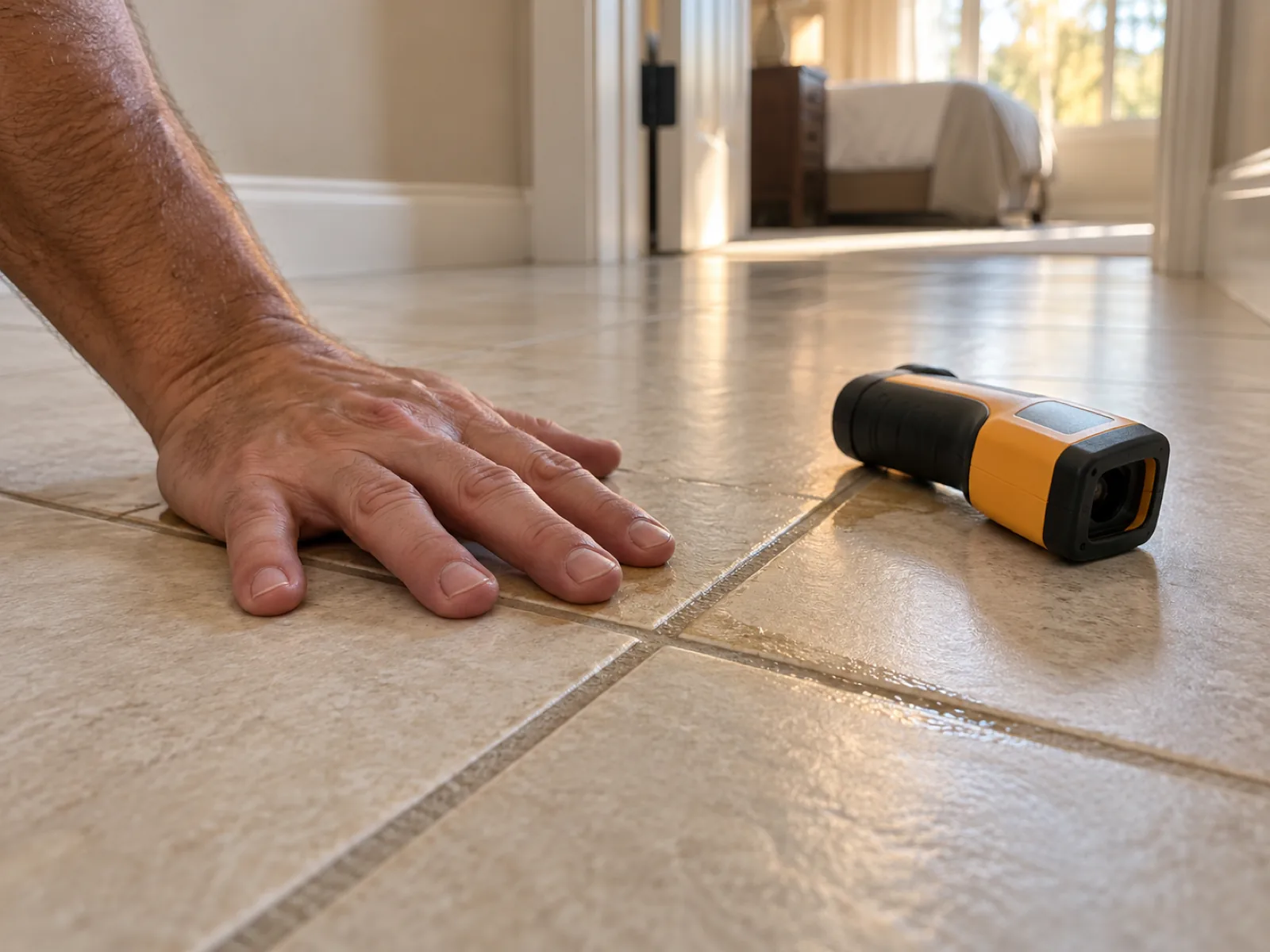
Hot water vs cold water slab leaks
A warm spot is a hot-line sign only. When a hot-water line leaks under the slab, the water heater keeps sending heated water into the concrete, and that heat can reach the floor surface. A cold-water line leaking under the slab gives no warm spot and often nothing visible at all, because the water drains down into the soil.
That difference shapes how each is found. Thermal imaging confirms hot-line leaks well and says little about cold ones. The cold side is confirmed by isolation and pressure testing instead: sections of pipe are closed off and held under pressure, and the section that loses pressure is the one leaking.
The quickest check at home uses the water heater. With every fixture off and the meter triangle moving, close the cold supply valve on top of the heater. If the triangle stops, the leak is on the hot side, since the hot lines are now cut off from the supply. If it keeps turning, look to a cold line or the service line.
Can a slab leak go unnoticed, and for how long?
Yes. A cold-line leak can run into the soil for a long time with nothing showing indoors, and a small hot-line leak may only warm the floor under a rug or a cabinet where nobody walks barefoot. There is no reliable figure for how long one can go unnoticed. It depends on the size of the leak, which line it is on and what sits above it.
For many households the first sign is not on the floor at all. On LVVWD accounts, the water district contacts the account holder once its meter has recorded nonstop flow for three days or more, and that notice is often the moment a hidden slab leak finally gets noticed.
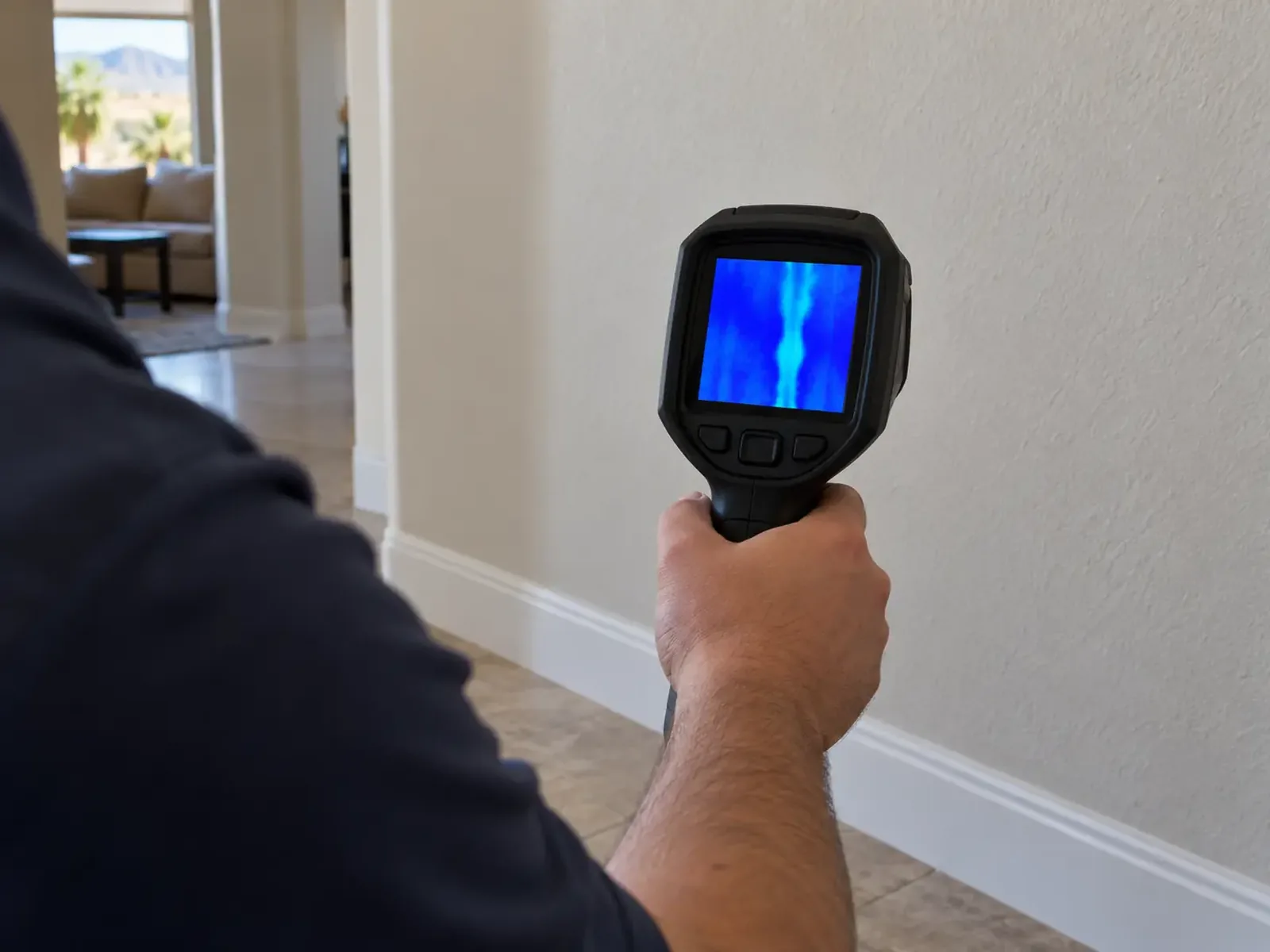
The meter test that rules a slab leak in or out
The Las Vegas Valley Water District's meter check takes a few minutes. Shut off every tap, appliance and irrigation zone, inside and out, then look at the red or white flow-indicator triangle on the meter. Movement means water is going somewhere. Next, close the main valve where the supply enters the home. A triangle that stops puts the leak on the house side of that valve, where slab lines, walls and fixtures are. A triangle that keeps moving with the house valve closed points, by LVVWD's guidance, to the buried line between the shut-off and the meter, outside the slab.
In Henderson, NV the same test works on your meter, but the water utility there is City of Henderson Utility Services, not LVVWD. Our page on slab leak detection henderson covers that side of the valley.
Why Las Vegas, NV homes are checked for slab leaks
Age is one reason. U.S. Census Bureau figures from the 2019-2023 American Community Survey put the median year a home was built at 1994 in the city of Las Vegas, NV, 1987 in Paradise, NV, 1991 in Sunrise Manor, NV, 2000 in Henderson, NV and 2006 in Enterprise, NV. A median means half the homes in each place are older than that year, so a large share of the valley's plumbing has been in service for decades. Those figures say nothing about what any single home's foundation or pipes are made of.
Hard water is the other factor plumbers often point to. LVVWD water measures 278 parts per million of hardness, or 16 grains per gallon, per a KTNV report quoting the district. Some plumbers link mineral-heavy water to pipe wear over time, including pinhole leaks in Las Vegas copper, while others put more weight on desert soils and ground movement around the foundation. Both get cited, and neither is settled.
What happens after a slab leak is confirmed
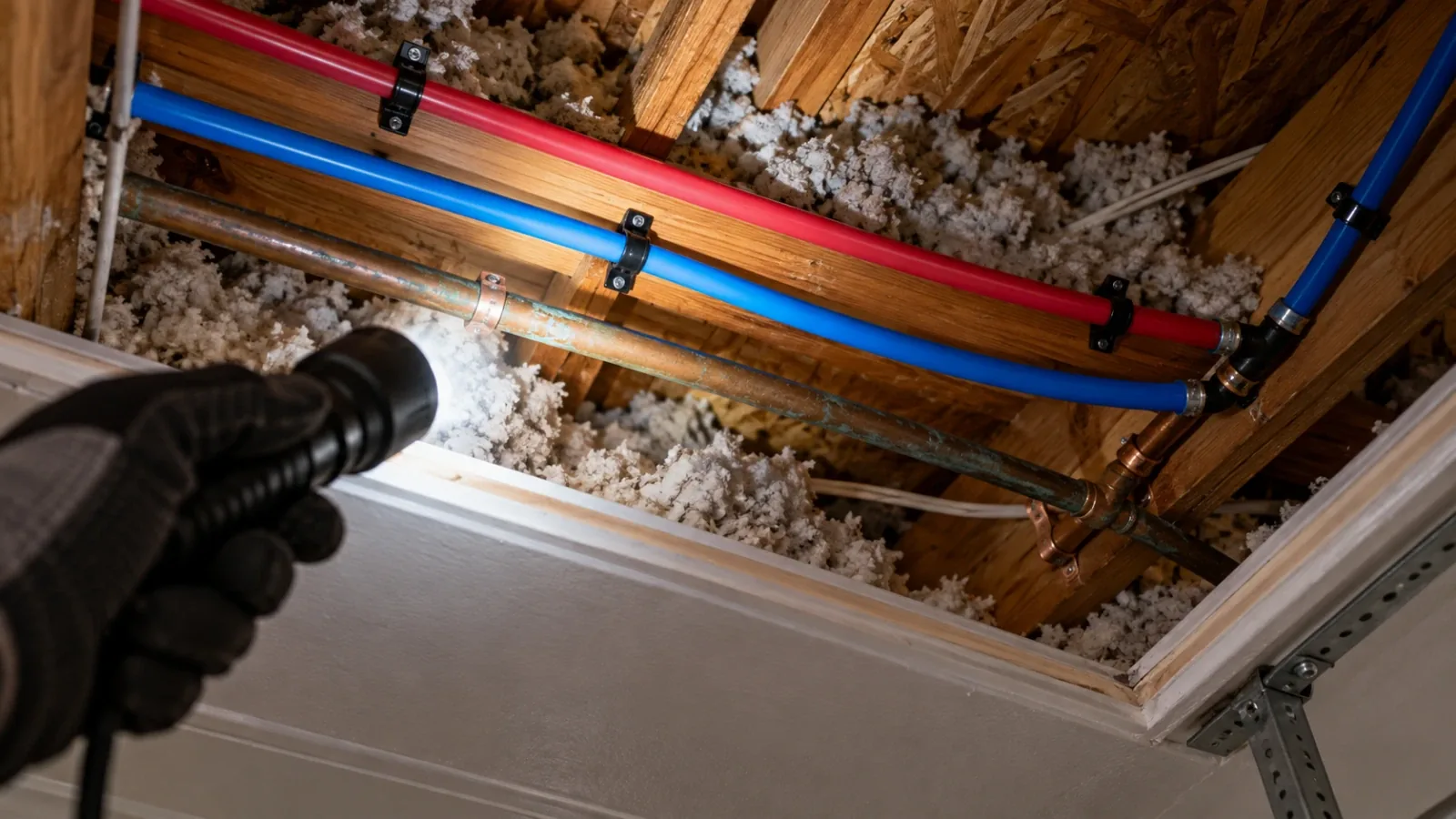
The next step is to pinpoint and mark the spot before anything is cut. Knowing that a line is leaking is not enough. The location has to be precise enough that the plumber opens a small, exact patch of floor rather than a trench across the kitchen.
Once the spot is marked, the repair conversation is between you and your plumber: a spot repair through the slab, a reroute through the walls or attic, or in some cases a repipe. Our guide to slab leak reroute or repipe compares them. Repairs are not on our service list, so we have no stake in which option you choose.