Side pipe dripping to the floor
That pipe is the T&P discharge line, so the relief valve is opening. The relief valve table below sorts out why.
Got a leaking water heater in Las Vegas, NV? Call any hour, 24/7. We find whether the tank, the relief valve, the drain valve or a fitting is the source before any replacement talk.
You speak with Leak Detection Las Vegas about what you are seeing, and we book a visit to locate the leak.
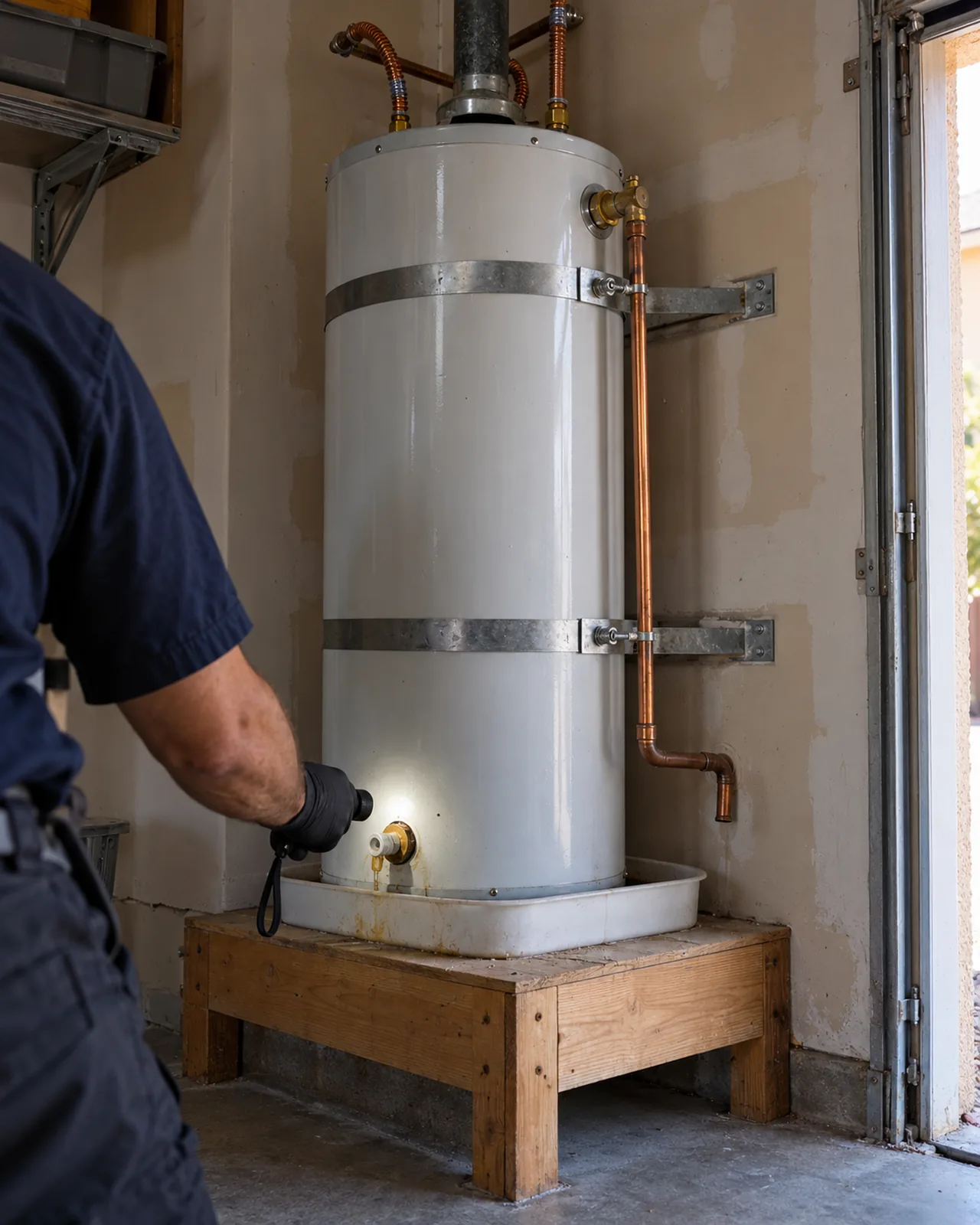
Leak Detection Las Vegas offers emergency and scheduled water heater leak detection in Las Vegas, NV, tracing water around tank and tankless heaters to its real source: the tank, the temperature and pressure relief valve, the drain valve, a supply fitting or a nearby line. You learn which before anyone raises replacement, using the method behind our leak checks.
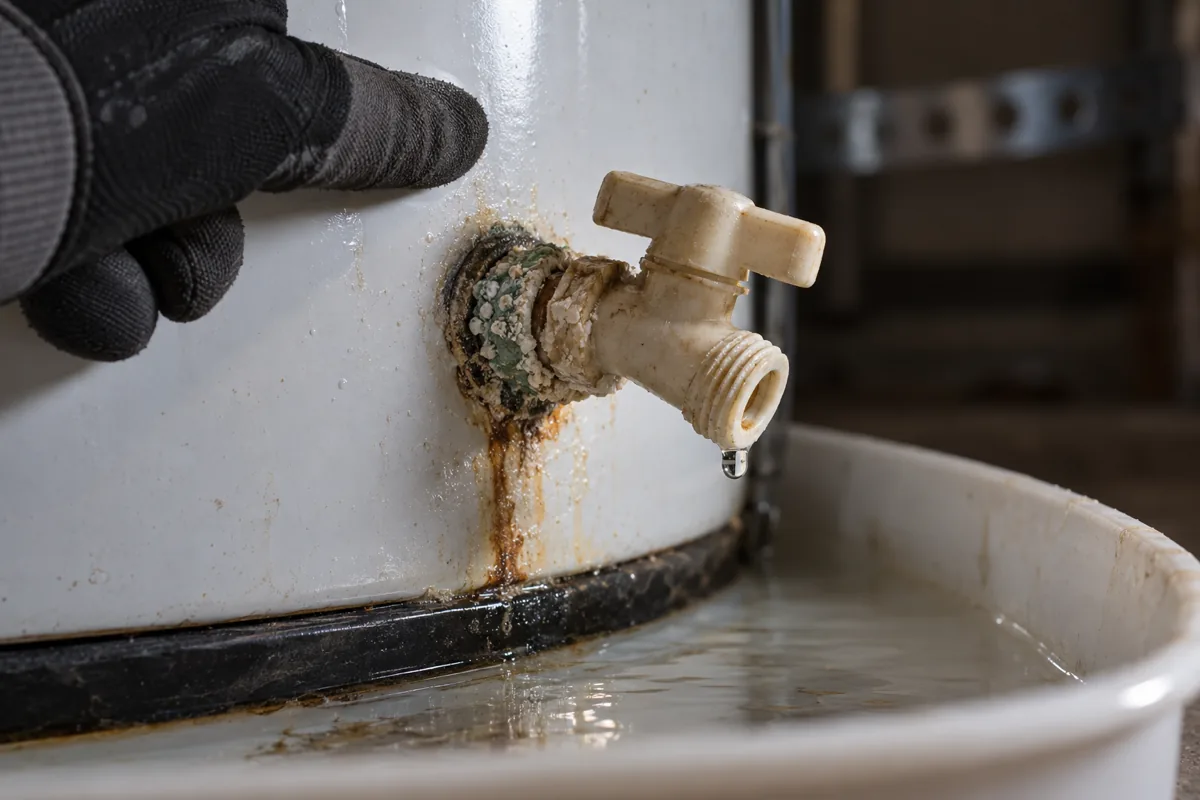
Where water first appears names the likely source; our guide on water heaters leaking from the bottom goes deeper.
That pipe is the T&P discharge line, so the relief valve is opening. The relief valve table below sorts out why.
Usually the cold inlet, hot outlet or anode rod port; water runs down the jacket and pools at the base.
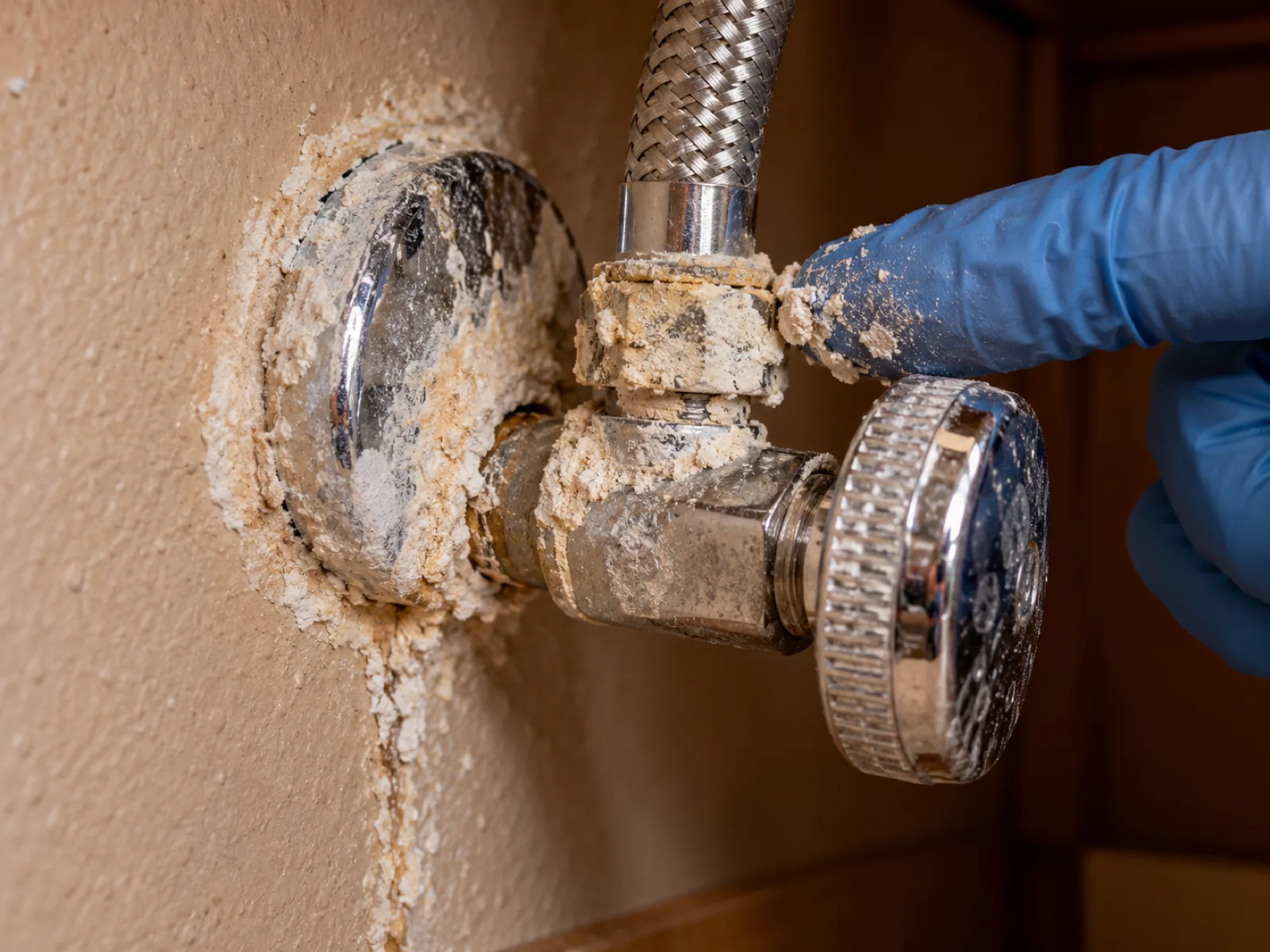
A seep from the faucet-style drain valve near the bottom is often fixable without a new tank. White mineral crust around the outlet is a common clue.
Water and rust coming from beneath the jacket, with dry fittings above, generally points to a tank seam.
In some garages a nearby supply line or softener loop drips into the same corner. If the heater stays dry after a wipe-down, the leak is elsewhere.
A leak on a hot line keeps pulling hot water, so the burner keeps cycling. A meter test and hot-line isolation confirm it.
What a heater visit covers, from the unit outward.
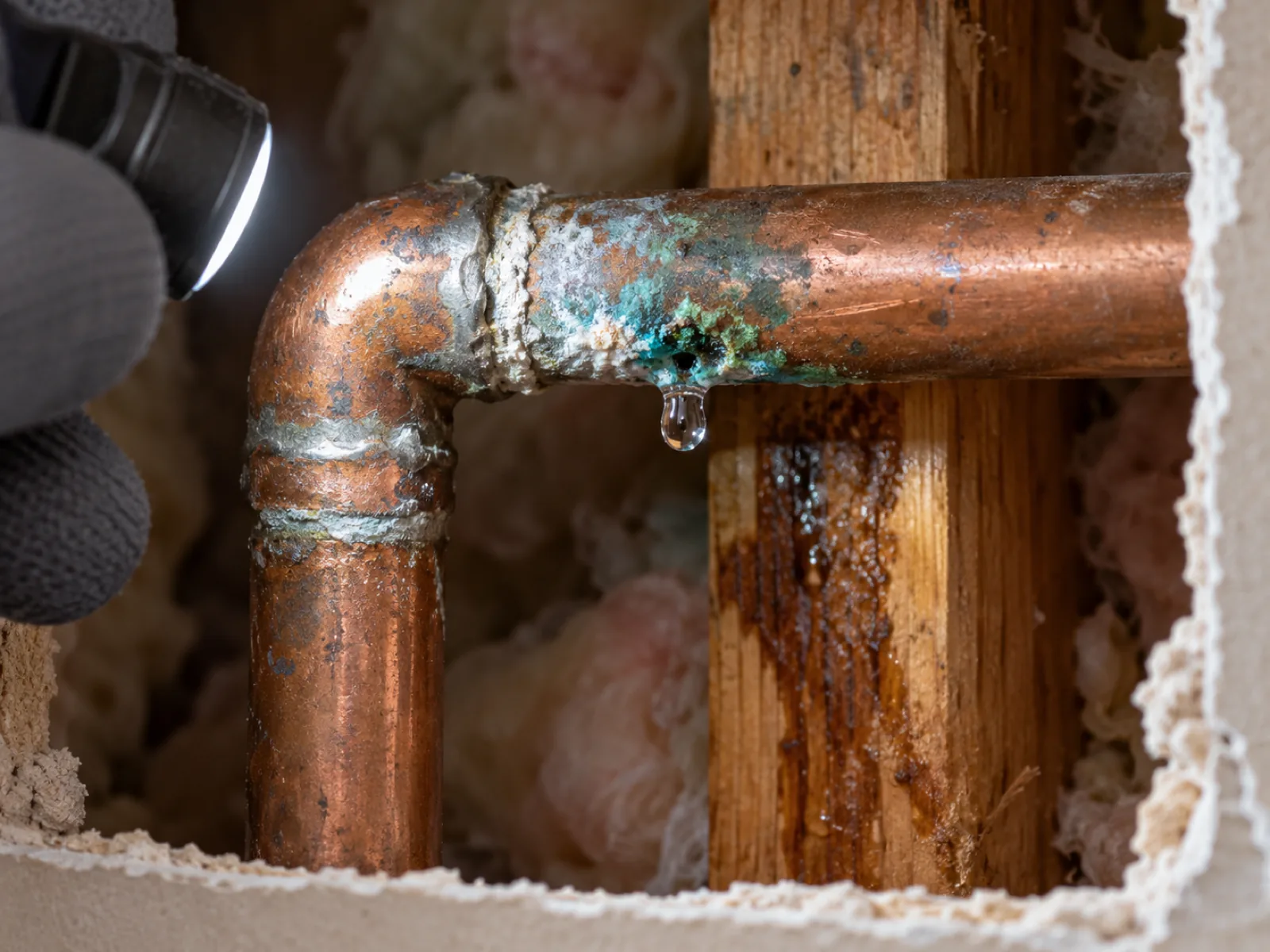
Tank heaters add a drain valve, anode port and seams to inspect; tankless units leak at water connections or their own relief valve.
Temperature, incoming pressure and thermal expansion are each checked, because a new valve on an unsolved cause drips again.
Inlet and outlet connectors, the anode port and the drain valve seat are each checked on their own.
Supply lines, a softener loop and fixtures sharing the wall are cleared before the heater takes the blame.
Every leaking water heater visit runs from the most visible drip point to the least visible one.
We dry the heater and the floor, then see where water reappears first.
We look for discharge and work out whether temperature, pressure or expansion is opening it.
Connections, the anode port and the drain valve seat are each checked separately.
Supply lines, a softener loop and shared-wall fixtures are checked before the heater is blamed.
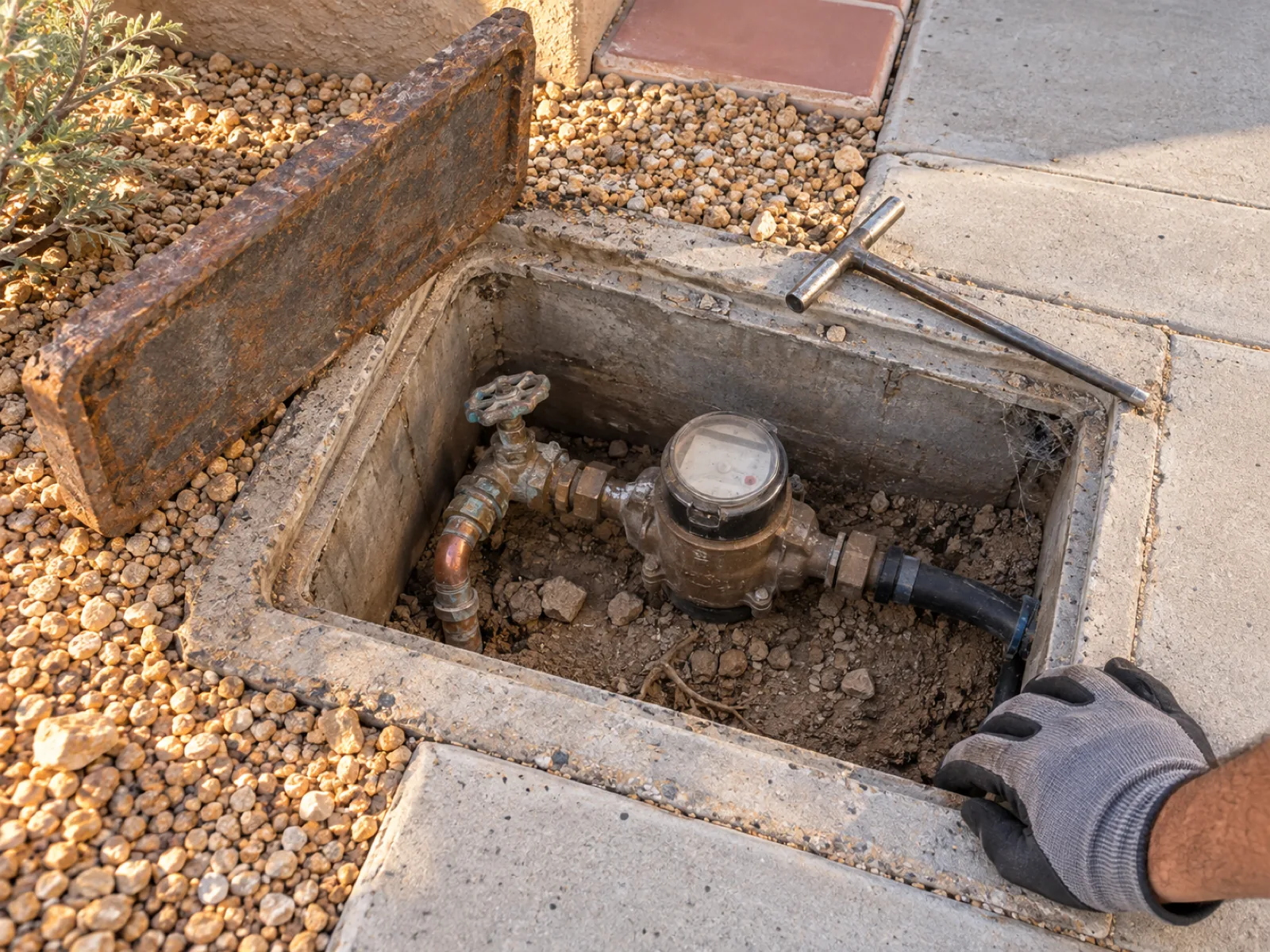
If the heater runs constantly, a meter test and hot-line isolation show whether a leak sits elsewhere.
What our water heater leak detection company gives you, and what it does not.
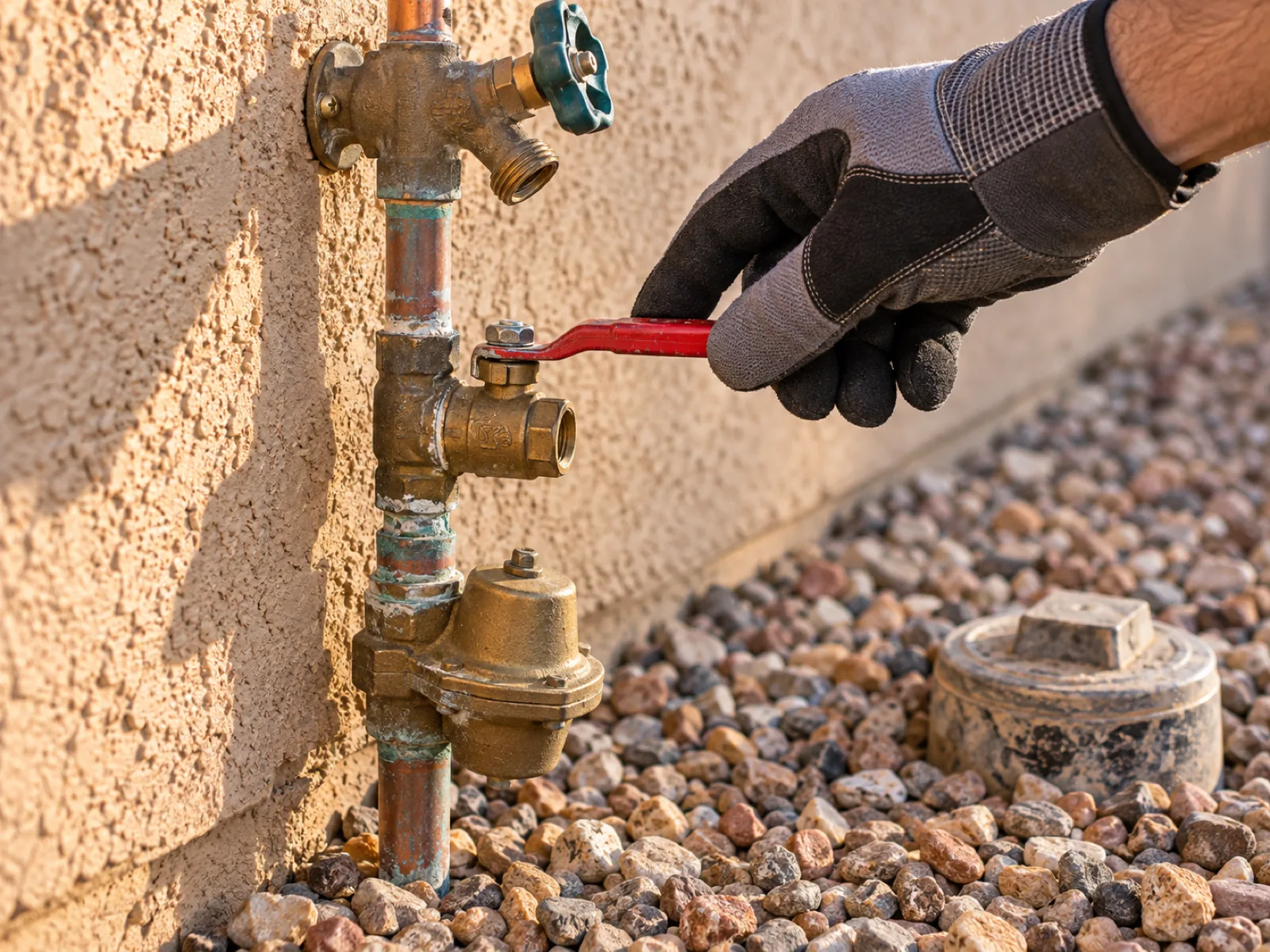
We do not install or replace water heaters, so a valve or connector finding is reported as plainly as a failed tank.
A relief valve that opens is read alongside temperature, pressure and expansion, which is what decides whether a new valve will stay dry.
If the tank is dry but the burner never rests, we keep going along the hot line instead of closing the call.
We do not swap valves, connectors or tanks; a licensed plumber or installer you choose handles that part.
A dripping relief valve is usually a symptom; replacing it without the cause tends to bring the drip back.
| Cause | What you notice | What gets checked |
|---|---|---|
| Temperature set high | Discharge after long heating cycles | The thermostat; A. O. Smith says T&P valves normally carry a 210 F rating |
| High incoming pressure | Drips at random times; fixtures may bang when closed | Static pressure at a hose bib and the pressure regulator |
| Thermal expansion in a closed system | Drips only while the heater runs, often after a regulator or check valve was added | Expansion control, such as an expansion tank; A. O. Smith links slow weeping to this |
| Worn or scaled valve seat | A steady drip whatever the heater is doing | The seat, where hard-water scale can stop it sealing |
| Pressure rating mismatch | Discharge at pressures the tank should handle | Valve rating against tank working pressure, generally 150 psi per A. O. Smith |
We have not published a price; four things shape how much checking a heater visit needs.
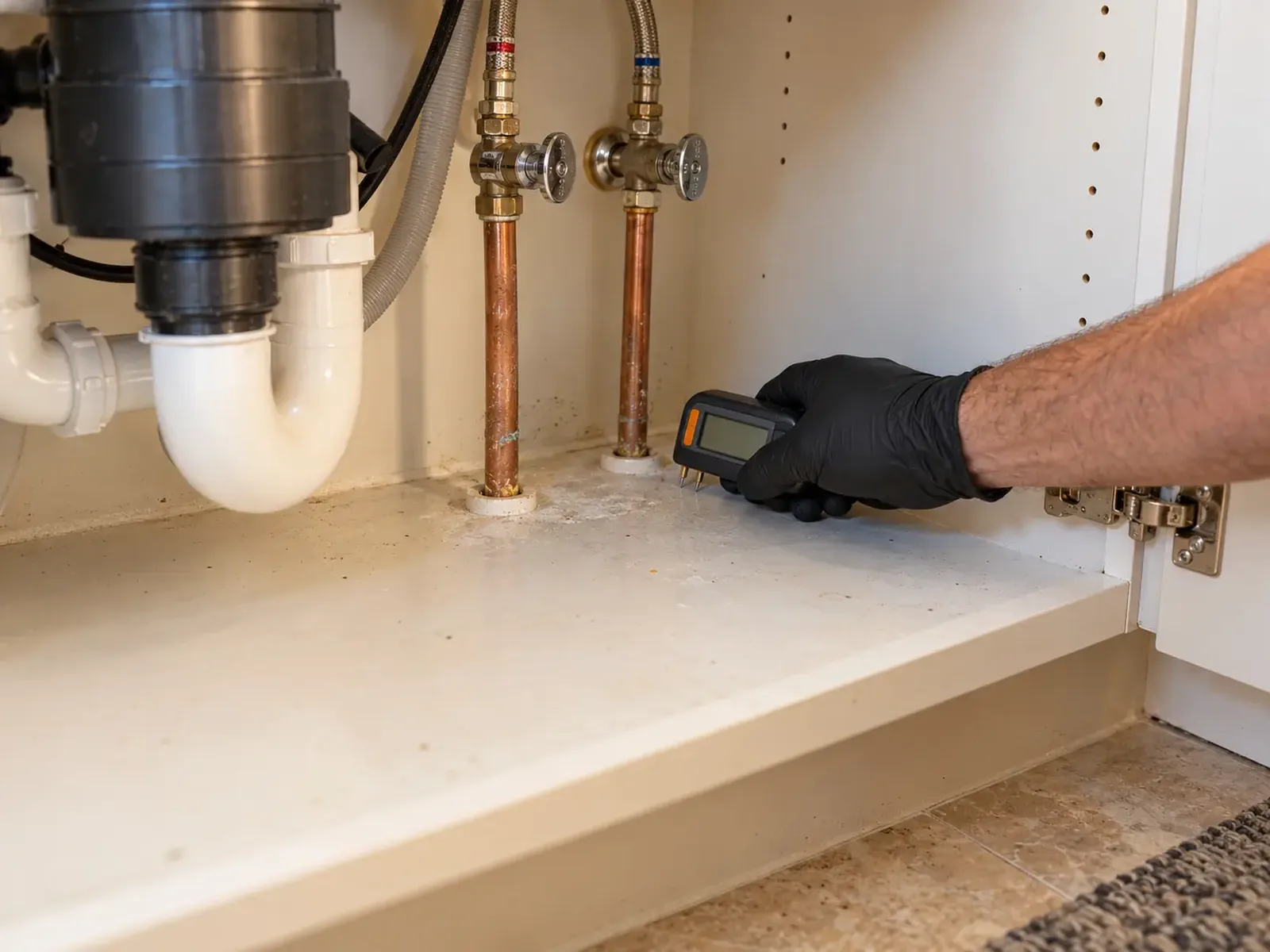
A tank adds a drain valve, anode port and seams. A tankless unit has fewer parts but tighter connections, often behind a cover.
An open garage install is quick to reach. A hall closet or attic platform takes longer to dry, watch and check.
A steady leak shows itself fast. A valve that opens only during heating cycles means waiting for the heater to fire, sometimes more than once.
If the heater never stops and its parts are dry, the visit extends to the hot line, sometimes as slab leak detection.
Three conditions in Las Vegas, NV homes change how a heater leak gets read.
LVVWD water measures 278 ppm, or 16 grains per gallon, as reported by KTNV. Hard water commonly leaves sediment and scale in tanks and at valves, which can make a drain valve seep after flushing.
137,016 of 244,429 occupied Las Vegas, NV homes heat with utility gas, per the Census ACS. That counts home heating, not water heaters, but it is a good reason to confirm gas or electric before shutting down.
Census ACS puts the Las Vegas, NV median year built at 1994. Valves and connectors on older installs can be stiff or corroded, so we test them before relying on them.
Have a photo of where the water appears and know whether the heater is gas or electric when you call.
We locate the leak; any plumber you choose repairs it.
Work through these in order; our guide on how to shut off water helps if the heater valve sticks.
It is usually the valve on the cold pipe running into the top of the tank.
Set a gas control to off, or switch off the breaker that feeds an electric heater.
Move stored boxes away and put towels or a shallow pan under the drip.
Note where water first shows: the base, the top fittings or the side pipe.
Southwest Gas advises getting out first, then calling 911 and the utility from a safe place.
We locate leaks; this is who usually takes the next step.
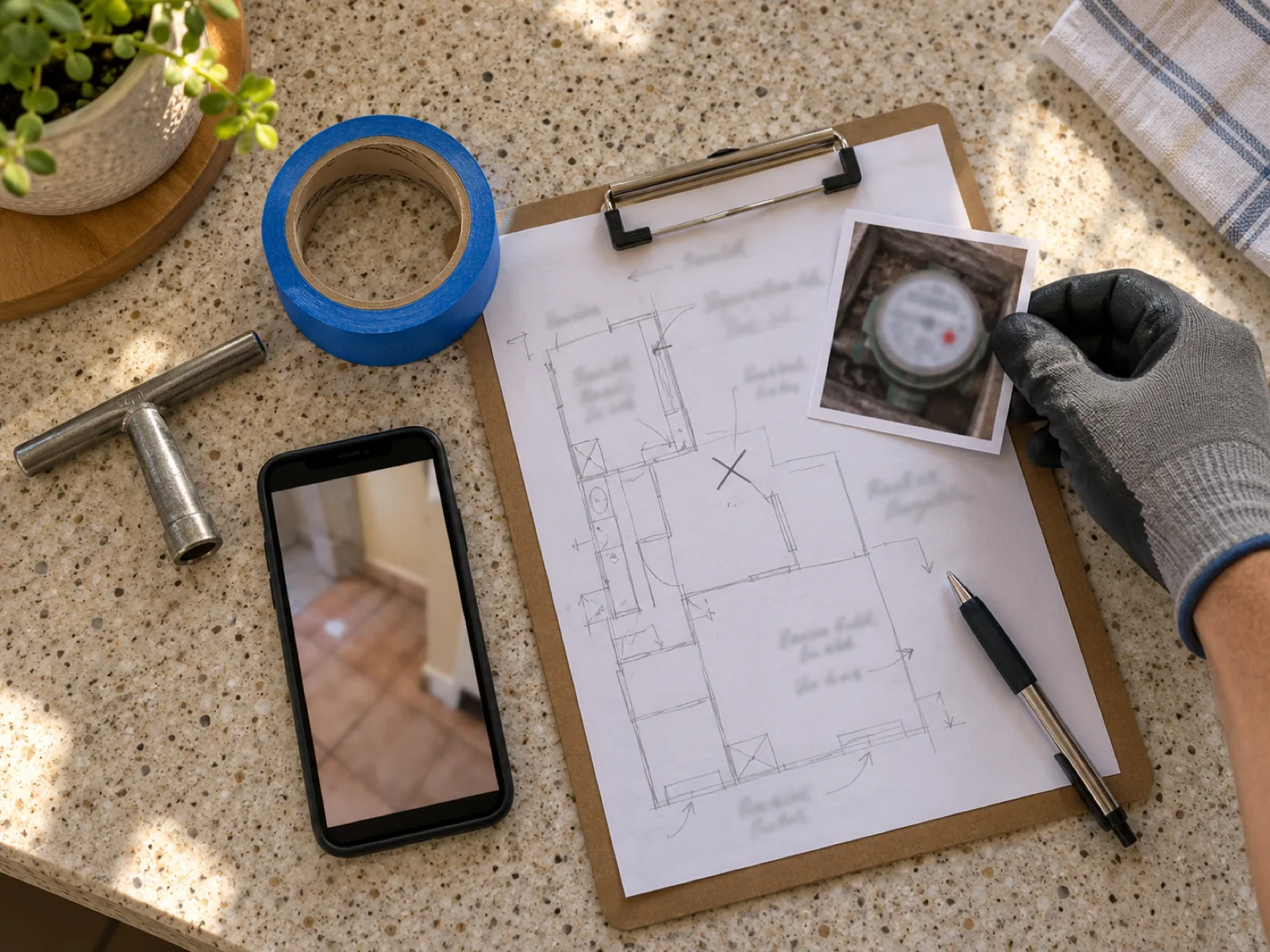
| Finding | Typical conversation | Who handles it |
|---|---|---|
| Relief valve opening from thermal expansion | Expansion control first, then possibly a new valve | A licensed plumber |
| Drain valve seep or loose connector | Replacing the valve or connector | A licensed plumber |
| Tank seam failure | Replacing the water heater | A licensed plumber or installer |
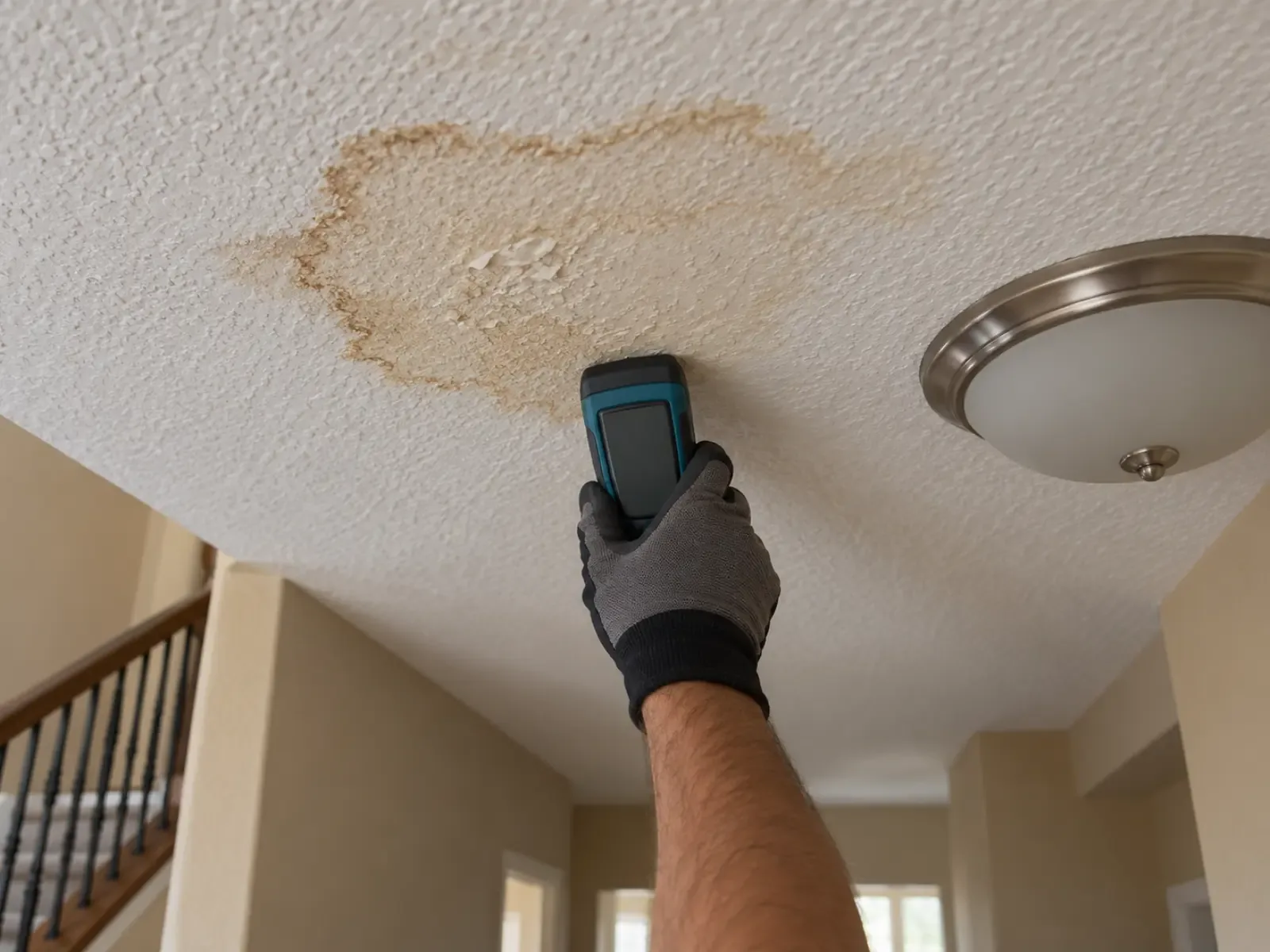
| Wet drywall, cabinets or flooring | Drying and water damage repair | A restoration company (we do not offer drying) |
Whoever repairs or replaces the heater should hold an active Nevada contractor's license.
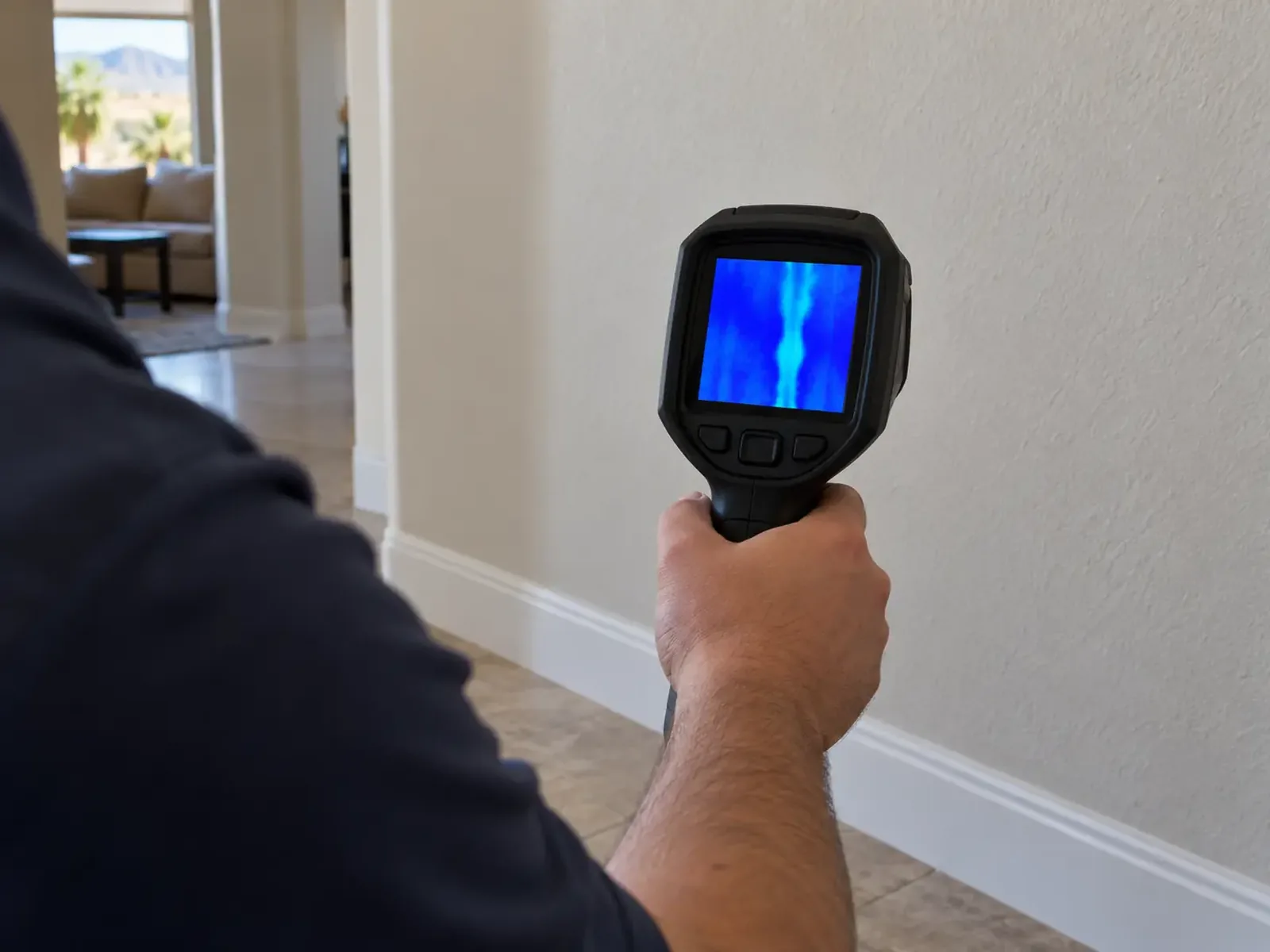
Heater leaks across Las Vegas, NV homes; rentals and HOA buildings go through commercial leak detection.
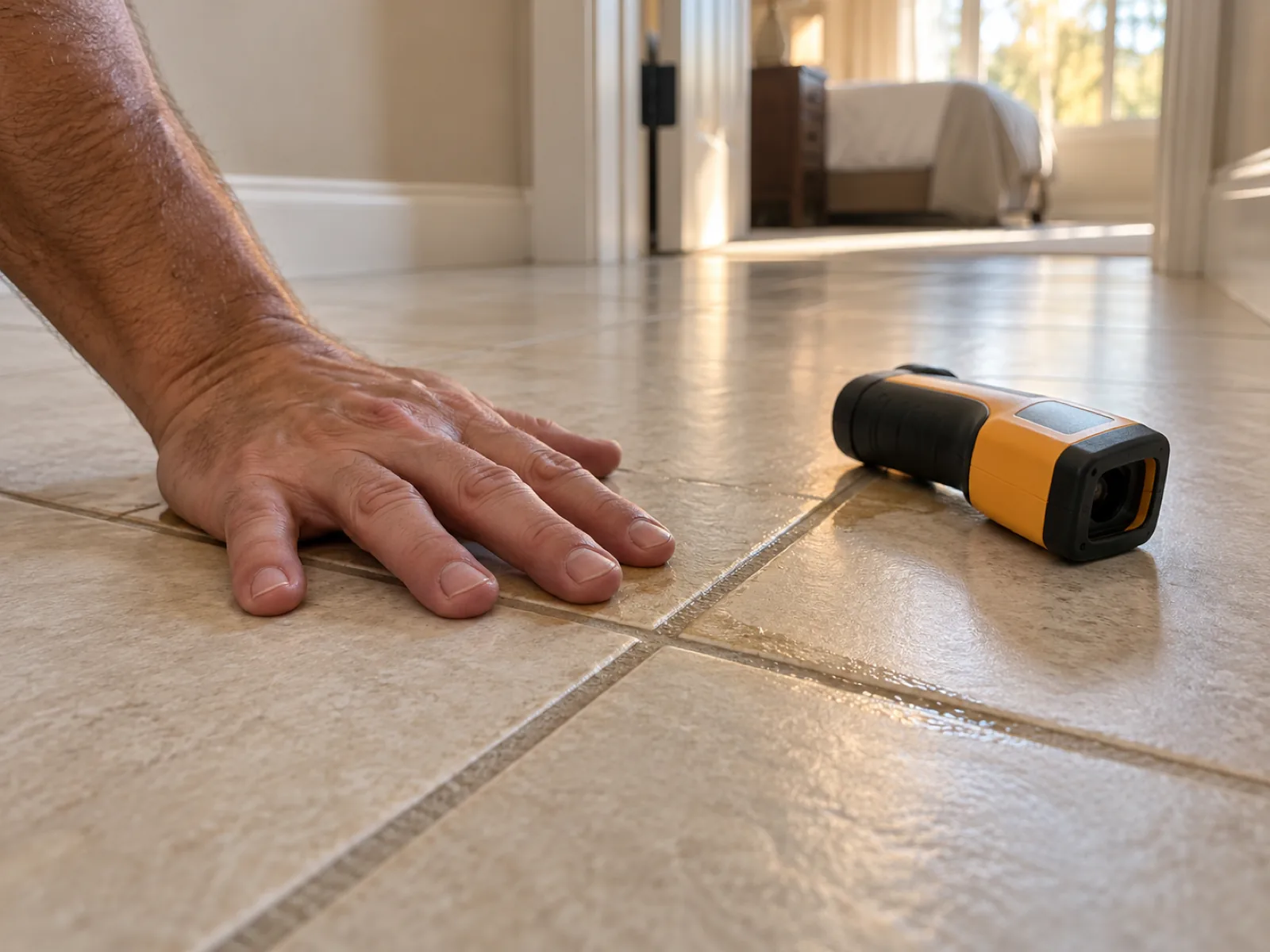
Visits start where the water first appears; spreading water goes to emergency leak detection.
A Centennial Hills heater that fires all day with dry fittings sends us to the hot line.
The relief valve table gets run first, before anyone opens a wall or prices a tank.
Landmarks and nearby places
Start with whoever can tell you where the water comes from. Our line takes calls at any hour, and we locate the source; a licensed plumber or installer you choose handles the repair.
An active leak is urgent: close the cold supply, turn the gas or power off, then call, day or night. A slow relief-valve drip is less pressing but still needs its cause found.
That pipe is the T&P discharge line, so the relief valve is opening. It often opens because of high temperature, high incoming pressure or thermal expansion. Find out which before paying for a new valve.
Often, yes, when the leak is a valve, a fitting or a connector. Water coming from the tank body itself generally means replacement. The visit tells you which of the two you are dealing with.
LVVWD water measures 278 ppm, or 16 grains per gallon, as reported by KTNV. Hard water commonly leaves sediment and scale in tanks and on valve seats, one reason drain valves and relief valves can seep.
Yes. A leak on a hot line keeps drawing hot water, so the heater keeps firing to replace it. A meter test with all taps shut, then isolating the hot line, narrows down where the leak sits.
The line is staffed 24/7: say where the water shows and whether the heater is gas or electric, and we find the leaking part.
We locate the leak; any plumber you choose repairs it.