A puddle under a water heater leaking from the bottom looks like the end of the tank, and often it is not. A valve or a fitting is a parts repair, not a new heater. Leak Detection Las Vegas finds the source of leaks in Las Vegas, NV homes before anything is replaced or opened, and we do not sell or install water heaters. The order below is the one that matters tonight: make it safe, find the source, then decide. To have the source confirmed on site, see our page on leaking water heater las vegas.
Why is my water heater leaking from the bottom?
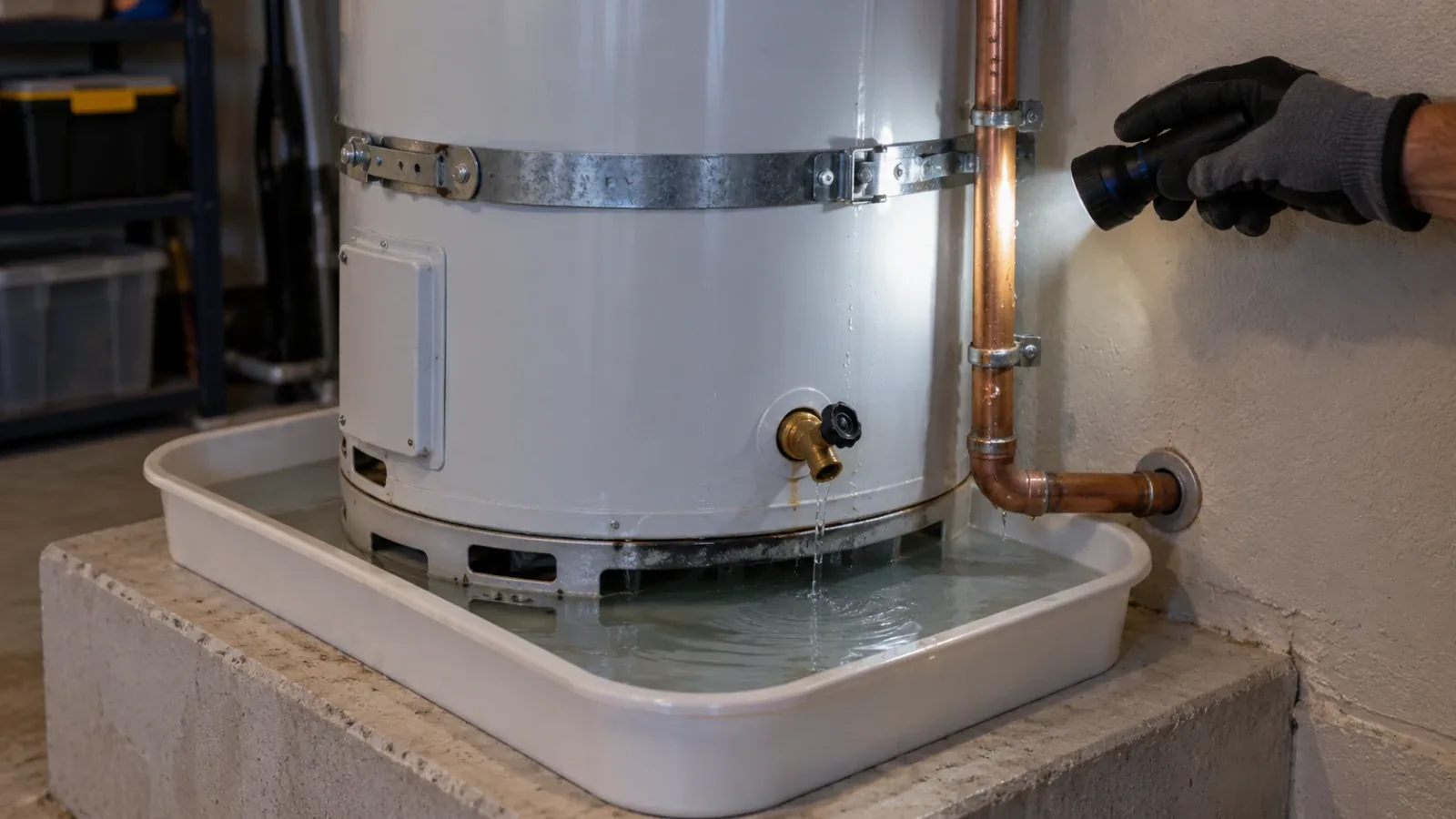
Most water at the bottom of a storage water heater comes from one of five places: the tank body, the T&P relief valve through its discharge pipe, the drain valve near the base, the fittings on top, or condensation on a gas unit. Only the first one means the tank itself has failed.
- The tank body or a seam: water seeps from under the jacket, sometimes with rust streaks.
- The T&P relief valve: water runs out of the discharge pipe beside the tank.
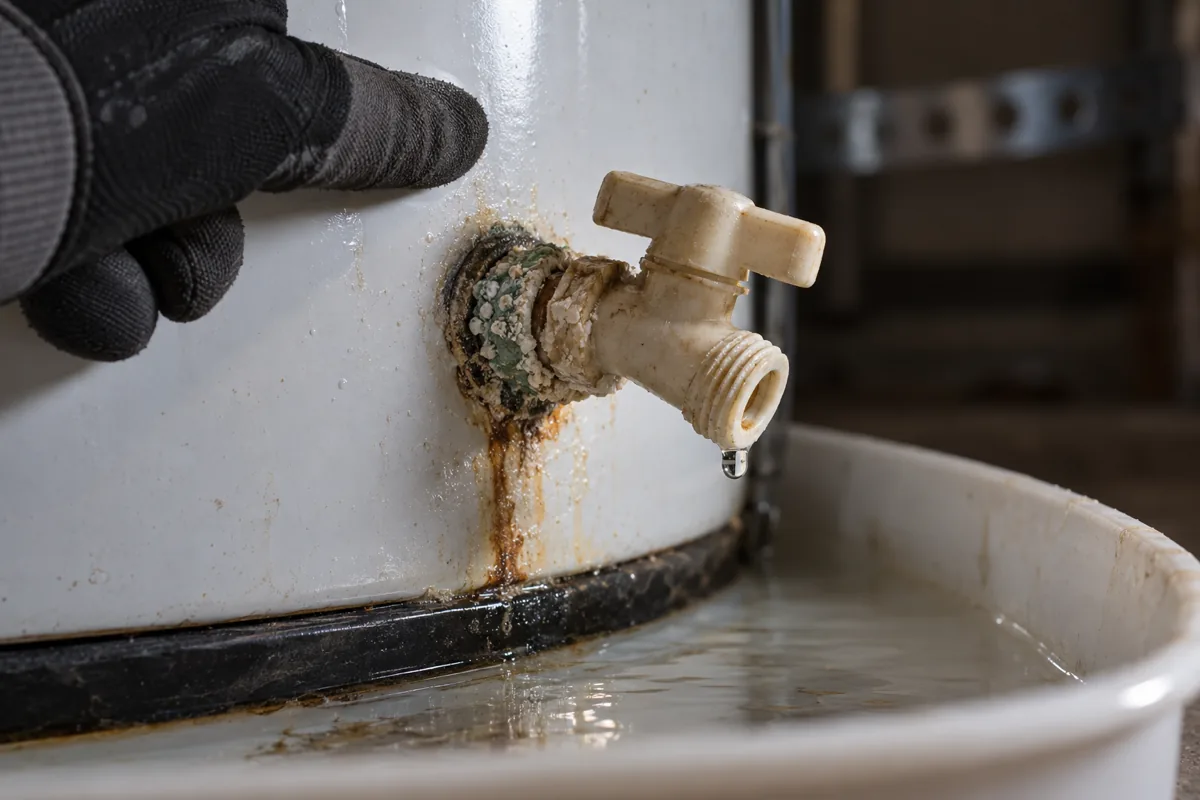
- The drain valve, a small spigot near the base, drips from its outlet or around its threads.
- Fittings or supply connectors on top leak, and the water tracks down the jacket.
- Condensation on a gas heater can drip and sizzle on a cold start, then stops.
- 1Cold-water inlet feeding the tank.
- 2Hot-water outlet to the house.
- 3Temperature and pressure (T&P) relief valve: a safety device that opens to release water when the tank goes past its temperature or pressure rating. Slow weeping or dribbling points to pressure relief, for example from thermal expansion in a closed system.
- 4Discharge pipe from the T&P valve, where released water comes out.
- 5Drain valve near the base, used to flush or empty the tank.
- 6Drain pan under the tank, which catches drips and small leaks.
What to do in the first 10 minutes
Stop the tank from refilling, cut the heat, then protect the floor. The source can wait ten minutes.
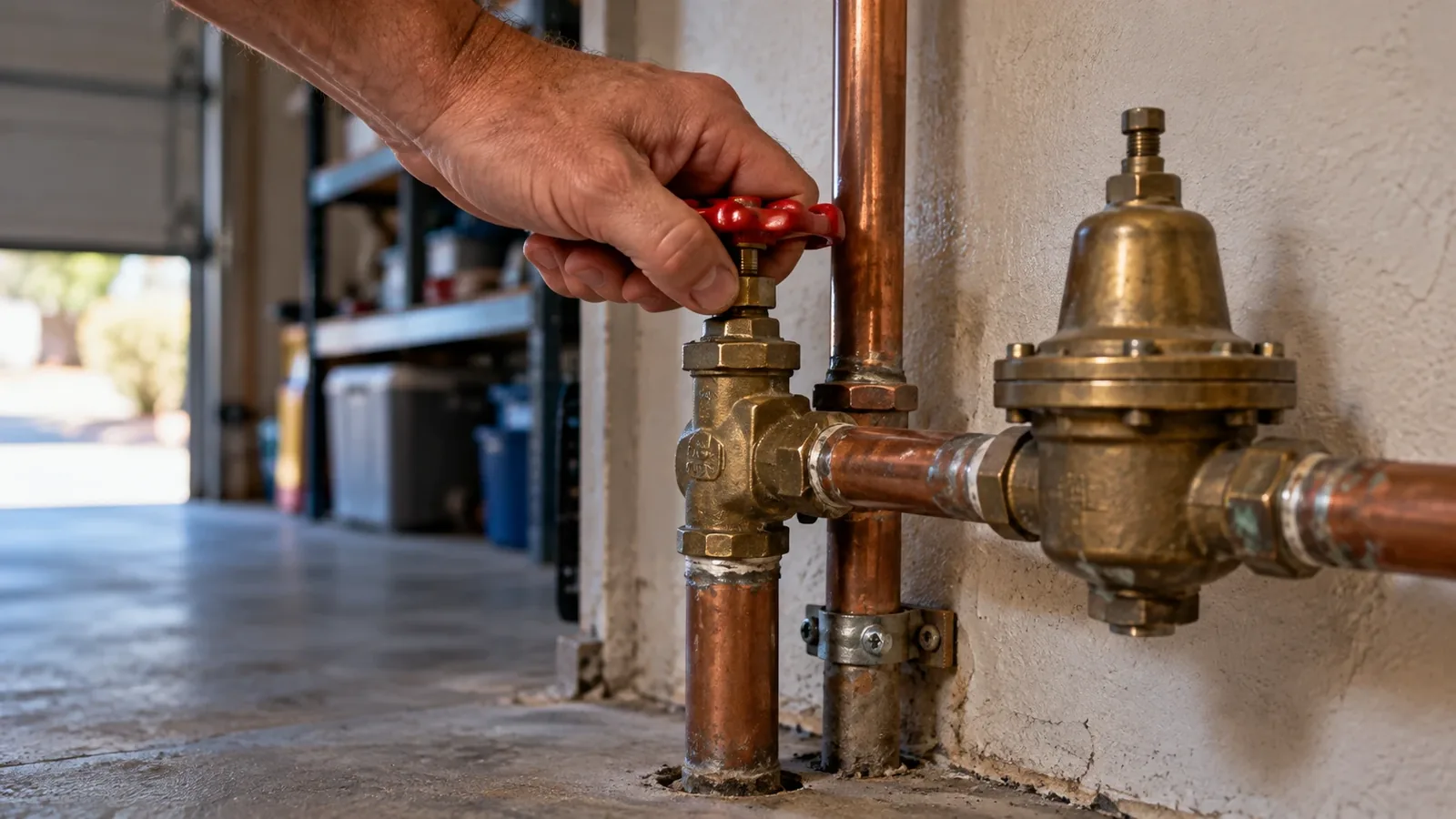
- Close the cold-water supply valve on the inlet pipe at the top of the tank. A tank that cannot refill can only lose what is already inside.
- Cut the heat. On an electric heater, switch off its breaker. On a gas heater, set the gas control to "pilot" or "off" following the label on the unit, since designs differ by manufacturer.
- Move stored items, then lay towels or a pan under the drip.
- Leave the tank full and let it cool. Draining a hot tank means scalding water, and the drain valve may be the part that is leaking.
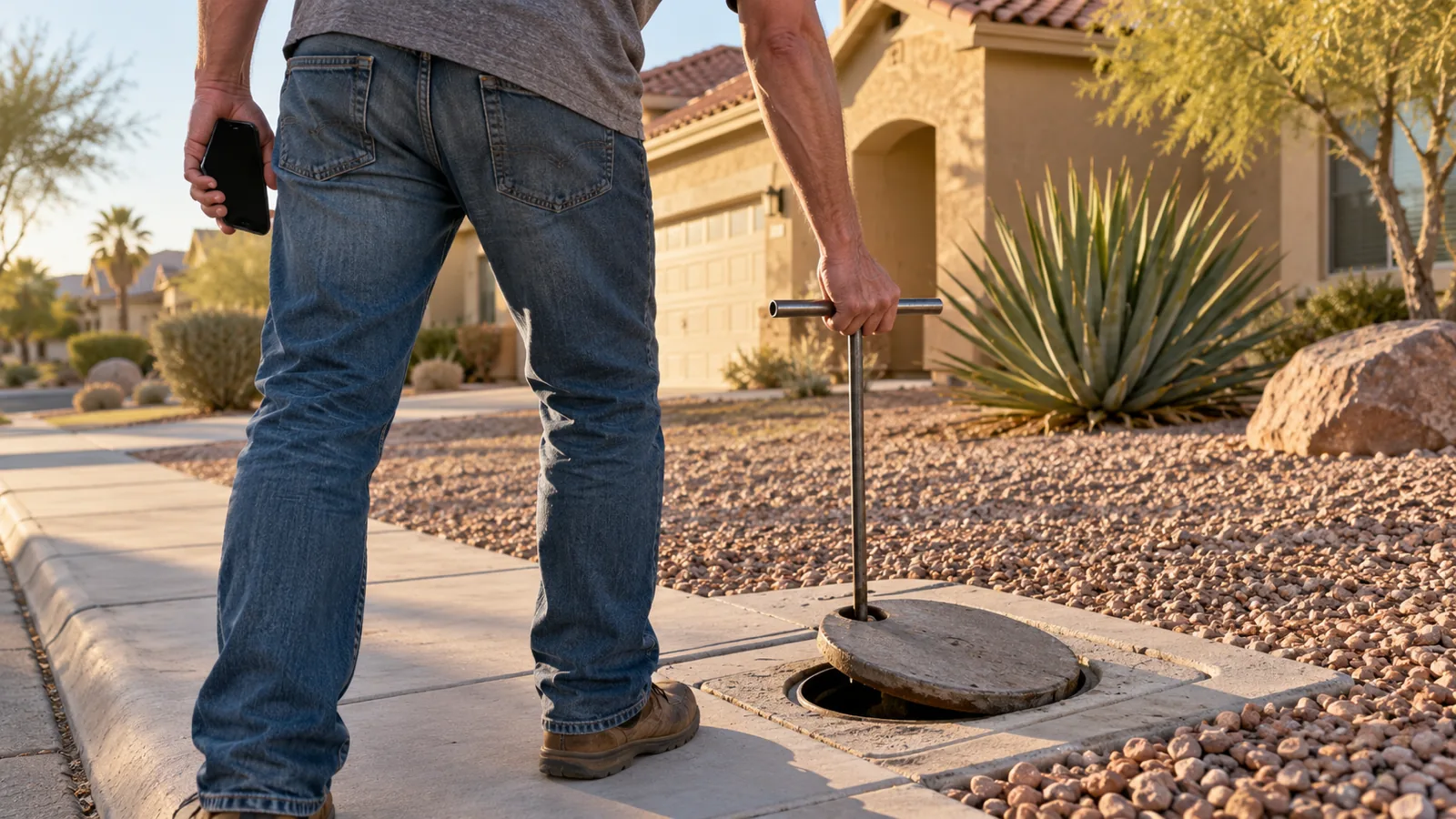
- If water keeps spreading from somewhere you cannot see, close the main shut-off for the house. For homes in Las Vegas, NV, the Leak Detection Las Vegas guide to how to shut off water in las vegas walks through finding the main valve.
Finding the source: tank, relief valve, drain valve or fitting
Each source leaves a different trail, and you can read most of them with dry paper towels and the back of your hand.
| Source | Where the water appears | What it looks like | What it usually means | Next step |
|---|---|---|---|---|
| Tank body or seam | Under the jacket at the base | Steady seep, rust streaks, wet while valves stay dry | The tank has failed | Keep the supply closed; plan replacement with a plumber |
| T&P relief valve | End of the discharge pipe | Pipe end wet or warm | Valve opened for heat or pressure, or is worn | Have pressure and valve checked |
| Drain valve | Spigot near the base | Drip from the outlet or threads | Worn seal or sediment holding it open | Usually a valve or cap fix |
| Fittings and supply lines | Top of the tank | Wet track down the jacket | Loose or corroded connector | Tighten or replace it |
| Condensation (gas units) | Burner opening | Drips or sizzles on a cold start | Normal; stops once hot | Recheck once the tank is hot |
The relief valve row catches more owners out than any other. On most tank installs the discharge pipe runs down the side of the heater and ends a few inches above the floor or pan, so its water lands exactly where a tank leak would. Touch the end of that pipe. Wet or warm means the valve opened, which points at temperature or pressure, not a rusted-out tank. A. O. Smith's technical guidance describes slow weeping from this valve as pressure relief, for example from thermal expansion in a closed system.
When the trail is not obvious, run the dry-and-watch sequence a detection specialist uses at the tank:
- Dry the tank, valves, top fittings and floor completely.
- Lay paper towels at the base, under the drain valve and under the discharge pipe, and wrap one around each top fitting.
- Check back after about 15 to 30 minutes. The towel that wets first is usually closest to the source.
Not sure which part is wet? Talk to a Leak Detection Specialist.
Is a water heater leaking from the bottom an emergency?
It depends on the source. An active leak from the tank body, or a relief valve that will not stop discharging, is urgent, because the cold supply keeps refilling the tank for as long as it is open. A slow drip at the drain valve is not an emergency. It still should not sit for weeks, since a small drip can soak drywall and whatever is stored beside the heater.
There is a meter side too. A heater that keeps refilling pushes water through your meter around the clock, the pattern the Las Vegas Valley Water District watches for: LVVWD contacts account holders when the meter shows nonstop flow for three days or longer. If the water is spreading and you cannot stop it at the tank, emergency leak detection for Las Vegas homes is the next call.
Can you still shower, run water or do laundry with a leaking water heater?
You can use cold water, but there is no hot water while the heater's supply valve is closed. With that valve shut the tank cannot refill, so a hot shower or warm wash only drains it further. Cold water elsewhere in the house keeps working, because only the heater has been cut off: toilets, cold taps and a cold laundry cycle are fine. If you closed the main shut-off instead, nothing runs until it is reopened. For a slow drain-valve drip, reopen the main, keep the heater's own supply closed, and live on cold water until the part is replaced. Leave the heat off the whole time.
Why hard water matters at the bottom of the tank in Las Vegas, NV
Water from the Las Vegas Valley Water District measures 278 parts per million of hardness, or 16 grains per gallon, according to a KTNV report quoting LVVWD (opens in a new tab). Heating water like that drives some of the dissolved calcium carbonate out of solution, and it settles on the bottom of the tank as sediment and limescale.
Over time that layer can cause trouble right where people find the puddle. Grit can lodge in the drain valve so it no longer seats and starts to seep. Water trapped under sediment can boil in small pockets, the rumbling some heaters make. The anode rod, a sacrificial metal rod that corrodes so the tank does not, can be used up sooner in mineral-heavy water. That is part of why the bottom of a tank is often where failures show first.
The 278 ppm figure describes LVVWD water only. Henderson, NV and North Las Vegas, NV have their own city utilities, and no figure is quoted for them here.
When the puddle is not coming from the water heater
Sometimes the heater is dry and the floor is not. Water near a heater can come from a hot-water line under the slab or inside a wall, a supply line to a nearby sink or washer, or an appliance drain line. Dry the heater completely, leave towels on every part of it, and watch the floor. If water returns while every towel on the heater stays dry, the source is elsewhere. A warm patch on the floor nearby points toward a hot line under the concrete rather than the tank.
This is where locating first pays off. Nothing should be cut or replaced until the leaking line is found, and that is the only work Leak Detection Las Vegas does. The approach is the same in Henderson, NV, where we handle leaking water heaters in Henderson, and in North Las Vegas, NV, where tracing a leaking water heater around North Las Vegas follows the same steps.
Repair or replace: what your plumber will discuss
Leaks from a valve or a fitting are usually parts repairs. A dripping drain valve can be replaced or capped, a loose connector on top can be tightened or swapped, and a weeping relief valve gets replaced after the cause is checked. Water coming from the tank body is a different conversation. A storage tank's steel shell generally cannot be patched once it leaks, so the discussion turns to replacement.
If the relief valve was the source, ask the plumber why it opened before anything is replaced. High house pressure from a failing pressure regulator, or thermal expansion with nowhere to go, can push a brand-new valve open just like the old one. Tankless (instantaneous) heaters have no storage tank to rupture, so their leaks tend to come from connections or internal parts.
Leak Detection Las Vegas finds and confirms the source. Repair and replacement are work for a licensed plumber, so what to fix or buy stays between you and them.