Ask about hard water pinhole leaks in Las Vegas, NV and you will hear one line more than any other: the water eats the pipes. Some of that is measured and some is guesswork. Here is the number, the debate, Census data on where housing is oldest, and how a pinhole is found before anyone mentions a repipe.
How Hard Is Las Vegas, NV Water?
Las Vegas Valley Water District water measures 278 ppm (16 grains per gallon) hardness. Plumbers commonly report it is hard on fittings, valves and water heaters, but whether hardness itself causes pinhole leaks in copper is debated, and pinholes are found the same way as any hidden leak.
The figure is LVVWD's, as reported by KTNV. Parts per million (ppm) counts dissolved hardness minerals, mostly calcium and magnesium; grains per gallon (gpg) is the unit softener makers use, and one grain per gallon is roughly 17 ppm. KTNV's headline called it the second-hardest water in the nation; that ranking is KTNV's, and the measured number is what matters.
Scope matters. The 278 ppm figure is LVVWD's, so it describes homes on LVVWD water in Las Vegas, NV and portions of unincorporated Clark County. It does not describe Henderson, NV or North Las Vegas, NV water; check your own utility's water quality report for its figure.
How Does Las Vegas, NV Hard Water Affect Pipes and Fixtures?
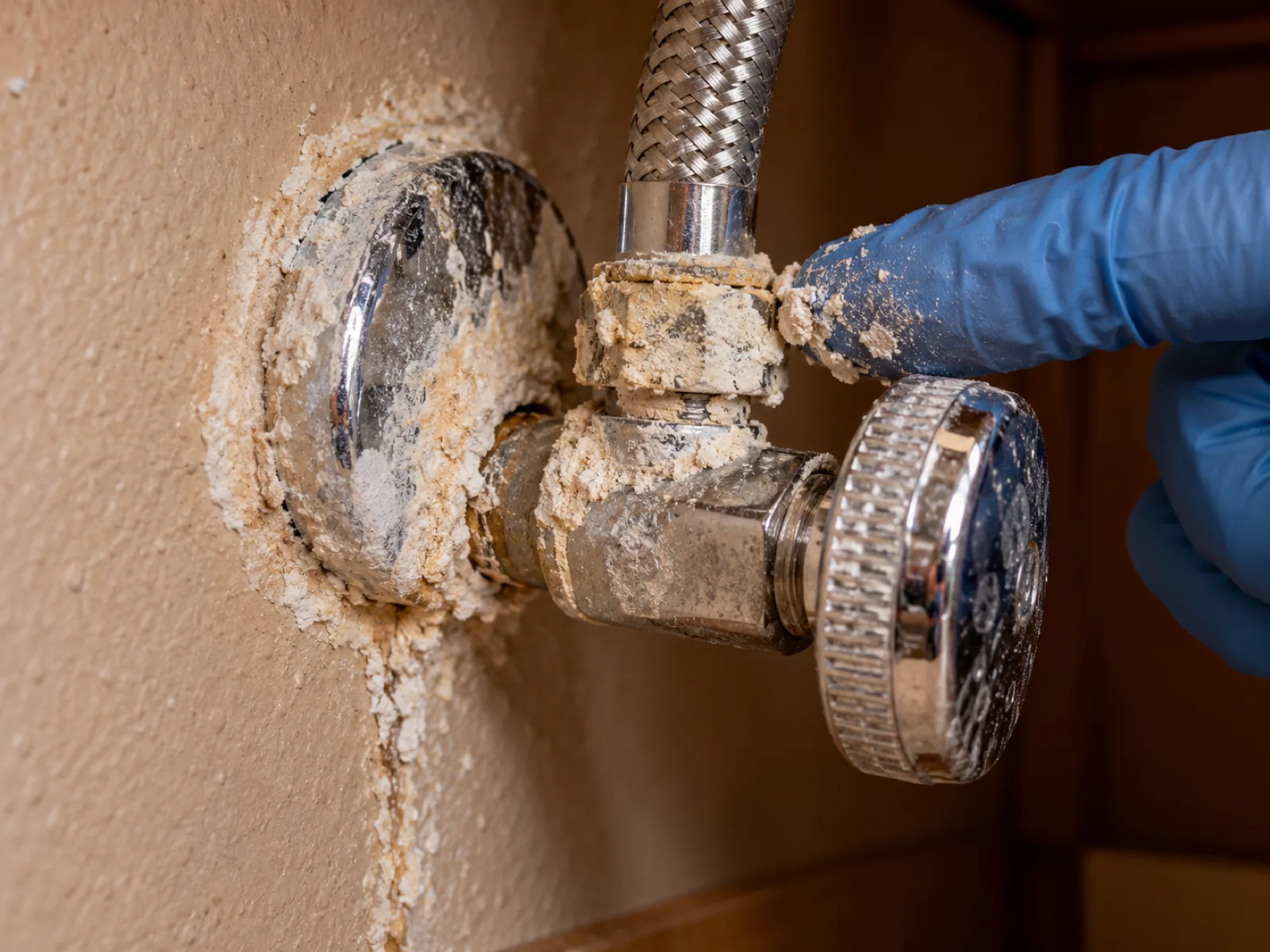
Hard water typically leaves calcium carbonate behind wherever it is heated or slowed down: the white crust on aerators, the grit in a water heater tank, the stiff valve nobody has turned in years. Heat speeds it up, so water heaters usually take the worst of it.
Scale and leaks are different problems. Scale clogs and wears moving parts, so a faucet cartridge drips or a fill valve sticks: real water loss, but visible. A pinhole is a hole through the pipe wall, and it is usually hidden.
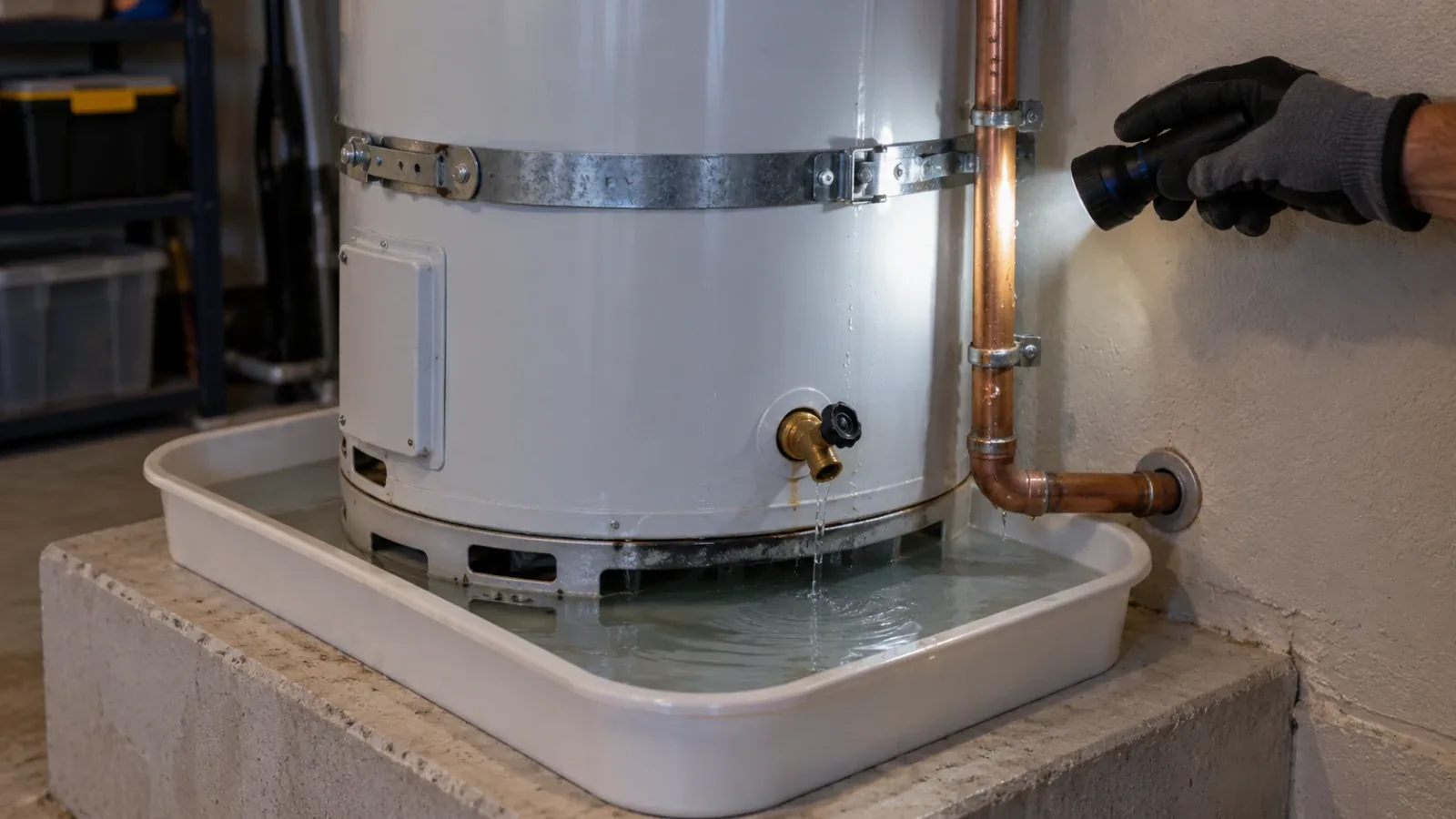
- 1Cold-water inlet feeding the tank.
- 2Hot-water outlet to the house.
- 3Temperature and pressure (T&P) relief valve: a safety device that opens to release water when the tank goes past its temperature or pressure rating. Slow weeping or dribbling points to pressure relief, for example from thermal expansion in a closed system.
- 4Discharge pipe from the T&P valve, where released water comes out.
- 5Drain valve near the base, used to flush or empty the tank.
- 6Drain pan under the tank, which catches drips and small leaks.
Does Hard Water Cause Pinhole Leaks?
The evidence is mixed, and neither side has settled it.
Position A: many plumbers who work in the valley report pinhole leaks in copper lines and blame the hard water. They see it often enough that it has become the local explanation, and it is a reasonable suspicion.
Position B: corrosion researchers point to other factors as well. Pinhole pitting in copper is generally discussed in terms of broader water chemistry, things like pH, the type of disinfectant the utility uses and how fast water moves through the pipe, rather than hardness alone. Some of that work even notes that a thin layer of scale can coat the inside of a pipe and protect it.
Both can hold at once: hardness may play a part in some homes and none in others. Neither changes the next step. If water is going somewhere it should not, the first job is to find where.
What Is a Pinhole Leak?
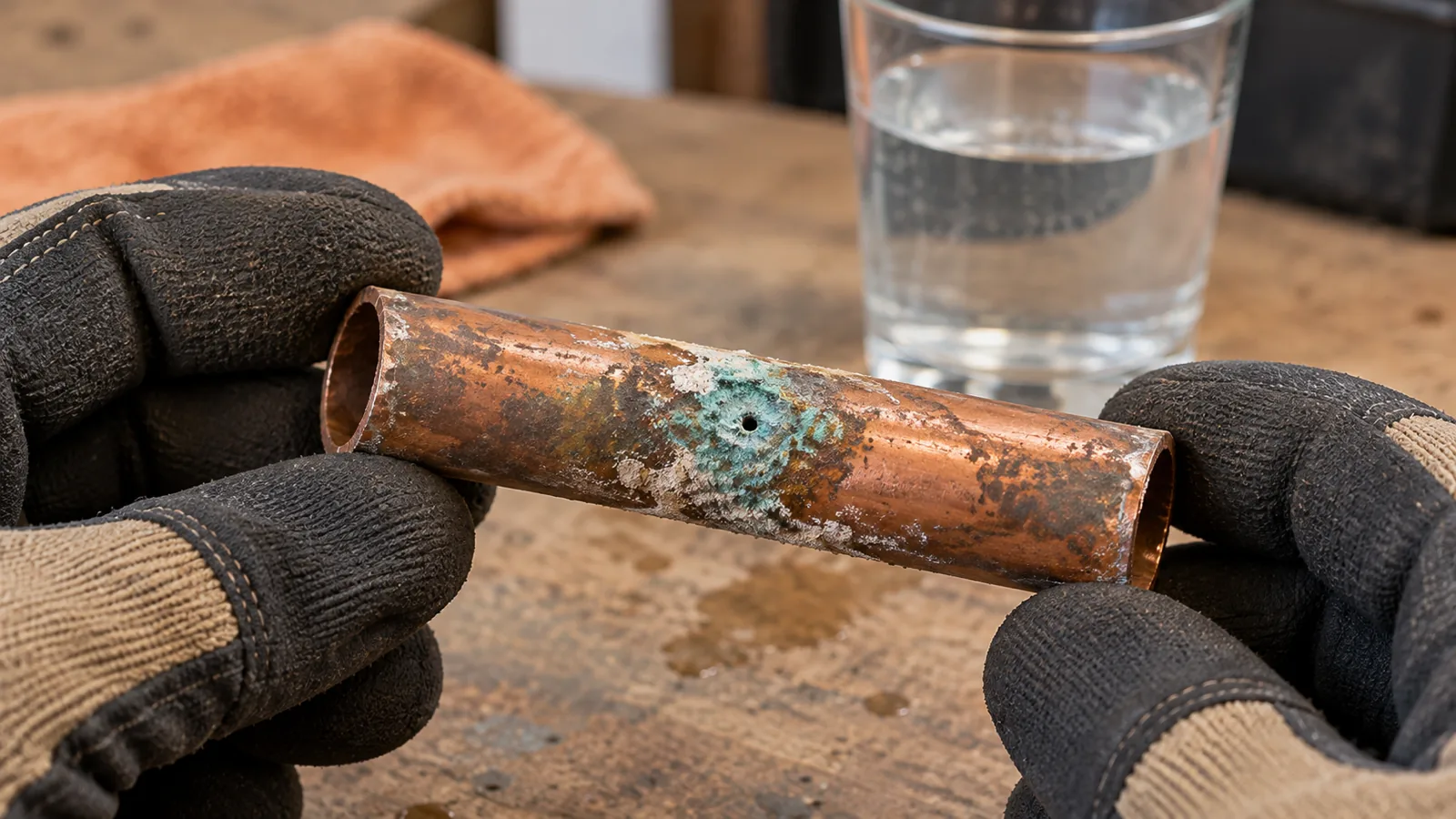
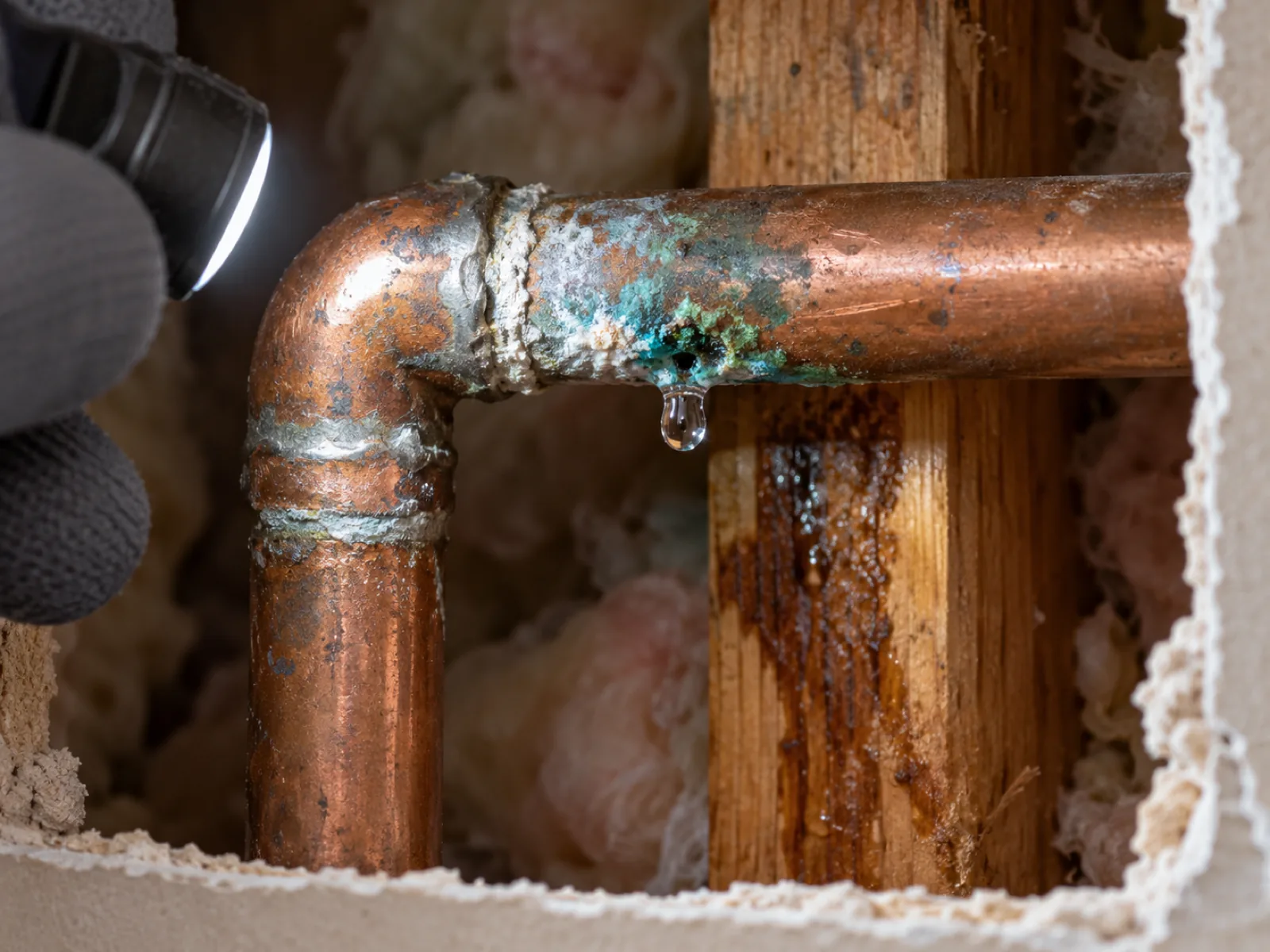
A pinhole leak is a tiny hole, often smaller than the head of a pin, that forms when pitting corrosion eats through a pipe wall from the inside. It shows up most often in copper. It can drip slowly or spray a fine jet. Because supply lines usually run inside walls or under a slab, many pinholes leak for weeks unseen.
Copper, PEX and Galvanized Lines Compared
Each pipe tends to fail in its own way. This is general behavior, not a claim about any neighborhood.
| Material | How it usually fails | What the leak looks like | Notes |
|---|---|---|---|
| Copper | Pitting that can become pinholes, at fittings or along a run | Slow drip, faint hiss, meter creep | Pinhole complaints usually involve copper |
| PEX (cross-linked polyethylene) | Fitting failures; damage from heat or sunlight exposure | Leaks at crimp or expansion fittings | Flexible, but should not sit in direct sun |
| Galvanized steel | Interior rust and scale narrowing the bore | Low pressure, rusty water, leaks at threads | Usually found in older plumbing |
Which Las Vegas Valley Areas Have the Oldest Homes?
A median is the midpoint: half the homes in each area were built before that year. These figures come from the U.S. Census Bureau's American Community Survey (2019-2023 5-year estimates, table B25035).
| Area | Median year built (ACS 2019-2023) | Water supplier |
|---|---|---|
| Paradise, NV | 1987 | LVVWD |
| Sunrise Manor, NV | 1991 | LVVWD |
| Las Vegas, NV (city) | 1994 | LVVWD |
| Spring Valley, NV | 1998 | LVVWD |
| Henderson, NV | 2000 | City of Henderson |
| North Las Vegas, NV | 2002 | Not stated |
| Whitney, NV | 2002 | LVVWD |
| Enterprise, NV | 2006 | LVVWD |
| Summerlin South, NV | 2006 | LVVWD |
Age is not a diagnosis; a house from 2006 can leak and one from 1987 may never. The table shows that in many parts of the valley, a large share of plumbing has been in service for decades, when wear of any kind can start to show. If you are in the east valley, see finding hidden leaks around Sunrise Manor; on the west side, read about slab leak detection for Spring Valley homes.
Signs You Have a Pinhole Leak Somewhere You Cannot See
A pinhole under a slab often announces itself as a meter that never settles or a faint hiss, long before any floor gets wet. Watch for:
- The meter's flow indicator still moving with all water off (LVVWD's meter check, for LVVWD-served homes)
- A faint hiss inside a wall when the house is quiet
- A warm spot on a tile or concrete floor, which points to a hot line
- A water bill that climbs with no change in how you use water
- A small damp patch, or paint that bubbles low on a wall
For the full list of under-floor clues, read our common slab leak signs.
Does One Pinhole Mean You Need a Repipe?
Not necessarily. One pinhole tells you one spot on one run failed, not the condition of every pipe in the house.
Locate first. Once the leak is pinpointed, the right question is whether the same run has other weak spots. That is a question for the locate step, often answered by testing that section, not by assuming the worst on day one. Whether the answer is a spot repair, a reroute of one line, or a wider repipe is a separate decision for you and your plumber, made with the location in hand. That is how our Las Vegas slab visits are set up: the output is a marked spot, not a recommendation to replace pipe.
Leak Detection Las Vegas does not repair or repipe, so we have no stake in which way that decision goes.
Will a Water Softener or Leak Sensor Help?
A softener changes the scale, not the pipe you already have. In our view it is not a leak fix: it can reduce new buildup, but it will not close an existing pinhole or reverse pitting already under way.
A leak sensor does nothing to the water; it alerts your phone when it gets wet. The Southern Nevada Water Authority's Home Leak Sensor Rebate pays 50 percent of the purchase price or $200, whichever is less, for properties served by an SNWA member agency with an account in good standing. The sensor must be bought within 30 days of the coupon's printed date and installed within 90 days of purchase, with one rebate per property. SNWA's member agencies include LVVWD, the City of Henderson and the City of North Las Vegas, so this one does reach Henderson, NV and North Las Vegas, NV homes.
Talk to a Leak Detection Specialist
Meter still creeping, or already had one pinhole? Have the next one located before the floor gets wet.