The bill is the symptom. The meter is the instrument. Work in this order: compare the season, read the meter with everything off, then go through the house and yard one system at a time. Leak Detection Las Vegas traces where the water goes in Las Vegas, NV homes, and most of these checks need no visit at all. If you already know something is running, our page on high bill leak tracing in Las Vegas explains how a visit works.
Why is my water bill so high in Las Vegas, NV?
A Las Vegas, NV water bill usually jumps for one of a few reasons: a leaking toilet, an irrigation zone running on more watering days, a pool or spa topping itself up, or a hidden leak that runs all day. Each leaves a different trace on the meter, so the checks run from easiest to rule out to hardest.
- Compare this bill with the same month last year.
- Read the meter with every fixture off.
- Dye-test the toilets.
- Watch the irrigation on an assigned watering day.
- Turn off the pool or spa auto-fill.
- Look at the softener, fridge line and water heater.
- Consider the leaks you cannot see.
- Act on an LVVWD continuous-flow notice.
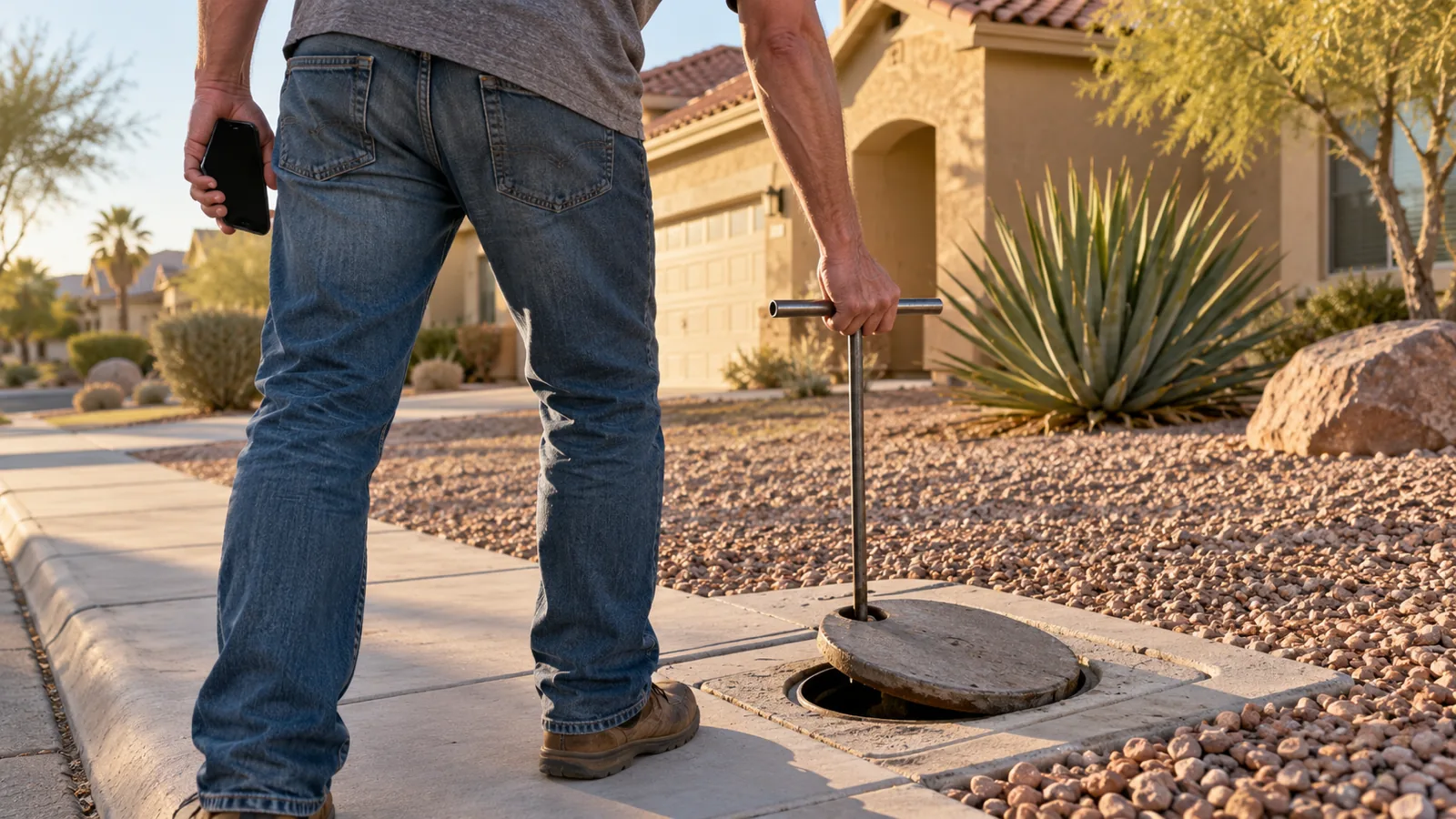
- 1Meter box. Lift the lid to see the water meter.
- 2Flow-indicator triangle (red or white) on the meter face. With all water off inside and outside the home, a triangle that is still moving means there may be a leak.
- 3Meter dial and sweep hand, which record the water that passes through the meter.
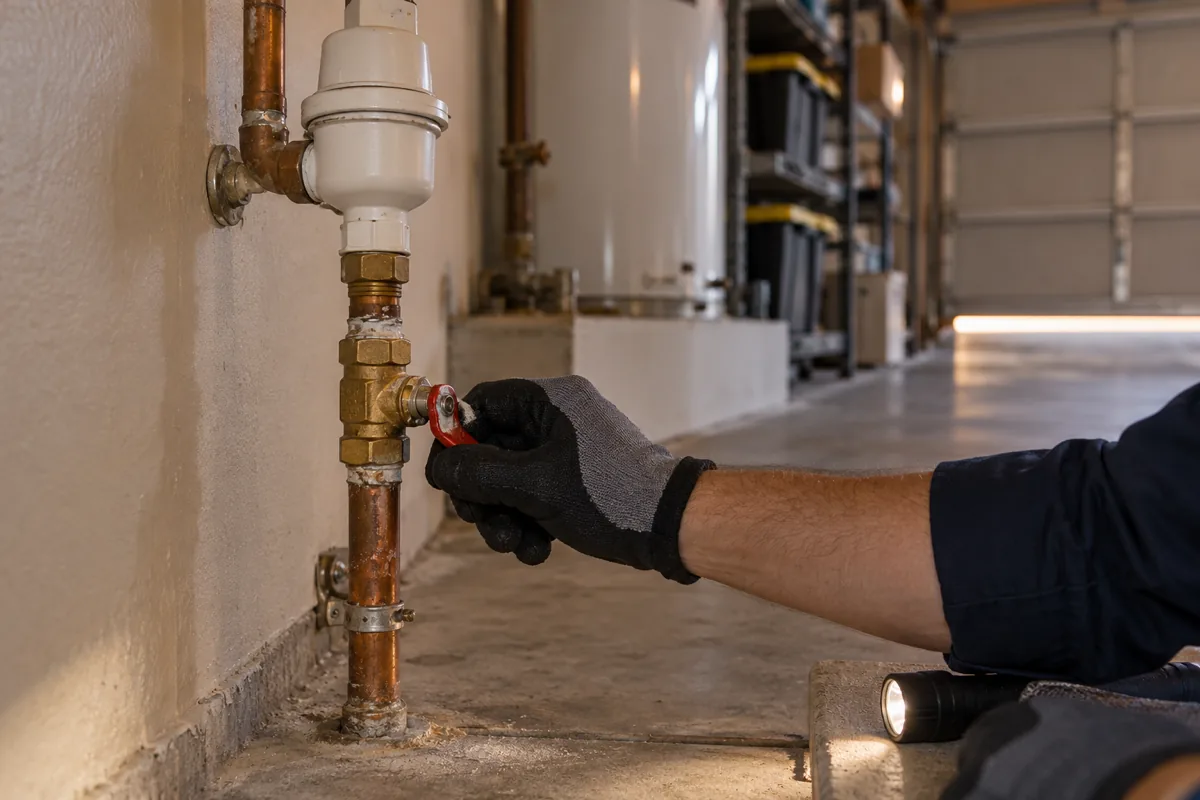
- 4Service line from the meter to the house. If the triangle still moves with the house shut-off valve closed, the leak is likely underground on this line.
- 5House shut-off valve. Close it and check the triangle again: if it stops, the leak is elsewhere on the property.
Check 1: Compare the bill with the same month last year
Season comes first because it is free to check. The Las Vegas Valley Water District (LVVWD) sets a mandatory watering schedule (opens in a new tab): one assigned day a week from November through February, three days in March, April, September and October, and six days, Monday to Saturday, from May through August. Sunday sprinkler watering is not allowed. Spring triples the winter allowance, and summer doubles it again.
So a bill that crosses into May can climb simply because the controller is doing what it was set to do. Compare consumption, the gallons or units printed on the bill, against the same period a year ago. Dollars move with rates and fees. Gallons do not.
Well above last year with the same household and yard? Keep going.
Check 2: Read the meter with everything off
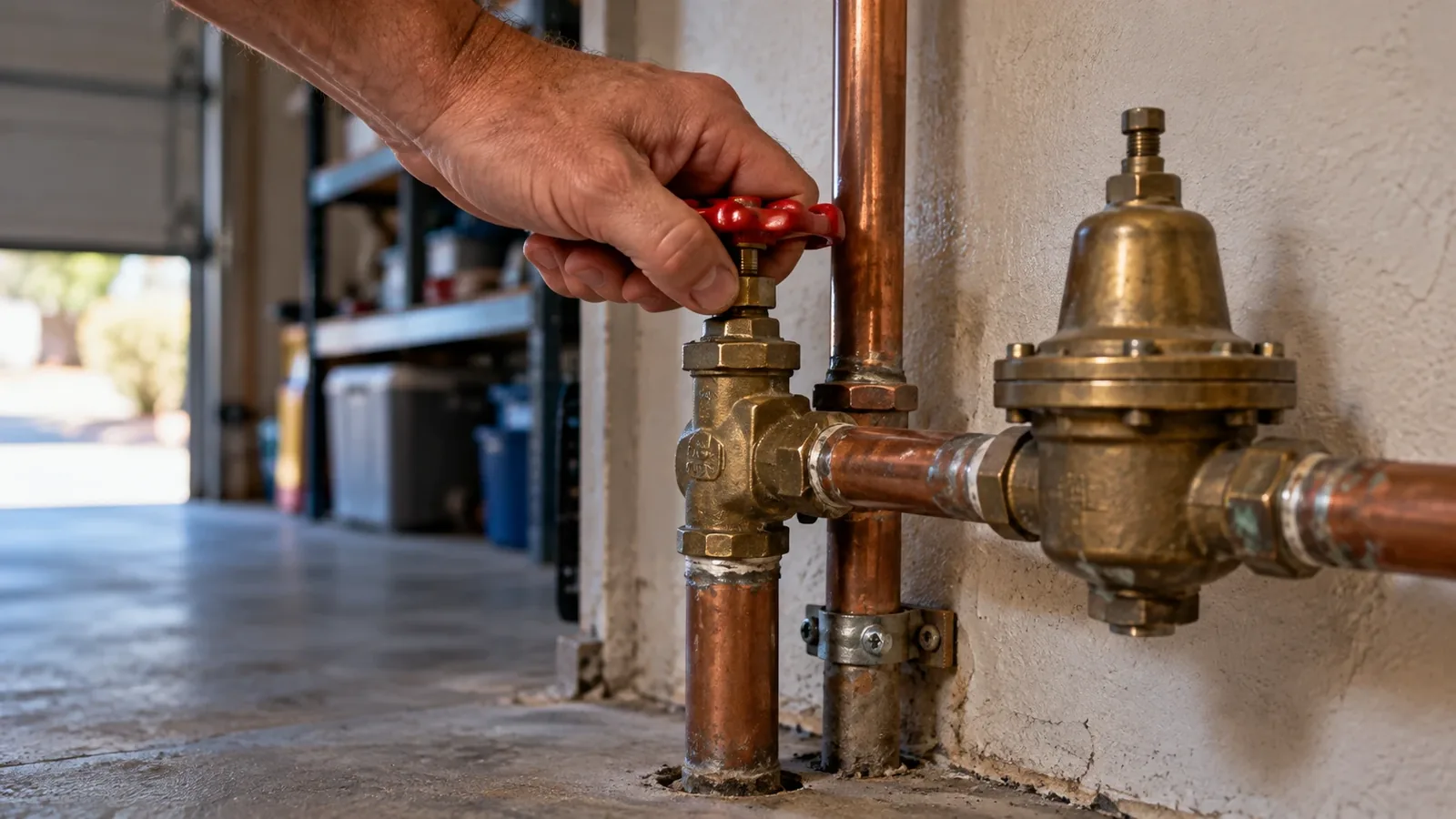
The meter answers the biggest question in minutes: is water moving when nothing should be using it? LVVWD's find and fix leaks (opens in a new tab) guidance says to turn off all water inside and outside, then watch the small red or white triangle on the dial. If it turns, something is drawing water. Closing the house shut-off valve splits the problem: a triangle that keeps moving points underground, between the valve and the meter, and one that stops puts the leak on the house side.
Traps like an ice maker filling mid-reading, and an outcome table, are in the Leak Detection Las Vegas guide to the lvvwd continuous-flow notice.
Triangle still with everything off? You have no constant leak right now. The answer is in how water is being used, so Checks 4 to 6 matter most.
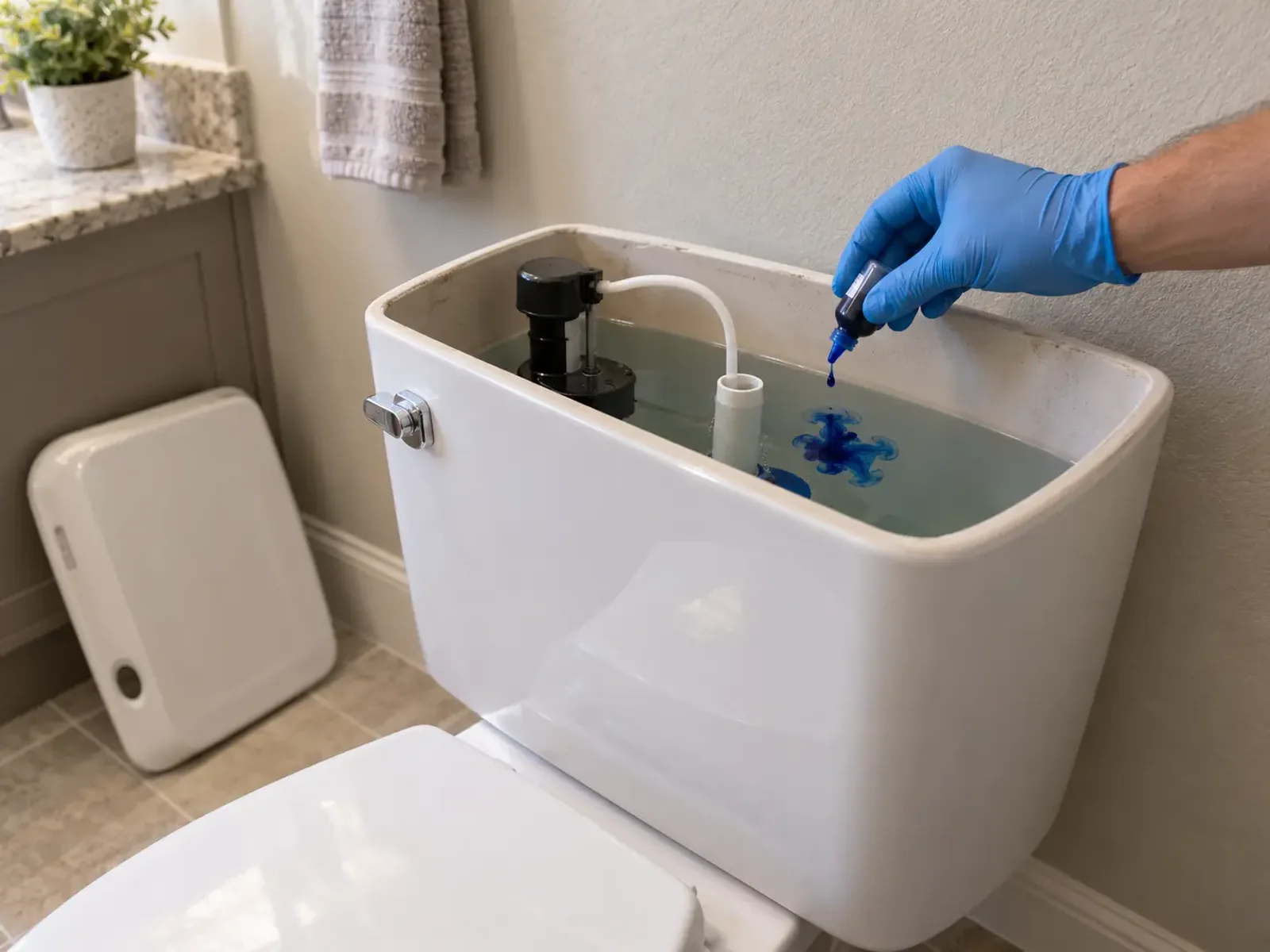
Check 3: Toilets
LVVWD says more than 20 percent of gravity-flush toilets leak. That makes the toilet the first suspect in almost any house and the cheapest to rule out.
The usual culprit is the flapper, the rubber seal at the bottom of the tank. As it ages it stops sealing, tank water slips into the bowl without a sound, and the fill valve tops it back up, sometimes with a short hiss every few minutes. A toilet you can hear running is easy. A silent one is why this check exists.
Put a few drops of food coloring in the tank, not the bowl, and leave it unflushed for about 15 minutes. Color in the bowl means the flapper leaks. Test every toilet, guest bath included.
If this is your answer, a new flapper is a parts-store fix and you may not need anyone. Toilets fine and the meter still moving? Talk to a Leak Detection Specialist.
Check 4: Irrigation on your watering days
An irrigation leak only shows on the meter while the controller is running. Read the meter on a non-watering day and it looks clean, which is exactly why a summer bill can jump while a quick meter check finds nothing.
Test on an assigned watering day instead. Run one zone at a time and watch the triangle and the ground: soggy gravel, a drip emitter blown off and spraying, a chewed line, a valve box still wet an hour after the cycle. A valve that weeps after it should have closed keeps the triangle creeping too.
The schedule multiplies the damage. With one assigned day in winter and six in summer, the same broken drip line gets six times as many chances to leak in July as in January. The fault did not change. The calendar did.
One note on scope: we do not repair irrigation. If the meter points to a zone, an irrigation contractor is the right call.
Check 5: Pool and spa auto-fill
An auto-fill valve quietly replaces whatever the pool loses. That could be evaporation in a dry Las Vegas, NV summer or a leak in the shell, a fitting or the plumbing, and the bill cannot tell you which. Turn the auto-fill off for a day and mark the level with tape. A pool that drops much faster than you expect deserves a closer look; our guide to pool leaks versus evaporation in Las Vegas covers the bucket test that separates the two.
Check 6: Water softener and other appliances
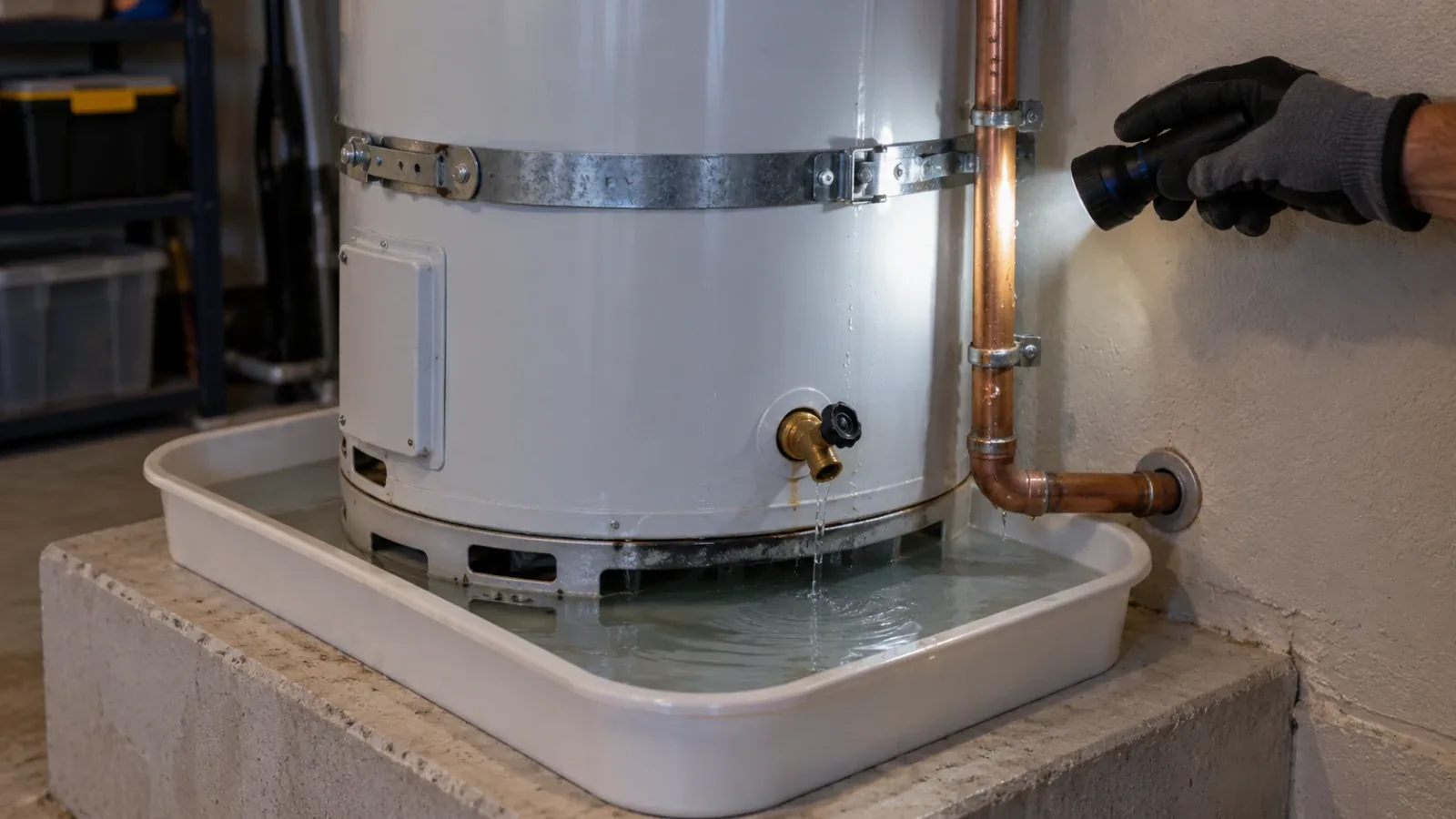
Appliances use water in bursts, and a stuck one turns a burst into a constant draw. A softener whose regeneration sticks can keep sending water to the drain after its cycle should end. A cracked ice-maker line can drip behind the fridge for weeks. A water heater relief valve can discharge into a drain or out the side of the house, where nobody sees it. Isolate each at its own valve while you watch the meter.
Check 7: Leaks you cannot see: slab, walls and the service line
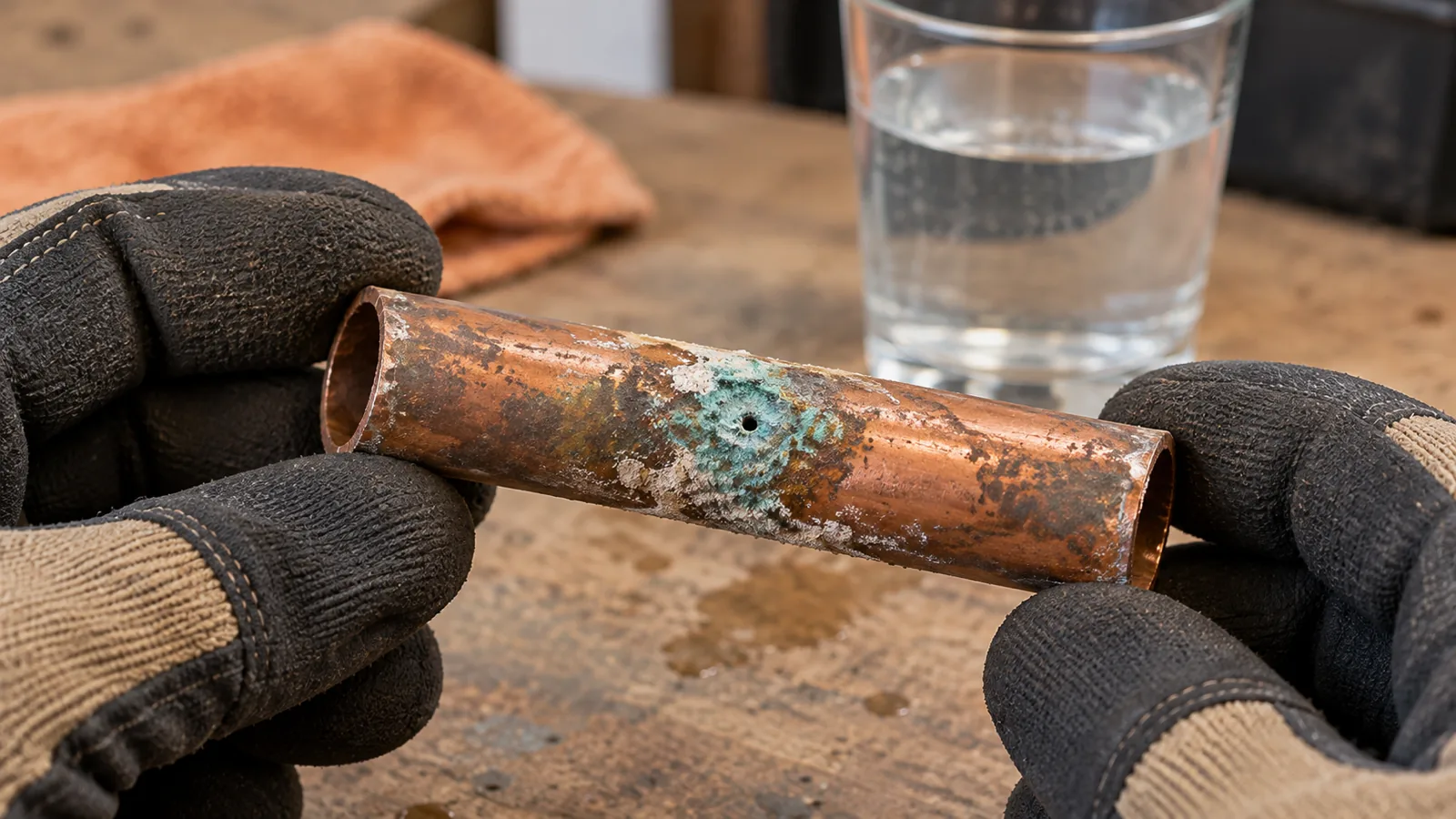
If the triangle moves with every fixture off, the toilets pass and the irrigation is off, the water is going somewhere hidden: a supply line under the concrete slab, a pipe inside a wall, or the underground service line between the meter and the house. The house valve reading tells you which side. Still moving with it closed points to the buried line; stopping points to the slab and walls.
This is where guessing gets expensive. A hole in the wrong spot does not stop the water and adds a drywall or concrete repair to the bill, so nothing should be opened until the line is pinpointed. It is the same locate-first approach we take for leak detection in Spring Valley and the rest of our service area.
Check 8: When LVVWD contacts you first
Sometimes the water district spots it before you do. LVVWD's advanced meters flag water that has moved through the meter without stopping for at least three days, and the district contacts the account holder. That notice is a flow record, not a guess: something on the property has not shut off. Go straight to the two readings in Check 2.
If your home is in Henderson, NV
Henderson homes are not LVVWD customers. Water in Henderson, NV comes from City of Henderson Utility Services, so LVVWD's watering schedule, flow notices and bill programs do not apply there. Adjustment requests go through the city, under its own rules.
The physics does not change at the city line. A triangle that moves with everything off means water is moving, and the house valve split works the same way. If the checks point to a hidden line, see our page on finding hidden leaks in Henderson. In North Las Vegas, NV, check with your city's water utility before relying on anything written for LVVWD accounts.
After you find it: the bill adjustment clock
Speed matters for money as well as water. For LVVWD customers, the district's Leak Adjustment Program expects repairs within 60 days of the billing date on which the leak was discovered and an online application within 90 days of finishing the repair, and usage during the leak has to be up by at least half. The full conditions, plus LVVWD's repair reimbursement, are in our guide to the lvvwd leak adjustment program.
For prevention, the Southern Nevada Water Authority (SNWA) offers a rebate on leak sensors that alert your phone, open to accounts served by an SNWA member agency, Henderson included. Terms are on snwa.com.
Checked Everything and the Meter Still Moves?
If the toilets pass, the irrigation is off and the triangle keeps turning, the water is going somewhere you cannot see. Book a visit and we will trace it before anything is opened.
Call to book a Leak Detection Visit
More homeowner guides: every guide in one place.