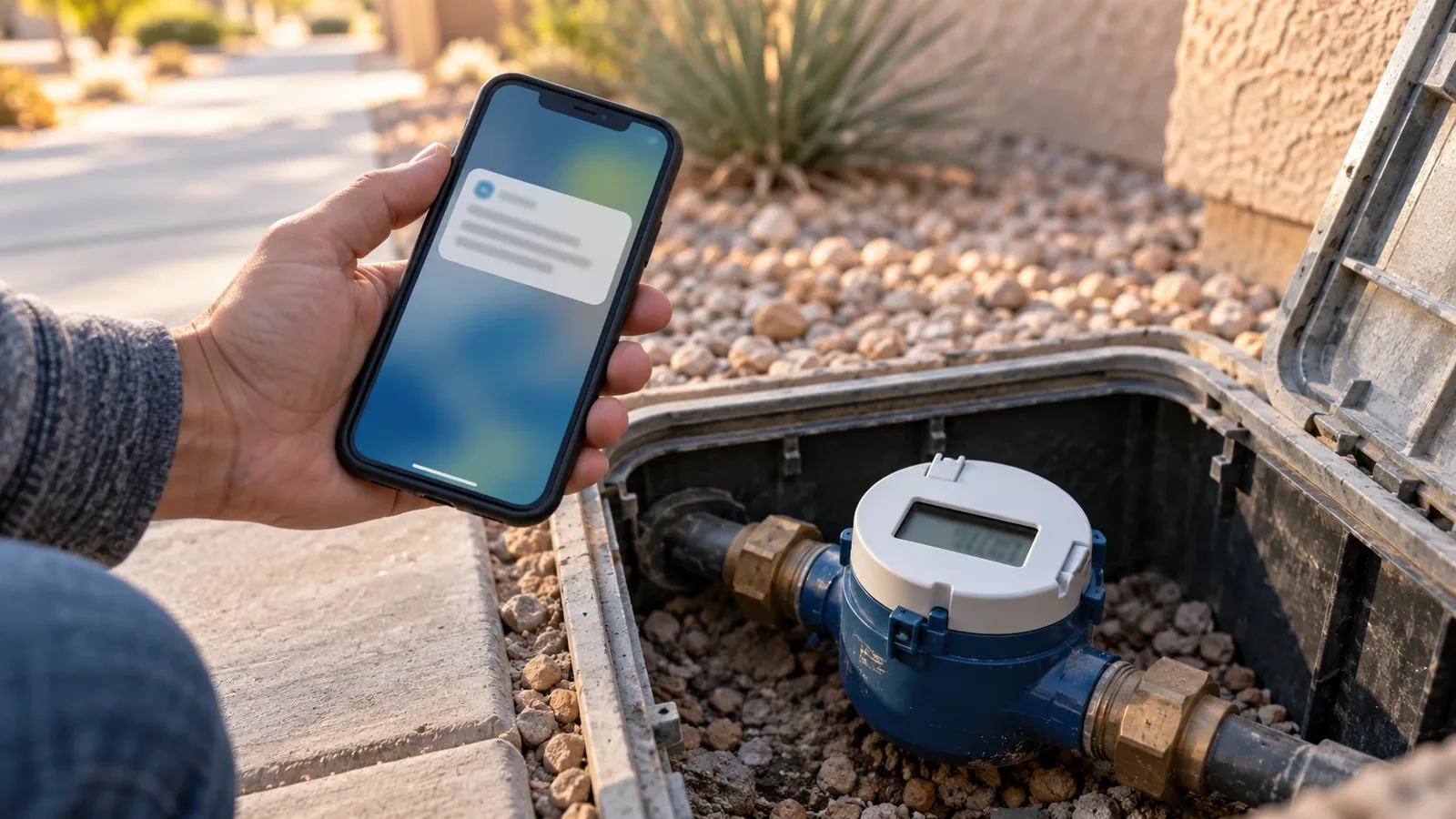
The call, text or email usually lands when nothing looks wrong: no puddle and no hissing. That is normal. Leak Detection Las Vegas locates hidden leaks for Las Vegas, NV homeowners, and this is the same first check we run at the meter on a visit. If the readings point somewhere you cannot see, our page on Las Vegas bill visits explains what a locating visit involves.
What is an LVVWD continuous flow alert?
An LVVWD continuous flow alert means the Las Vegas Valley Water District's advanced meter has recorded water moving through your meter without stopping for at least three days. Something on the property is running constantly: a toilet, an irrigation valve, an appliance or a hidden leak. LVVWD describes the notice on its find and fix leaks page (opens in a new tab).
"Continuous" is the important word. A long shower, a load of laundry or filling the pool one afternoon all stop at some point, and an advanced meter sees the gap. Three days with no gap means something never shut off. The notice does not tell you how much water, and it does not tell you where.
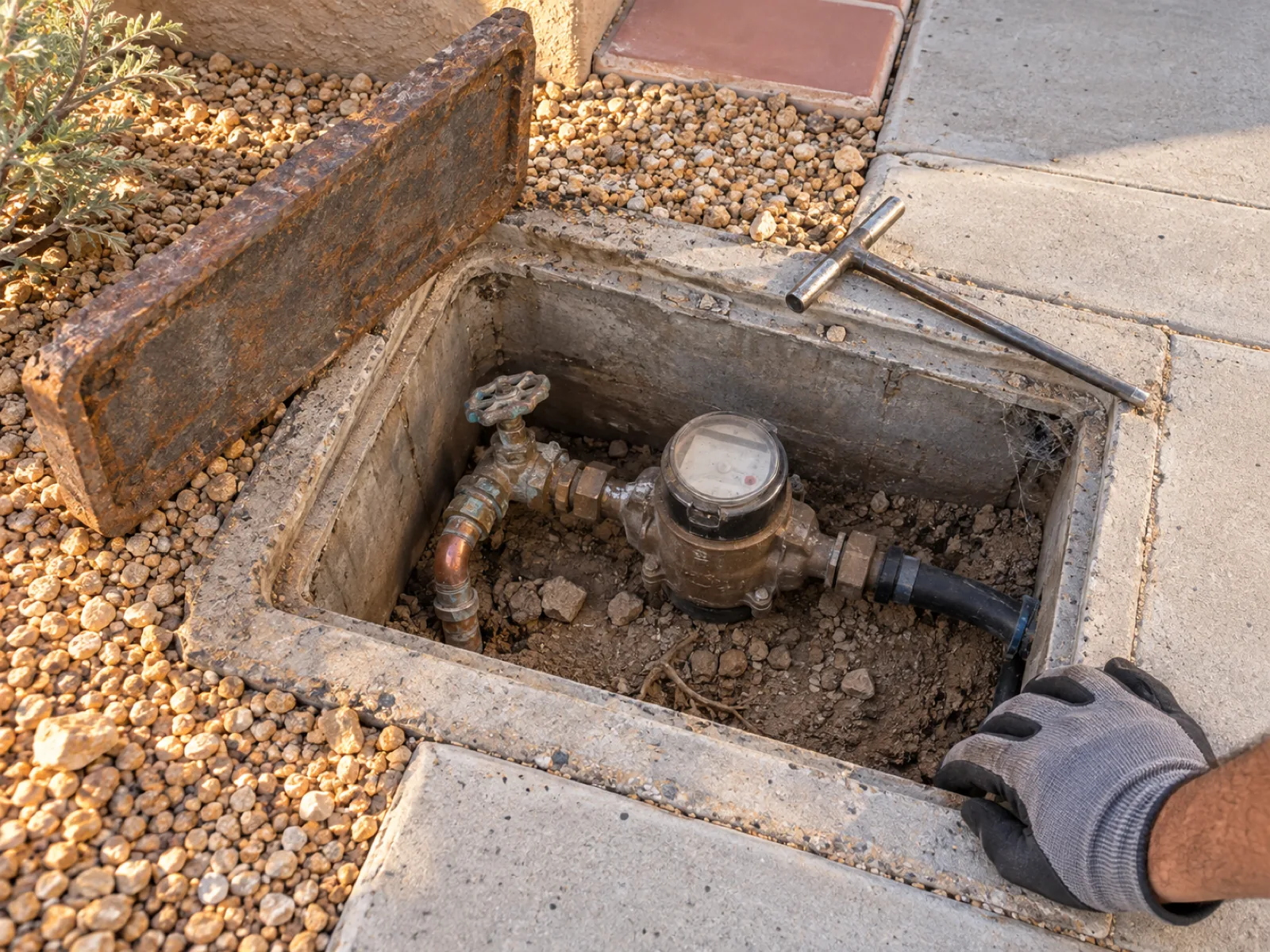
- 1Meter box. Lift the lid to see the water meter.
- 2Flow-indicator triangle (red or white) on the meter face. With all water off inside and outside the home, a triangle that is still moving means there may be a leak.
- 3Meter dial and sweep hand, which record the water that passes through the meter.
- 4Service line from the meter to the house. If the triangle still moves with the house shut-off valve closed, the leak is likely underground on this line.
- 5House shut-off valve. Close it and check the triangle again: if it stops, the leak is elsewhere on the property.
Step 1: Turn everything off and read the triangle
This is the reading LVVWD itself recommends, and it takes a few minutes.
- Turn off every faucet and water-using appliance, set the irrigation controller to off, and close the pool auto-fill if you have one. Pause the softener if it is mid-cycle.
- Open the meter box lid at the curb or front yard. Lift it carefully; boxes can hold insects or standing water.
- Find the small red or white flow-indicator triangle on the dial face. It turns with even small flows that the main sweep hand barely shows.
- Watch it for a couple of minutes. Slow movement counts.
- Write down what you saw: moving or still.
If the triangle is moving with everything off, LVVWD's guidance is that there may be a leak. Read it at a quiet hour, and read it twice a few minutes apart, because an ice maker filling or a softener finishing a cycle can turn the triangle briefly and then stop.
Step 2: Close the house valve and read it again
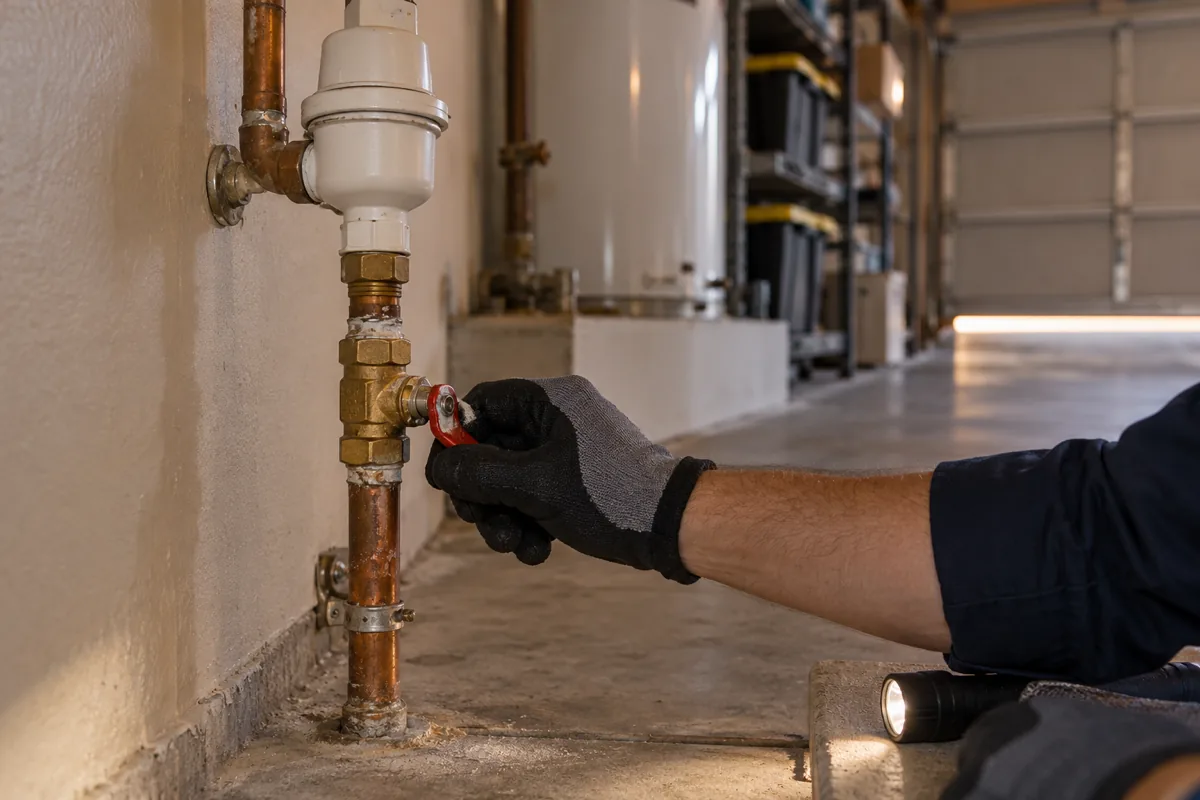
If the triangle moved, close the house shut-off valve, usually where the supply line enters the house or in the garage, and read the meter again. LVVWD's guidance splits the outcomes this way: if the triangle keeps moving with the house valve closed, the leak is likely underground between that valve and the meter; if it stops, the leak is elsewhere on the property. The table below adds the next step for each result.
| Triangle with fixtures off | Triangle with house valve closed | What it points to | Next step |
|---|---|---|---|
| Still | Not needed | No constant leak at this moment; look at loads that come and go, especially irrigation | Re-test on an assigned watering day with the controller running one zone at a time |
| Moving | Stops | Leak on the house side: toilets, fixtures, softener, water heater, or lines in the slab or walls | Work through the house-side suspects below, then have the line located |
| Moving | Still moving | Leak underground between the meter and the house valve, or an irrigation line that branches off before the valve | Turn the irrigation off and check the backflow assembly first, then suspect the service line |
The first row matters more than people expect. LVVWD's watering schedule runs from one assigned day a week in winter to six in summer, so a leaking zone can be silent on the day you test and running on the day the meter logged it.
Triangle still moving with the house valve closed? Talk to a Leak Detection Specialist.
If the leak is between the meter and the house
The third row points at the service line, the buried pipe from the meter to your house valve. LVVWD's own meter check places a leak there when the triangle keeps turning with the house valve shut.
That line is generally the homeowner's side of the system. The clearest public signal is that LVVWD lists a Water Line Protection Program for single-family account holders, $3.99 a month through American Water Resources, covering service-line leaks between the meter and the house. A utility is unlikely to sell protection for its own pipe. Read that as a clue about who is expected to act.
If water is visibly coming out of the meter itself, or from the street side of the box, that is different: contact LVVWD through lvvwd.com. LVVWD's Conservation Help line, 702-258-SAVE, is its general conservation number, not an emergency line.
If the leak is inside the house: the usual suspects
When the triangle stops with the house valve closed, the water is going somewhere on the house side of the valve. Work through these in order.
- Toilets. LVVWD says more than 20 percent of gravity-flush toilets leak. Put food coloring in the tank, wait about 15 minutes without flushing, and look for color in the bowl. A worn flapper is the usual cause.
- Irrigation valves and the anti-siphon valve. A valve that weeps after its cycle, or an anti-siphon assembly dripping at the top, keeps water moving. Some of these lines are fed from the house side.
- The water softener. A regeneration valve that sticks can keep sending water to the drain.
- The water heater. A relief valve discharging into a drain line or outside can run unnoticed.
- The pool auto-fill, if it is plumbed from the house side and you did not close it in Step 1.
- Hidden supply lines under the slab or inside walls.
The first two are often fixes you can do yourself or hand to a handyman: a flapper costs very little, and an irrigation valve repair goes to an irrigation contractor, since we do not repair irrigation. If you work down to item six, the water is going somewhere you cannot see, and that is where tracing leaks under the slab in Las Vegas comes in.
Why the alert can come with no water in sight
Most homeowners expect a leak to show. Many do not. A pressurized line under a concrete slab can leak into the soil below it, the buried service line can leak into the yard without reaching the surface, and a drip line under gravel can feed the ground for a long time. None of these has to leave a wet spot.
Two traps catch people at this stage. The first is an intermittent load: a softener regenerating, an ice maker refilling or an irrigation zone on its assigned day can all move the triangle and then stop, which looks like a leak on one reading and like nothing on the next. Read twice, at a quiet hour, with the controller off.
The second is the irrigation branch. Irrigation lines often tee off the service line before the house valve, so a leaking zone or a weeping backflow assembly can keep the triangle turning even with the house valve closed. That reading looks exactly like a failed service line. Before concluding the buried pipe has failed, switch the controller off and check the anti-siphon or backflow assembly for water.
What the alert does not mean
The alert is not a bill credit, not a repair visit and not proof that your meter is faulty. It is a flow record. The water district is telling you what passed through the meter; finding and fixing the cause on your side of it is up to you.
Money is the reason not to wait. If the leak raises your consumption and you repair it, LVVWD's Leak Adjustment Program counts 60 days from the billing date on which the leak was discovered for the repair, then 90 days from the repair for your application. Details are in our guide to LVVWD leak adjustment and reimbursement. If the bill jumped without an alert, the Leak Detection Las Vegas guide to why las vegas water bills jump runs through the other causes.
Henderson and North Las Vegas homes
This alert is an LVVWD process for LVVWD accounts, which cover Las Vegas, NV and unincorporated Clark County. Henderson, NV homes are served by City of Henderson Utility Services, so notices and bill programs there come from the city, not LVVWD. The meter test itself still works: the triangle and the house valve split behave the same on any meter. In North Las Vegas, NV, check with your city's water utility about how it handles continuous use. For an overview of the areas we cover, see the Leak Detection Las Vegas home page.
Triangle Still Moving With the House Valve Closed?
If the readings point to a line you cannot see, book a visit and we will locate it before anything is opened or dug up.
Call to book a Leak Detection Visit
More guides: more guides for homeowners.