The Short Answer: Resulting Damage vs the Failed Pipe
Insurers split a slab leak into two pieces: the water damage the leak caused, and the pipe that failed. The Insurance Information Institute (III) explains that a standard HO-3 policy covers accidental discharge of water from a plumbing system but will not pay for damage from routine wear and tear. The sample HO-3 form it publishes adds that coverage for that discharge includes the cost to tear out and replace any part of the building when necessary to repair the system, but not the loss to the system or appliance the water escaped from.
In plain terms, the wet flooring may be a claim, the concrete opened to reach the line may be a claim, and the copper itself usually is not. Your insurer decides from your declarations page, water-damage section and exclusions, so read those before the adjuster calls. If the leak is not located yet, slab leak detection in Las Vegas is the step that turns "warm floor" into a located line.
What Homeowners Policies Typically Cover and Exclude After a Slab Leak
Each row comes from the III's description of a standard HO-3 policy and its sample ISO form (HO 00 03 10 00). Your policy may add or remove coverage through endorsements.
| Typically covered (standard HO-3, per III) | Typically not covered (standard HO-3, per III) |
|---|---|
| Damage from accidental discharge of water from the plumbing, such as soaked flooring, baseboards and cabinets | Damage from routine wear and tear, marring or deterioration |
| Tear-out and replacement of part of the building when necessary to repair the plumbing system | The pipe or appliance the water escaped from |
| Whatever your declarations page and endorsements add | Whatever your exclusions and endorsements remove |
- 1Floor covering: tile, wood or carpet.
- 2Concrete slab foundation.
- 3Water supply line running beneath the slab.
- 4The leak, wetting the soil around the line.
- 5Warm spot on the floor when the leaking line carries hot water.
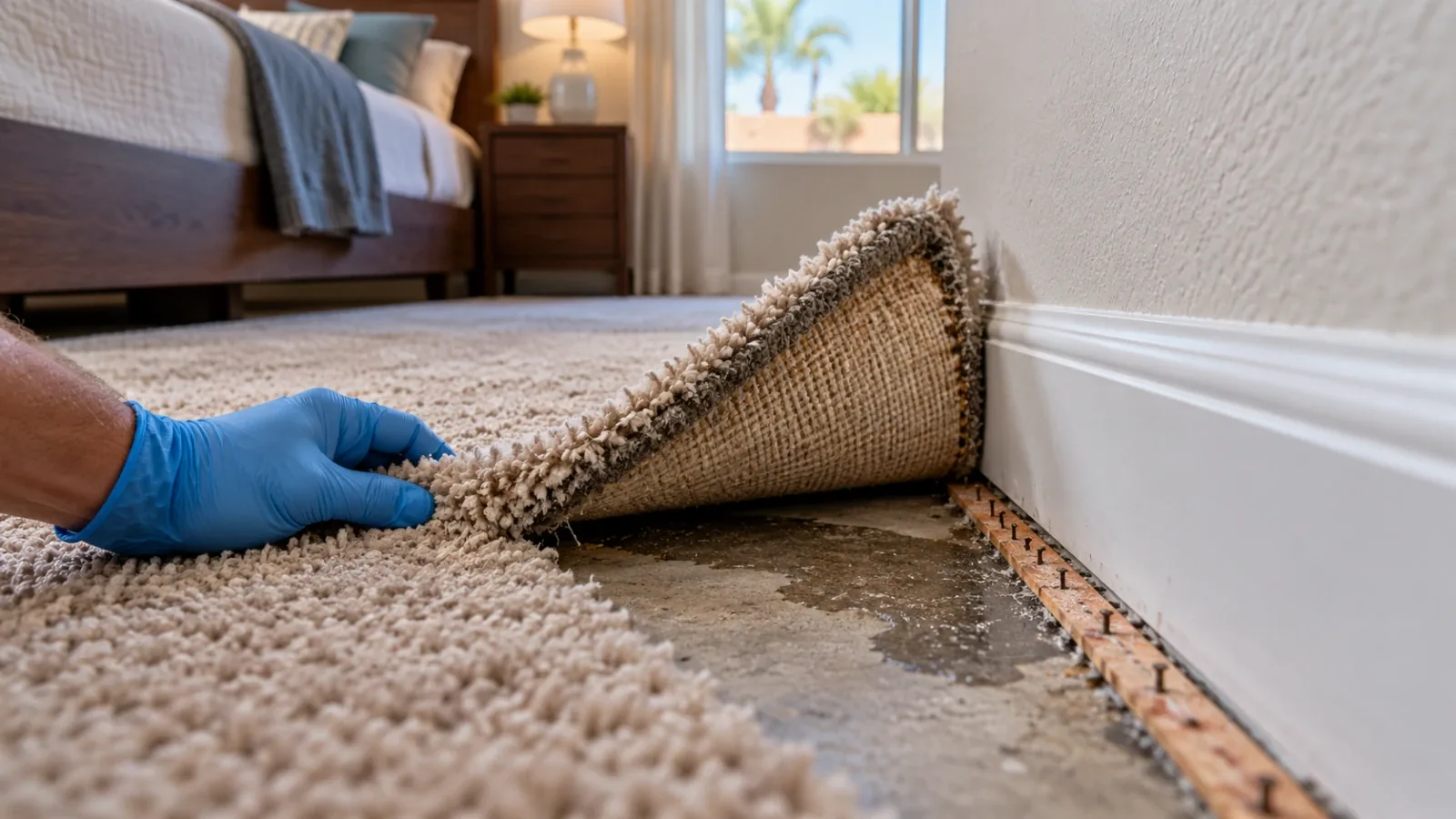
- 6Damp or discoloured flooring, or wet carpet, near the leak.
- 7Sound of running water with every fixture turned off.
Is Leak Detection Covered by Insurance?
The III sources cited here do not address the cost of locating a leak directly, so we will not guess. Ask your insurer before booking whether finding the leak is part of the claim, and get the answer in writing or note who told you and when.
Sudden Burst or Slow Leak: Why the Timeline Matters
The date you first noticed something matters in two separate conversations. An insurer will ask when the problem started, because wear and tear sits on the excluded side of a standard policy. Freezes can also cause sudden failures: KTNV reports that 32 degrees or less can freeze pipes in the desert and may cause them to burst. How a freeze loss is treated is a question for your insurer.
The second clock belongs to the water district. For Las Vegas Valley Water District (LVVWD) customers, the Leak Adjustment Program requires repairs within 60 days of the billing date when the leak was discovered, and an online application within 90 days of the date repairs were completed. It also requires consumption up at least 50 percent during the leak period.
So write down the date you notice a warm spot, hiss or bill jump. That one note protects both conversations. Not sure a warm patch is a leak? Our guide on how a warm floor spot is confirmed explains the checks.
What Adjusters Usually Ask For
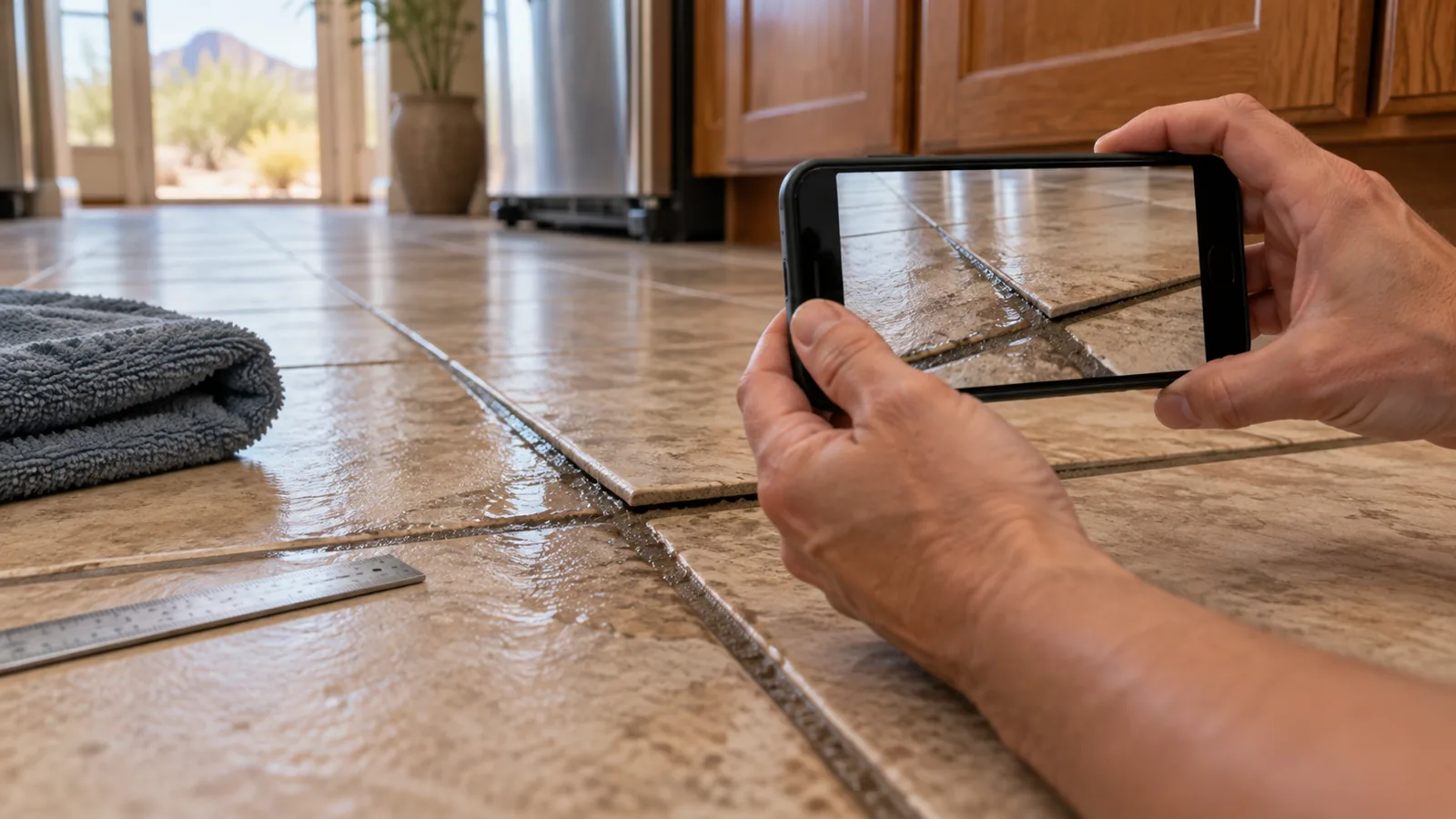
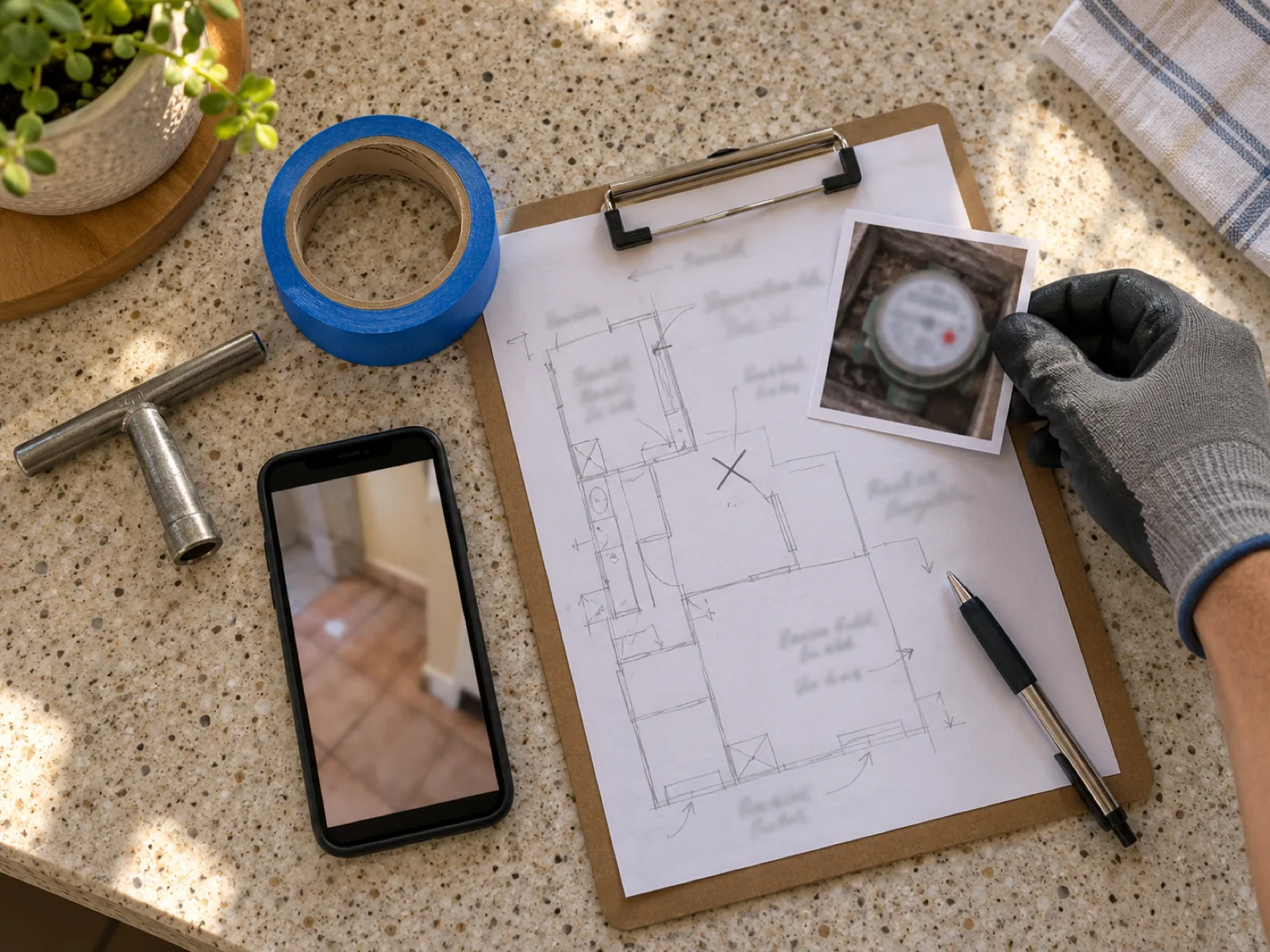
The III's claim tips suggest photographing or videotaping the damage, taking reasonable steps to protect the property from further damage and saving receipts, keeping damaged items until the adjuster has visited, and keeping copies of correspondence with your insurer. For a slab leak, add:
- The date you first noticed the problem
- The located leak source and how it was confirmed
- Water bills showing the jump in use
What a Leak-Source Finding Should Document
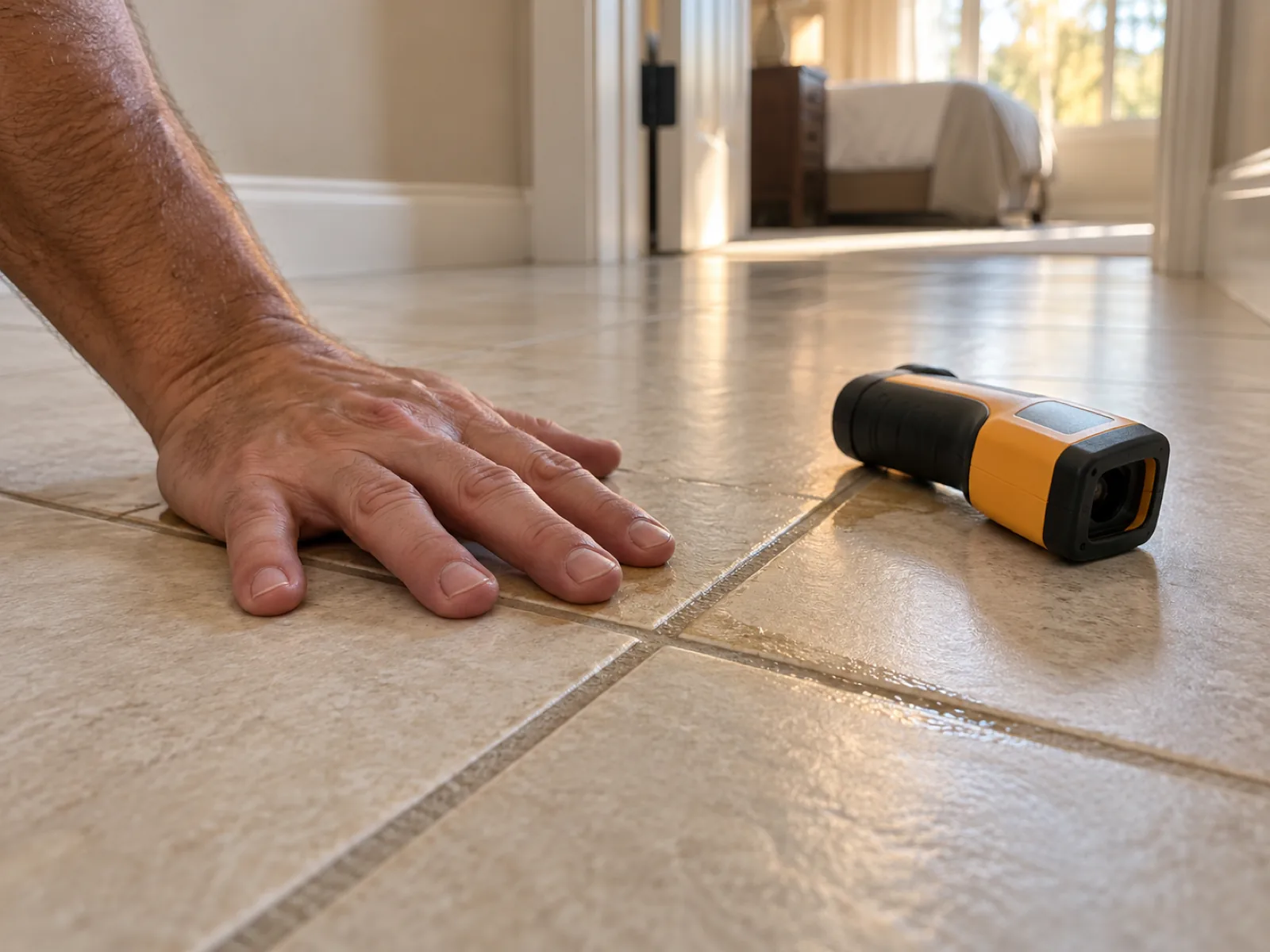
The most useful single fact for an adjuster is where the water starts. Ask whoever locates the leak for:
- The location, marked on the floor and described in relation to a fixed point such as a wall or doorway.
- Which line failed: hot or cold, and supply or drain. A hot-water line under the slab often explains a warm floor; a cold line usually will not.
- How it was confirmed, for example a meter test, a pressure test on isolated lines, acoustic listening or thermal imaging, rather than a single reading.
- The date of the visit, so it lines up with your own timeline.
- What was not checked, so nobody assumes the whole system was cleared.
A finding with those five parts lets the adjuster, the plumber and you talk about the same spot. Have the leak source located and documented.
LVVWD Programs That Sit Alongside Insurance
These programs run through the water district, not your insurer, and do not replace a homeowners policy. Leak Detection Las Vegas does not administer any of them; LVVWD decides eligibility.
Leak Repair Reimbursement. Single-family property owners may be reimbursed up to 50 percent of a leak repair, up to $2,000 per event, with a $200 minimum repair and a paid invoice. One reimbursement per rolling 365 days; tenants and ongoing leaks are excluded.
Water Line Protection Program. LVVWD lists this plan for single-family account holders at $3.99 per month, provided by American Water Resources. It covers service line leaks between the meter and the house. That is the line in the yard, not the lines under your slab.
Low-income Leak Repair Assistance. Income-qualified homeowners can receive up to $10,000 per leak event, applied for through community partners LVVWD names, including the City of Las Vegas.
These are LVVWD programs for LVVWD customers in Las Vegas, NV and portions of unincorporated Clark County. Henderson, NV and North Las Vegas, NV homeowners should ask their own utility what it offers.
After the Claim: Reroute, Repipe or Spot Repair
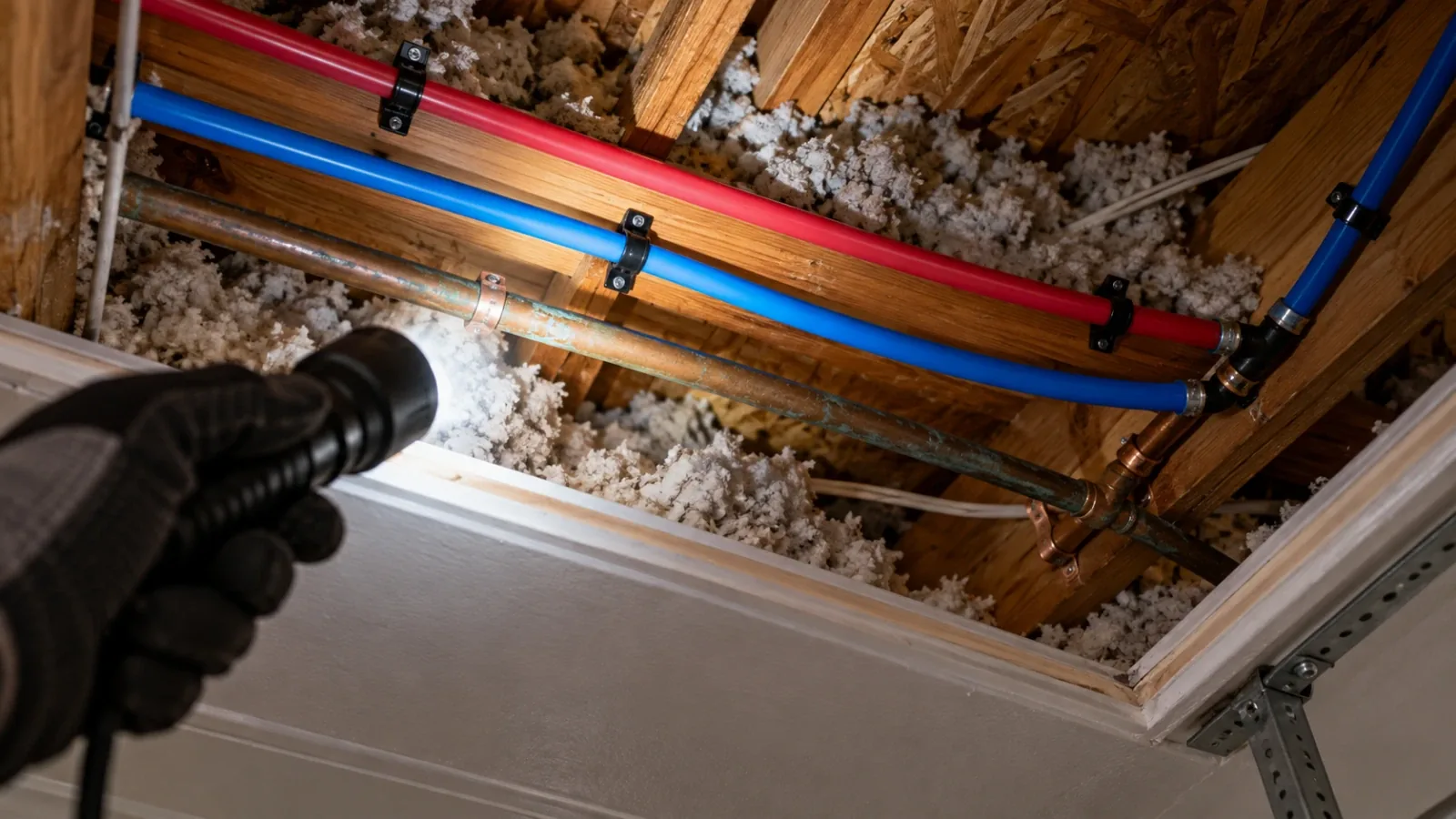
Once the source is located, the repair choice is a conversation with a licensed plumber: open the slab and fix the spot, reroute the line through walls or the attic, or repipe. Each changes what gets torn out, the part of the bill the sample HO-3 form addresses. The Leak Detection Las Vegas guide to reroute vs repipe after a slab leak walks through the trade-offs.
Before you sign anything, check the contractor on the Nevada State Contractors Board's public License Search.
If Water Is Spreading Right Now
Close the house shut-off valve, photograph what you see, then get the source located. LVVWD's guidance is to turn off all water inside and outside and watch the flow-indicator triangle on the meter; if it still moves with the house valve closed, the leak may be underground between the valve and the meter. For an active leak, emergency leak detection in Las Vegas is the next call. We locate leaks; we do not offer drying, water damage restoration or mold remediation, so call a restoration company for that part.
If Your Claim Is Disputed in Nevada
The Nevada Division of Insurance's Consumer Services Section can help clarify a policy and answer questions about claims. It asks consumers to try to resolve the issue with the insurer or agent first; after that, you can file a formal complaint online. For complaints such as improper denial or delay, the Division says the insurer generally must respond within 20 business days. We do not deal with your insurer for you, and nothing here is legal or insurance advice.
Get the Leak Source Located and Documented
A claim conversation starts with a located leak. Leak Detection Las Vegas locates slab and hidden leaks across the Las Vegas Valley so the repair starts at a marked spot. Talk to a leak detection specialist.