The reroute vs repipe slab leak decision starts once the leak has been found and marked, and most plumbers will put three paths in front of you, not two. Here is what each means for a Las Vegas, NV slab home, from a business that handles slab leak detection for Las Vegas homes and does not sell the repair.
What is the difference between a reroute and a repipe?
A reroute replaces the leaking section of pipe by running a new line through the walls or attic and abandoning the old one under the slab. A repipe replaces the home's supply lines throughout. A spot repair opens the slab at the leak and fixes that one spot, leaving the rest of the line in service.
Spot repair, reroute and repipe compared
The three options differ in how much pipe is replaced and what gets opened to do it.
| Option | What the plumber does | What gets opened | Usually fits when | Trade-offs |
|---|---|---|---|---|
| Spot repair | Breaks through the slab at the marked spot and repairs that section of pipe | A small area of flooring and concrete at the leak | One leak, a reachable spot, pipe that tests sound elsewhere | The rest of the under-slab line stays in service; flooring over the spot must be restored |
| Reroute | Runs a new line for the leaking run through walls or the attic, caps the old pipe and leaves it under the slab | Drywall along the new route, little or no concrete | The same line has leaked before, or the leak sits under cabinets or flooring worth keeping | Wall and ceiling patching; the new route can be longer than the old one |
| Whole-home repipe | Replaces the home's supply lines, usually above the slab | Drywall in many rooms | Repeated leaks across hot and cold lines, or aging pipe throughout | The largest job of the three; it replaces every line, not only the failing one |
When a spot repair through the slab makes sense
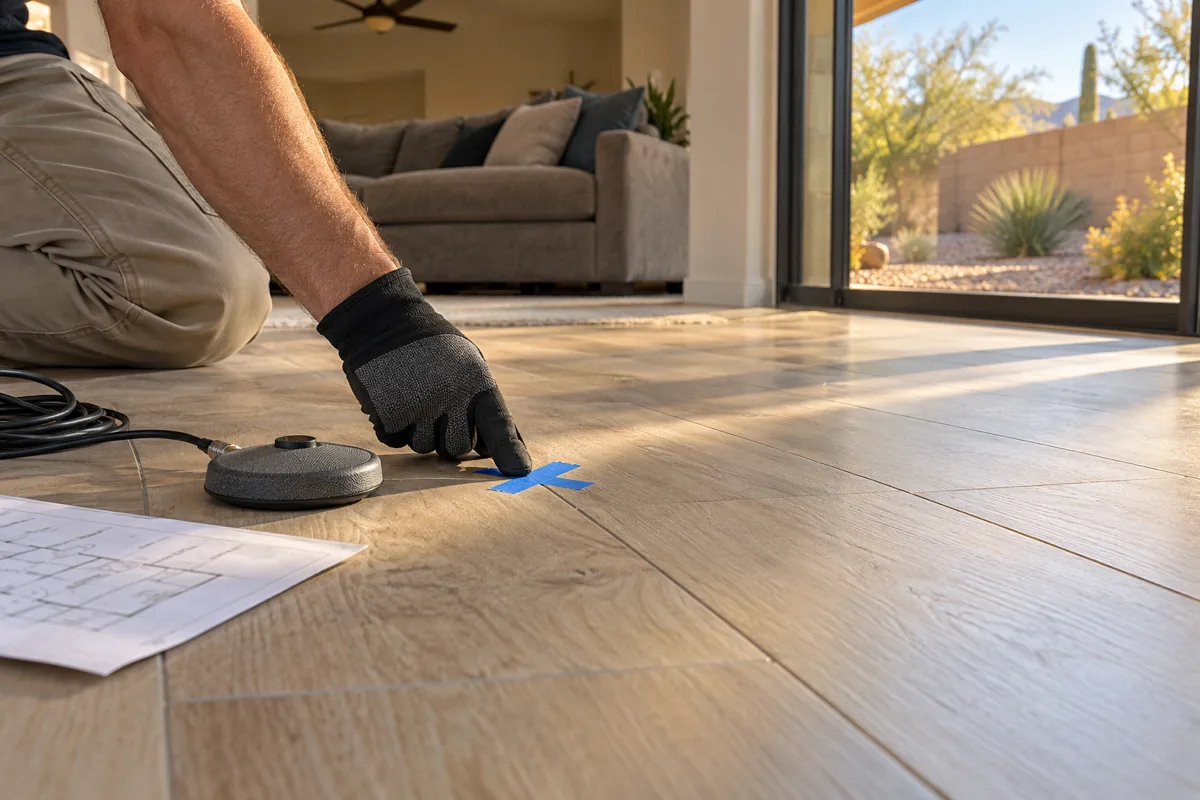
A spot repair fits a single leak on pipe that otherwise tests sound, in a place the plumber can reach. How precisely the leak was marked decides how much floor and concrete come up. A leak located to a small area means a small opening; a vague location means a bigger hole, or a second one.
The decision usually turns on the second leak, not the first. One leak on a line that passes a pressure test elsewhere is often just one bad spot, and a single leak on otherwise sound pipe rarely justifies a whole-home repipe by itself. What sits on top matters too. A leak under a kitchen island, or under tile that no longer matches anything sold today, can push a sensible spot repair toward a short reroute instead.
Need the leak pinpointed first? Talk to a Leak Detection Specialist.
- 1Floor covering: tile, wood or carpet.
- 2Concrete slab foundation.
- 3Water supply line running beneath the slab.
- 4The leak, wetting the soil around the line.
- 5Warm spot on the floor when the leaking line carries hot water.
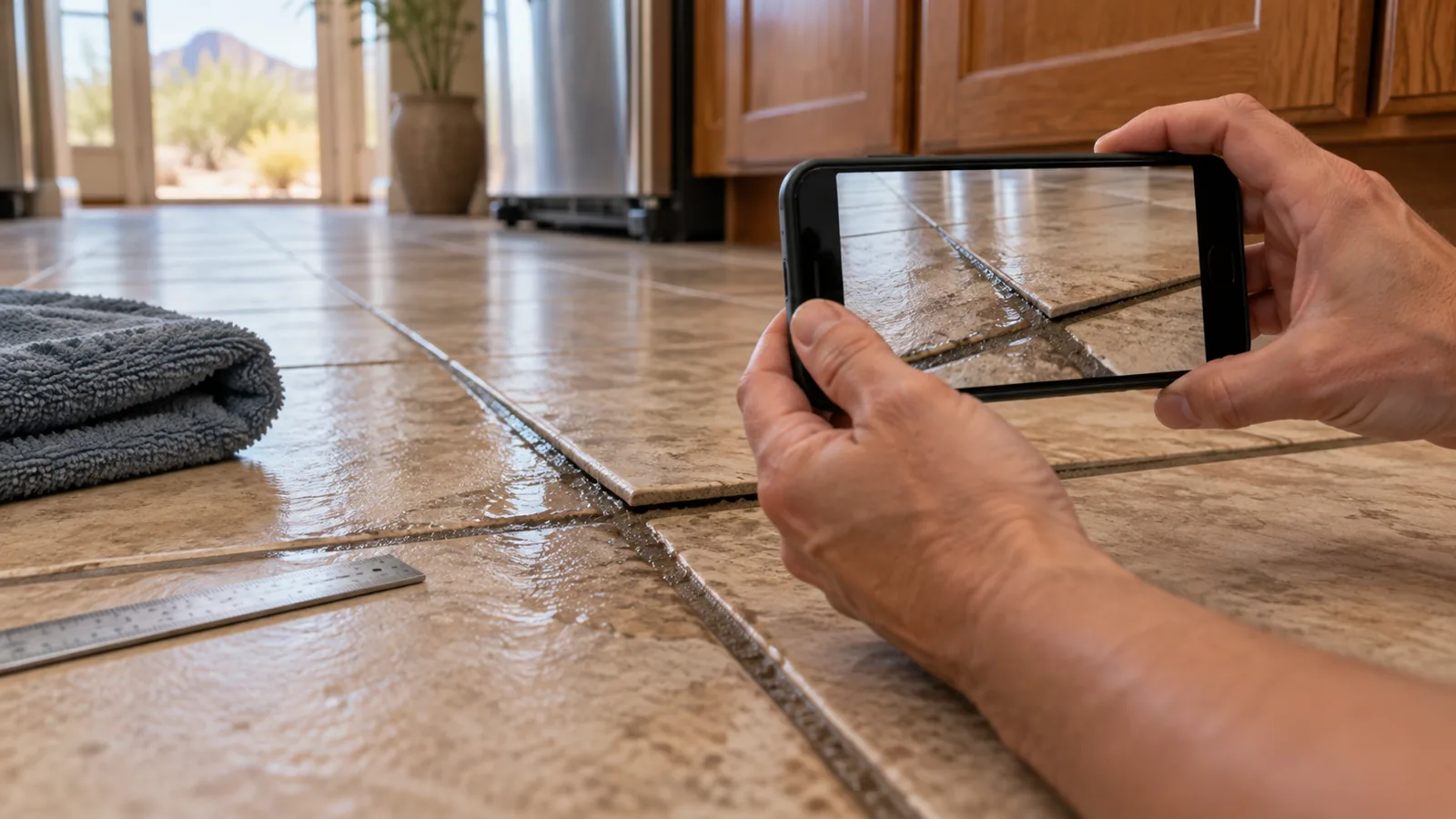
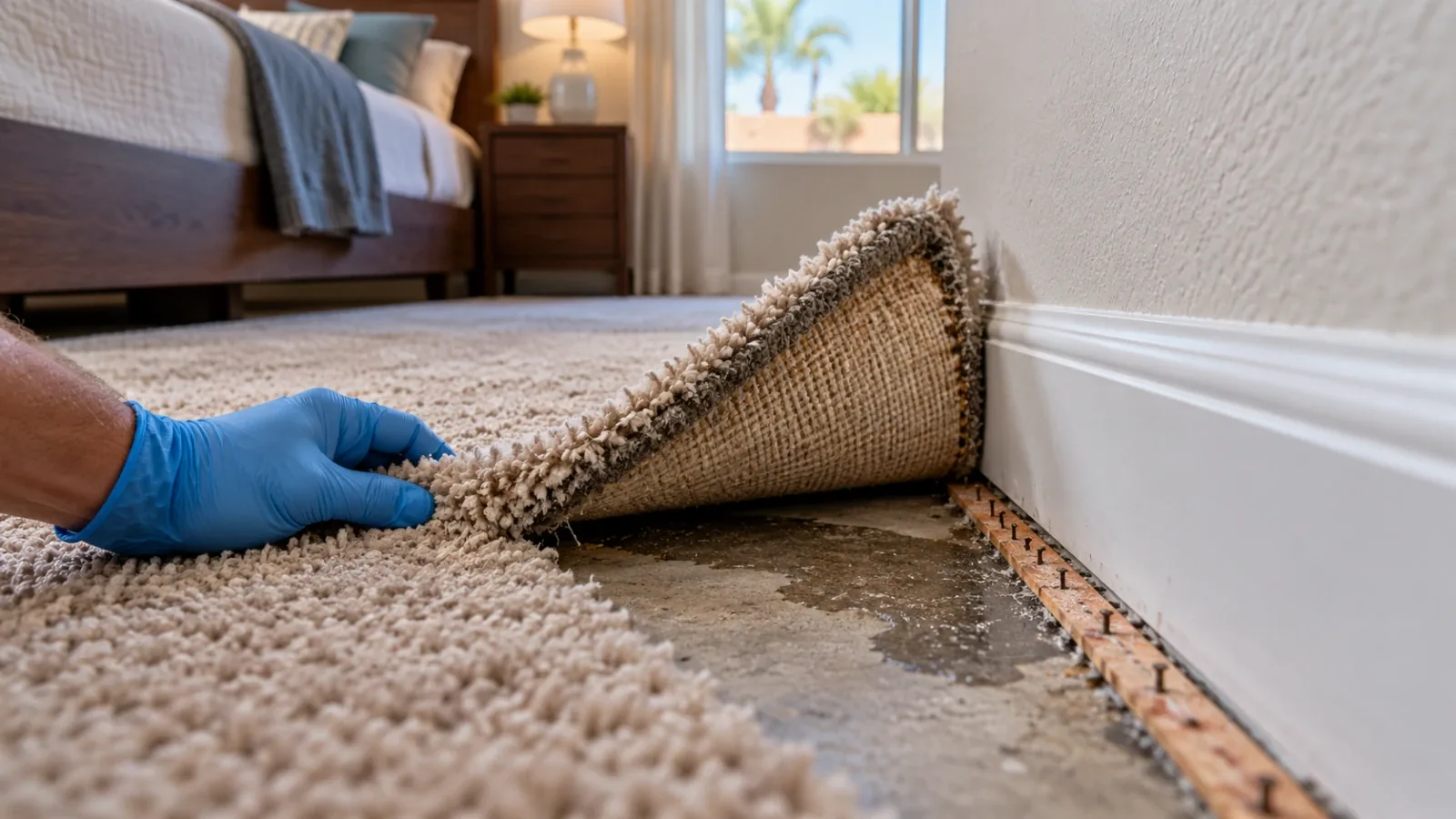
- 6Damp or discoloured flooring, or wet carpet, near the leak.
- 7Sound of running water with every fixture turned off.
When rerouting the line makes sense
A reroute makes sense when one line is failing rather than one spot. If the same line leaks a second time within a short period, the pipe itself is the likely problem, and rerouting that run through the walls or attic replaces it without chasing leaks under the floor one at a time.
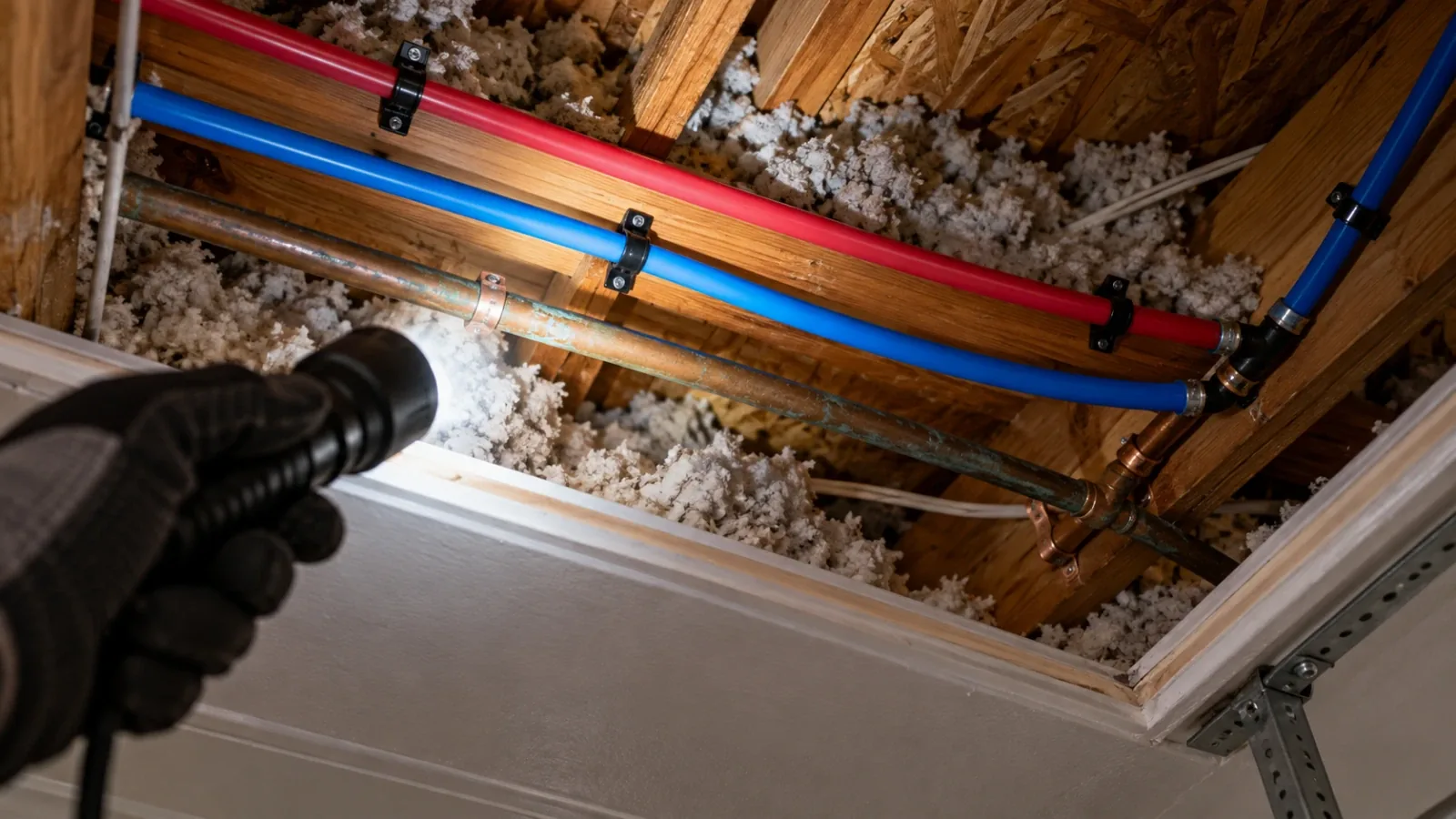
Reroutes also come up when the leak sits under cabinets, a tub or flooring the owner wants to keep. The old pipe stays capped and abandoned in place. The trade-off moves from concrete to drywall, because the new line's path has to be opened and patched.
When a whole-home repipe comes up
A repipe conversation usually follows repeated leaks across several lines, both hot and cold, or a pressure test showing more than one line failing at once.
Age is part of the picture in the valley. U.S. Census Bureau figures from the 2019-2023 American Community Survey give a median year built of 1994 for Las Vegas, NV, 1987 for Paradise, NV and 2000 for Henderson, NV, so many homes have supply lines that have been in service for decades. That says nothing about the material or condition of any one house; only testing does. Hard water often enters the same discussion (LVVWD water measures 278 parts per million, per a KTNV report quoting the district), though how much it adds to pipe wear is debated among plumbers.
Repipes today commonly use PEX (cross-linked polyethylene), copper or CPVC. Each has trade-offs, and the plumber's choice tends to depend on the house, the plumbing code in force and the budget rather than on one material being right everywhere.
Five questions to ask before you choose
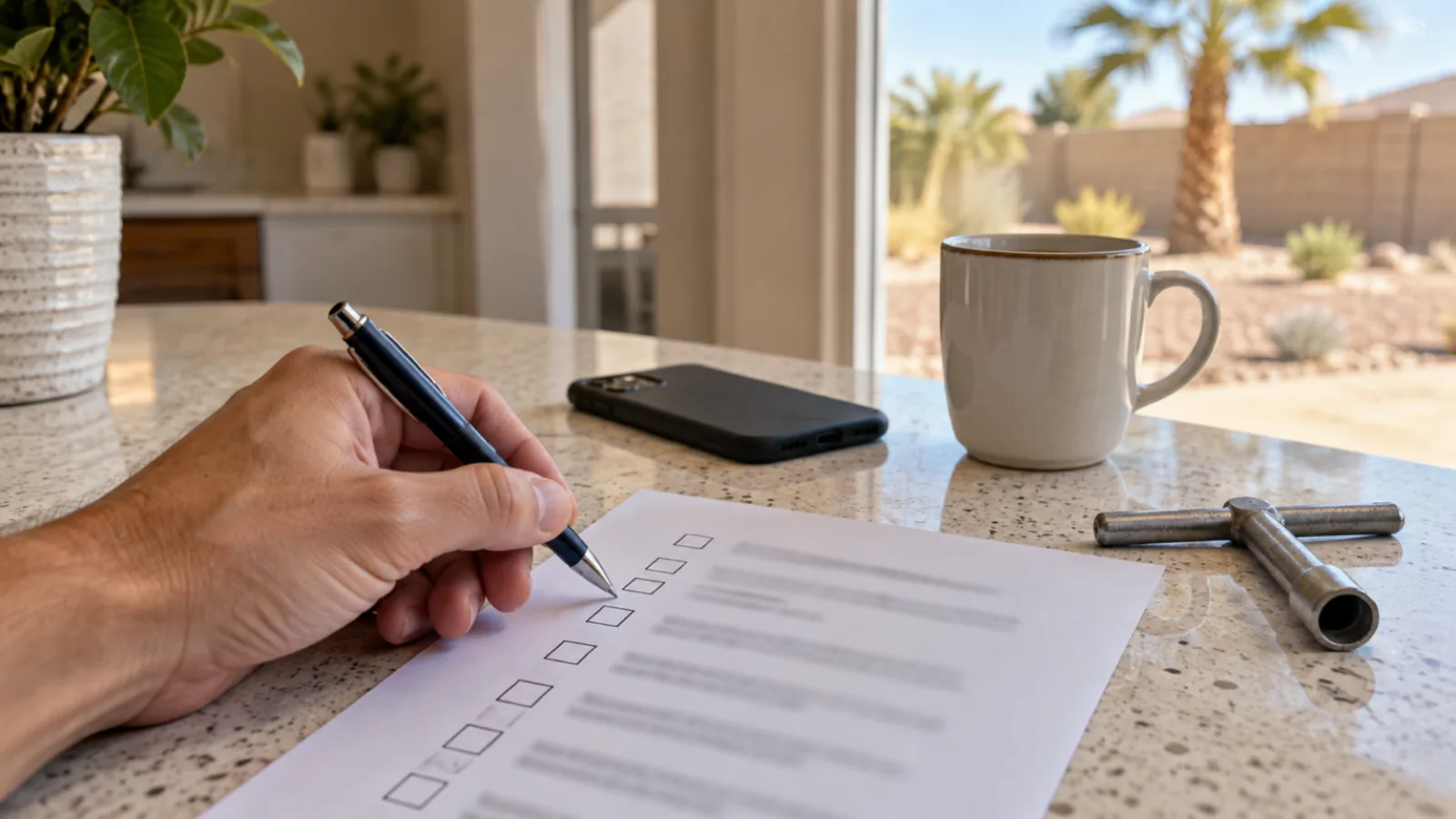
These five answers make any plumber's recommendation easy to weigh:
- How many leaks has this line had, and how far apart were they?
- Is the leak on a hot line or a cold line?
- Did the remaining lines pass a pressure test after the leak was isolated?
- What will be opened, and who restores the flooring and drywall afterward?
- Does the job need a permit?
The pressure test matters most: it tells you whether you have one bad spot, one bad line or a house full of tired pipe. Still unsure the leak is under the slab? Start with what a slab leak looks like.
What changes the repair price
Repair price depends on how much has to be opened and how much pipe is replaced, and a good quote shows both. The factors that move it:
- Access, meaning what sits over the spot (tile, wood, cabinets, a tub) and how much of it must be lifted and restored
- Line length, from a short run near an exterior wall to a long one across the house
- The number of sinks, toilets and appliances a reroute or repipe has to reconnect
- Material choice
- Drywall, ceiling and paint repairs along a new route
- Whether a permit is required
Plumbing work follows the adopted building code and some jobs need a permit, so ask the plumber whether yours does. Finding the leak is priced separately from fixing it, and leak detection cost las vegas covers that side of the bill.
Paying for the repair: LVVWD reimbursement and insurance
If you own a single-family home on LVVWD water, the LVVWD Leak Repair Reimbursement Program (opens in a new tab) may cover part of the repair. According to LVVWD, eligible single-family residential owners can be reimbursed up to 50 percent of the cost to repair a leak, up to $2,000 per event, with a $200 minimum repair. One reimbursement is allowed within a rolling 365 calendar days from the repair date, a paid invoice is required, and tenants, ongoing leaks and rural service areas are excluded. Whichever option you pick, get the invoice itemized and paid in full.
Timing matters as well. LVVWD's separate Leak Adjustment Program, which addresses the extra usage on the bill, requires the repair to be finished within 60 days of the billing date on which the leak was discovered, among other conditions. A choice that stalls for months can cost you that adjustment.
Henderson, NV homes are served by City of Henderson Utility Services, not LVVWD, so these programs do not apply there; the city runs its own leak adjustment program with its own rules. Our page on slab leak detection in Henderson covers that side of the valley.
Insurance works differently from these programs, and our guide to slab leak insurance in Nevada covers that side in more detail.
Hiring the plumber in Nevada
Check the plumber before you choose an option. The Nevada State Contractors Board states that under NRS 624.700 it is unlawful to act as a contractor, or to bid on a job, in Nevada without an active license, and NSCB lists a first offense as a misdemeanor and a third as a Class E felony. The NSCB License Search (opens in a new tab) and Disciplinary Search let you look a contractor up before you sign anything.
One exception causes confusion. The NSCB handyman exemption (NRS 624.031) says repair or maintenance work on property under $1,000, including labor and materials, may not require a contractor's license, unless certain conditions apply, such as the job needing a building permit. Check where your job falls rather than assuming it qualifies.