How does leak detection work?
Professional leak detection finds a hidden water leak in a set order: confirm water is moving at the meter, isolate which part of the plumbing is losing it, narrow the line with pressure testing, pinpoint the spot by sound or heat, and mark it so only that spot is opened.
In short, the five steps are:
- Confirm at the meter that water is leaving the system.
- Isolate the part of the plumbing that is losing it.
- Narrow the failing line with pressure testing.
- Pinpoint the spot by sound or by heat.
- Mark it, so the repair opens one place instead of a room.
Each step removes suspects. Skipping one usually means guessing later.
Step 1: Confirm the leak at the meter
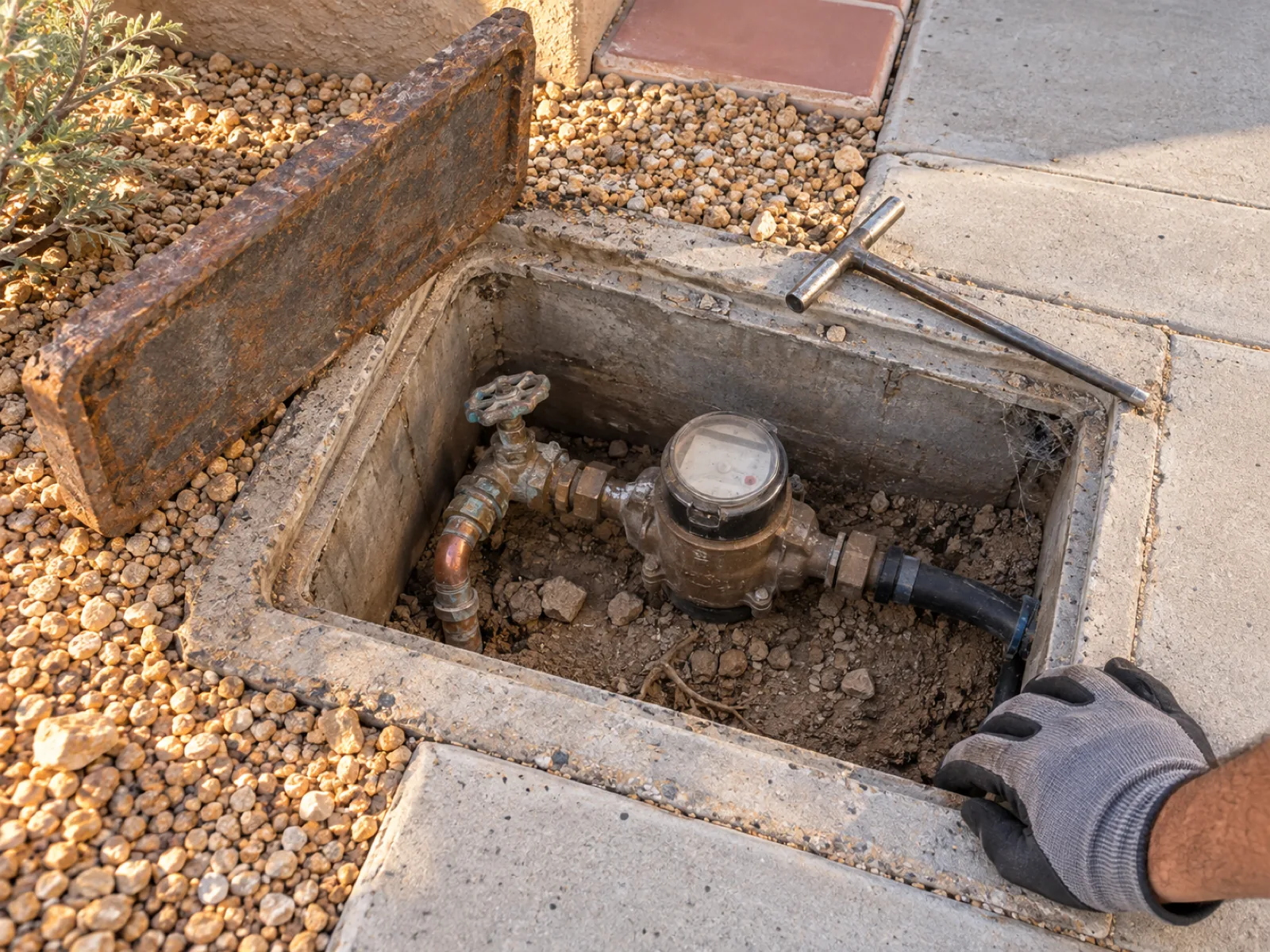
The water meter is the cheapest, most honest instrument on the property. LVVWD's leak check guidance (opens in a new tab) has customers turn off all water inside and outside, then watch the small flow-indicator triangle on the meter dial. If it keeps turning, there may be a leak. Then close the valve where the supply enters the home and look again: a triangle that still turns points to the buried pipe running from the meter up to that valve, while one that stops sends the search indoors or elsewhere on the lot.
Many visits in the valley start one step earlier, with a notice. LVVWD sends word when a meter has recorded three or more days of unbroken flow, so a homeowner often arrives already knowing something is wrong, just not where.
- 1Meter box. Lift the lid to see the water meter.
- 2Flow-indicator triangle (red or white) on the meter face. With all water off inside and outside the home, a triangle that is still moving means there may be a leak.
- 3Meter dial and sweep hand, which record the water that passes through the meter.
- 4Service line from the meter to the house. If the triangle still moves with the house shut-off valve closed, the leak is likely underground on this line.
- 5House shut-off valve. Close it and check the triangle again: if it stops, the leak is elsewhere on the property.
Step 2: Isolate the system that is losing water
Once a leak is confirmed, the search space is the whole property. Isolation cuts it down by closing one system at a time and watching the meter.
- The house valve splits the buried service line from everything inside.
- Closing the cold supply valve on the water heater takes the whole hot side out of play. If the meter stops, the leak is on a hot line.
- Shutting the irrigation supply rules drip lines and valves in or out.
- With the auto-fill off, the pool and spa drop off the suspect list.
Every closure that stops the meter tells you where to look. Every closure that does not stop it removes one more place from the list. That is why a house with irrigation, a softener and a pool takes longer than a condo with one supply line.
Not sure which system is losing water? Talk to a leak detection specialist and describe what the meter does.
Step 3: Narrow it with pressure testing
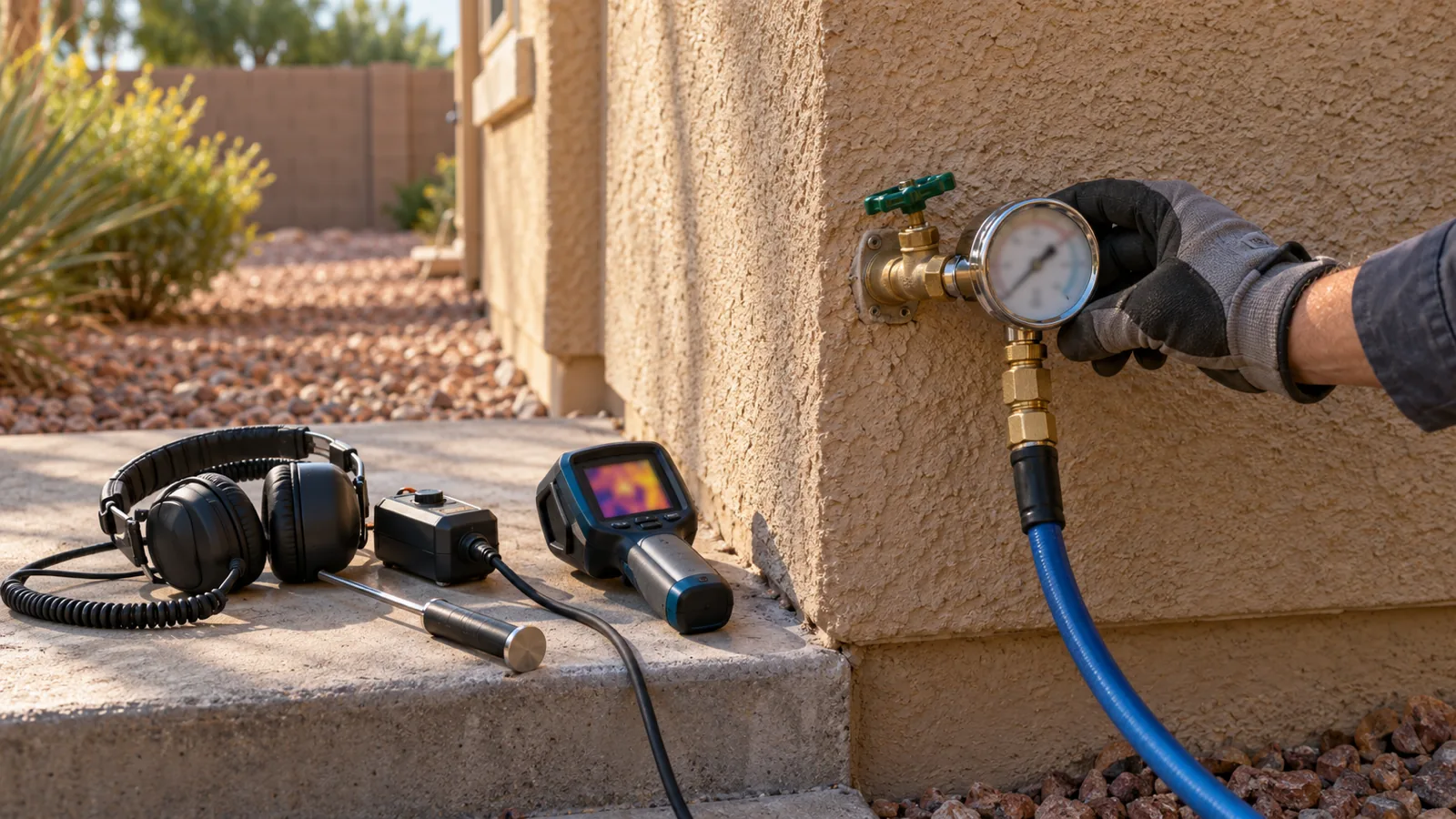
Isolation tells you which system is failing. Pressure testing tells you which line inside it. A technician closes off a section of pipe, pressurizes it, and reads a gauge (a manometer, in the textbook term). If the section is sound, the gauge holds; a leaking section loses pressure.
Testing segments one after another narrows the search from "the cold side" to "this run of pipe". That step often decides whether a slab leak is on one branch or several, with nothing opened.
Step 4: Pinpoint by sound
Water escaping a pressurized pipe makes noise: a hiss, a rush, a steady drip into a void. Acoustic leak detection listens for it with a ground microphone placed on the floor or soil above the pipe, moving along the line until the sound is loudest. A leak noise correlator takes it further by comparing the sound at two points on the same pipe to estimate where between them the leak sits.
Sound has limits. It travels best through hard surfaces close to the pipe. Deep soil, thick padding, a running pool pump or traffic noise can bury it, which is why technicians often ask for equipment and irrigation to be off during a visit. If you hear running water in a wall with every fixture closed, this is the method that follows that sound to its source.
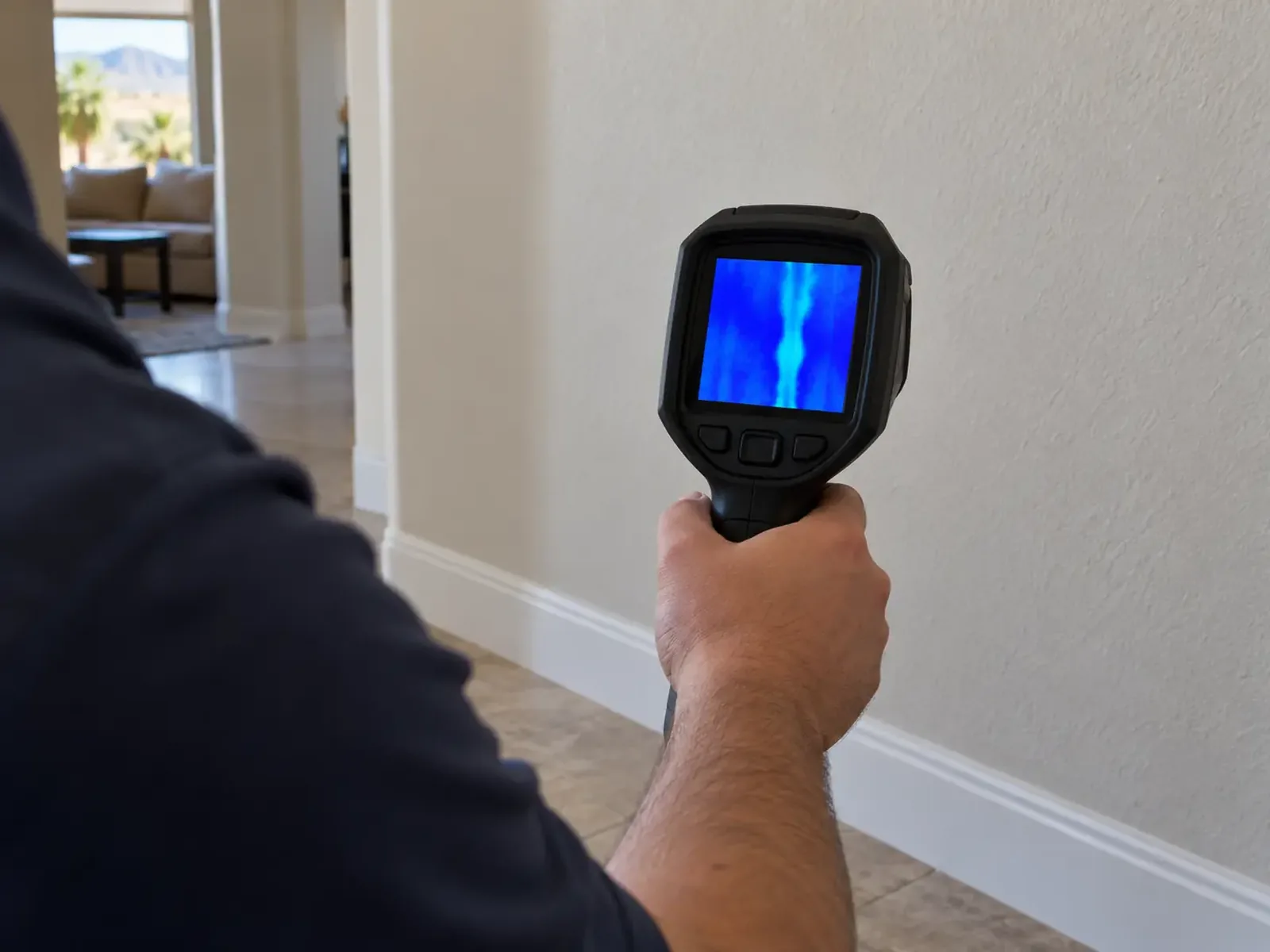
Step 5: Pinpoint by heat
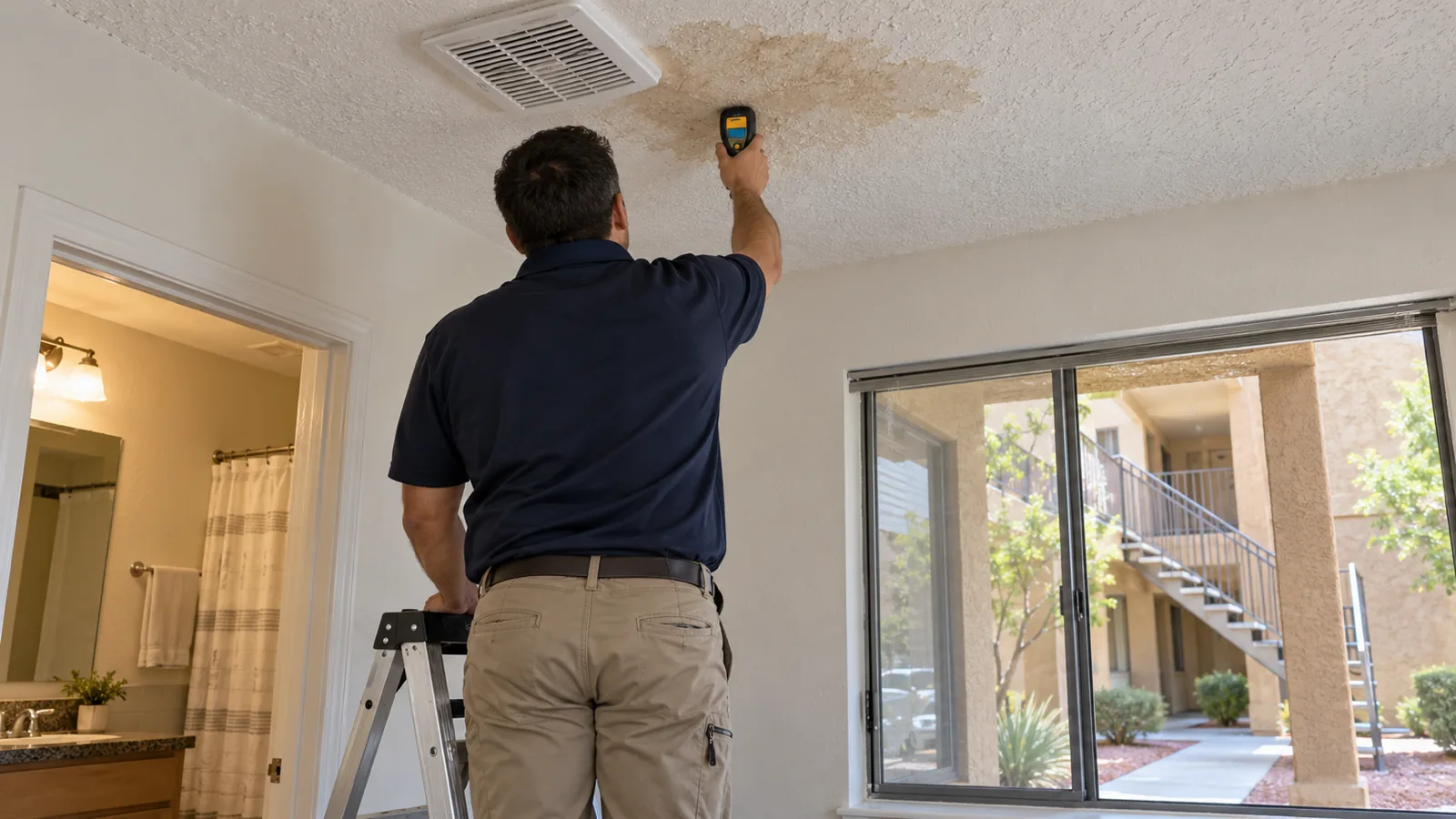
Thermal imaging reads surface temperature. Water leaking from a hot-water line warms the slab, tile or drywall around it, and that warmth shows up as a pattern a thermal camera can see.
The method is chosen by the pipe, not the other way round. Thermal imaging is strongest on hot lines because it reads the heat the leaking water carries. A cold-line leak under a slab can be nearly invisible to it, so the cold side is narrowed with pressure testing and listening instead. Thick flooring, rugs and sun-warmed surfaces can also blur the picture.
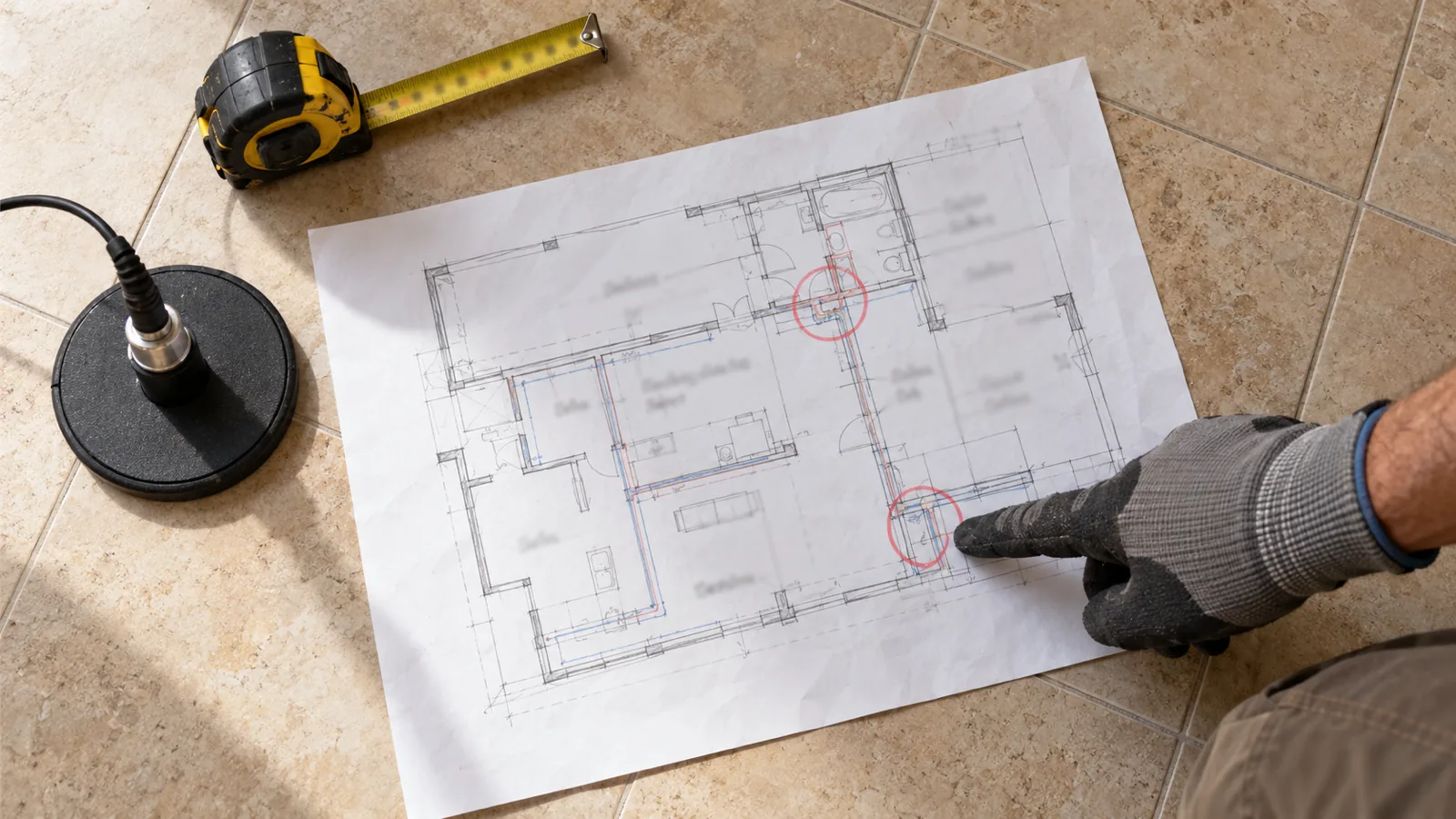
When sound or heat agrees with the pressure results, the spot is marked on the surface. That mark is the deliverable the whole sequence exists to produce.
Other methods: tracer gas, dye, radar and moisture readings
A few methods fill the gaps the main ones leave:
- Tracer gas is pushed into a drained line, and a sensor finds where it escapes at the surface. It helps where sound fails, such as a quiet leak in a deep line.
- In pools and spas, a little dye released near fittings, lights and skimmers drifts toward where water is being pulled out. That is the core of pool and spa leak detection in Las Vegas, NV, which Leak Detection Las Vegas in Las Vegas covers on its own page.
- Ground-penetrating radar can trace where a buried pipe actually runs before anyone listens along it.
- Moisture meters map how far dampness has spread in walls, cabinets or flooring.
If you have seen the question "what are the three types of leak detection?", the usual answer is acoustic, thermal and pressure methods: the three families most hidden-leak searches rely on.
What each method can and cannot tell you
No single machine finds every leak. The table shows why the methods are combined.
| Method | Best at | Can miss or struggle with |
|---|---|---|
| Meter test | Proving water is being lost at all | Where it is going |
| Isolation | Naming the system: service line, hot, cold, irrigation, pool | The exact spot within that system |
| Pressure test | Proving which line or segment fails | Position along that line |
| Acoustic listening | Pinpointing pressurized leaks under hard surfaces | Deep soil, soft padding, background noise |
| Thermal imaging | Hot-water leaks under slabs and in walls | Cold lines, thick flooring, sun-warmed surfaces |
| Tracer gas | Quiet leaks where sound fails | Lines that cannot be drained and charged |
| Dye | Pool and spa fittings, lights, skimmers | Buried lines away from the water |
A careful technician will tell you which of these a given job needs, and which ones will not help. An answer that relies on one tool for everything is worth questioning.
Locate first, open second
Slab, tile and drywall are expensive to open and slow to put back. Every opening made on a hunch is a second opening if the hunch is wrong. That is the case for the order above: by the time anything is cut, the spot has been confirmed by the meter, the isolation, the pressure results and either sound or heat.
That is how our Las Vegas slab leak detection is approached, and it matters most when a first attempt has already missed. If you are reading this after a plumber could not find it, the usual reason is that a step in the sequence was skipped.
Leak Detection Las Vegas locates and marks the leak. The repair itself, whether a spot fix, reroute or repipe, belongs to your plumber, who then works from a marked spot.
How to prepare for a leak detection visit
A little preparation saves time on site:
- Clear the meter box lid so it can be opened.
- Make sure the water heater and its cold supply valve can be reached.
- Know where the irrigation controller is.
- Open the way to the pool equipment pad, if you have one.
- Have recent water bills or the LVVWD notice to hand.
- Note any warm floor spots, damp patches or places where you hear water.
- Keep pets secured while gates and meter boxes are open.
If you are comparing visits before you book, our guide to what leak detection costs here explains which of these factors change the work.
Reporting a leak you can see outside your property
Water bubbling from the street, a public main or the meter itself is usually the water provider's to fix, not yours. Report it to the right one:
- Las Vegas, NV and unincorporated Clark County: Las Vegas Valley Water District, through lvvwd.com (opens in a new tab). LVVWD's Conservation Help line is 702-258-SAVE.
- Henderson, NV: City of Henderson Utility Services.
- North Las Vegas, NV: your city's own water utility.
All three are member agencies of the Southern Nevada Water Authority, but each handles its own system. Leaks on your side of the meter are the property owner's responsibility, and that is where detection comes in.
Book a Leak Detection Visit
Want the leak narrowed and marked before a single tile comes up? Leak Detection Las Vegas works across Las Vegas, Henderson, North Las Vegas, Enterprise and Spring Valley, NV, starting every visit at the meter. Call to book a Leak Detection Visit